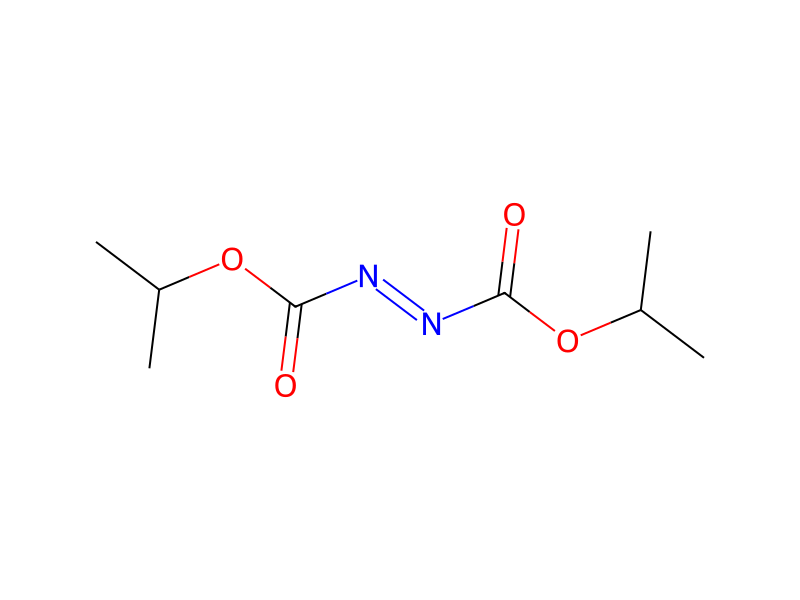
[CH3:1][N:2]1[C:6]([NH:7]C(C2C=CC=CC=2)(C2C=CC=CC=2)C2C=CC=CC=2)=[C:5]([CH2:27][CH2:28][CH2:29]O)[CH:4]=[N:3]1.[C:31]1(=[O:41])[NH:35][C:34](=[O:36])[C:33]2=[CH:37][CH:38]=[CH:39][CH:40]=[C:32]12.C1(P(C2C=CC=CC=2)C2C=CC=CC=2)C=CC=CC=1.N(C(OC(C)C)=O)=NC(OC(C)C)=O.Cl>O1CCCC1.O1CCOCC1.O>[NH2:7][C:6]1[N:2]([CH3:1])[N:3]=[CH:4][C:5]=1[CH2:27][CH2:28][CH2:29][N:35]1[C:31](=[O:41])[C:32]2=[CH:40][CH:39]=[CH:38][CH:37]=[C:33]2[C:34]1=[O:36]To a solution of 3-(1-methyl-5-triphenylmethylaminopyrazol-4-yl)propanol (4.0 g, 10 mmol), phthalimide (1.5 g, 10 mmol) and triphenylphosphine (4.0 g, 15 mmol) in tetrahydrofuran (20 ml) was added diisopropyl azodicarboxylate (3.0 g, 15 mmol), and the mixture was stirred at room temperature for 30 minutes. To the reaction mixture was added 4 mol/l hydrogen chloride solution in dioxane (10 ml), and the mixture was stirred at room temperature for 30 minutes. To the reaction mixture was added water, and the mixture was washed with ethyl acetate. The organic layer was separated, and the aqueous layer was adjusted to pH 9 with 10% aqueous sodium carbonate solution. The solution was extracted with chloroform. The organic layer was dried over anhydrous magnesium sulfate, filtered, and concentrated in vacuo. The residue was triturated with ethyl acetate and dried in vacuo to give 5-amino-1-methyl-4-(3-phthalimidopropyl)pyrazole (2.2 g) as a solid.