HomeMCPSkillsWorkbenchOpenChem
HomeWorkbenchNotificationsMe
llms.txt · skill.md · MCP GuidePrivacy Policy · Terms of Service · Supportv1.8.5
  1. Home
  2. /Reaction

Hydrochloric Acid → 4-(4-Amino-2,6-dibromophenoxy)-2-isopropylphenol

HRID 393394
Print

Reaction equation

[Br:1][C:2]1[CH:18]=[C:17]([N+:19]([O-])=O)[CH:16]=[C:15]([Br:22])[C:3]=1[O:4][C:5]1[CH:10]=[CH:9][C:8]([OH:11])=[C:7]([CH:12]([CH3:14])[CH3:13])[CH:6]=1.S(S([O-])=O)([O-])=O.[Na+].[Na+].Cl.C(=O)(O)[O-].[Na+]>C1COCC1.O.C(OCC)(=O)C>[NH2:19][C:17]1[CH:16]=[C:15]([Br:22])[C:3]([O:4][C:5]2[CH:10]=[CH:9][C:8]([OH:11])=[C:7]([CH:12]([CH3:14])[CH3:13])[CH:6]=2)=[C:2]([Br:1])[CH:18]=1
ParticipantsConditionsProcedureWorkupSources & evidenceReaction notes

Participants

8

Reactant 4

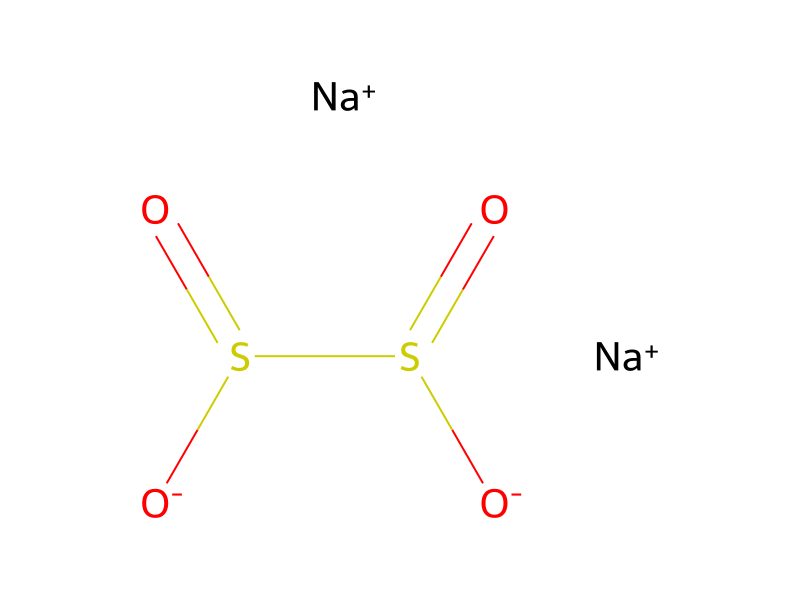
HCID 313Hydrochloric AcidHCID 24489Sodium DithioniteHCID 516892Sodium BicarbonateHCID 226603024-(2,6-Dibromo-4-nitrophenoxy)-2-isopropylphenol

Product 1

HCID 121504324-(4-Amino-2,6-dibromophenoxy)-2-isopropylphenolYield 96.9%

Reagents, catalysts & solvents 3

HCID 962
Water
Solvent
HCID 8028TetrahydrofuranSolvent
HCID 8857Ethyl AcetateSolvent

Conditions

Temperature
33 °C

Procedure

4-(2,6-Dibromo-4-nitrophenoxy)-2-isopropylphenol (795 g, 1.84 moles) was divided into three roughly equal portions. Each portion was dissolved in THF (2.6 L) and charged into a 12 L three-necked round bottom flask equipped with a mechanical stirrer, addition funnel, and temperature probe. The solutions were heated to 33° C. Sodium dithionite (482 g, 2.4 moles) dissolved in deionized water (2.6 L) was added to each flask. The reaction temperature was held at 50° C. until each reaction was complete as assayed by HPLC. Hydrochloric acid (6N aqueous) was added dropwise to the heated reaction mixtures until their pH was about 3, and heating was continued for 45 min. The reaction mixtures were cooled to room temperature and their pH was adjusted to 6.6 by addition of saturated aqueous sodium bicarbonate solution. Ethyl acetate (2.5 L) was added to each flask with stirring for 2 min. Each reaction mixture was separated, and each organic layer was washed once with half-saturated aqueous sodium chloride solution, then once with saturated aqueous sodium chloride solution. The solvents were removed by rotary evaporation and the solids were dried overnight in a vacuum oven at 40° C. to yield crude 4-(4-amino-2,6-dibromophenoxy)-2-isopropylphenol (657 g, 96.9%). The crude 4-(4-amino-2,6-dibromophenoxy)-2-isopropylphenol was purified by recrystallization from isopropanol upon addition of 2.5 volumes of deionized water (90% recovery).


Workup

  1. additioncharged into a 12 L three-necked round bottom flask
  2. customequipped with a mechanical stirrer, addition funnel
  3. additionwas added to each flask
  4. customwas held at 50° C. until each reaction
  5. temperatureheating
  6. customThe reaction mixtures
  7. temperaturewere cooled to room temperature
  8. customEach reaction mixture was separated
  9. washeach organic layer was washed once with half-saturated aqueous sodium chloride solution
  10. customThe solvents were removed by rotary evaporation
  11. customthe solids were dried overnight in a vacuum oven at 40° C.

Sources & evidence

ORD record
ord-2dd977f598bb420481c9ebd3938e861b
Source dataset
uspto-grants-2004_10
DOI
10.6084/m9.figshare.5104873.v1
Patent number
US06806381B2

Reaction notes

On this pageParticipantsConditionsProcedureWorkupSources & evidenceReaction notes