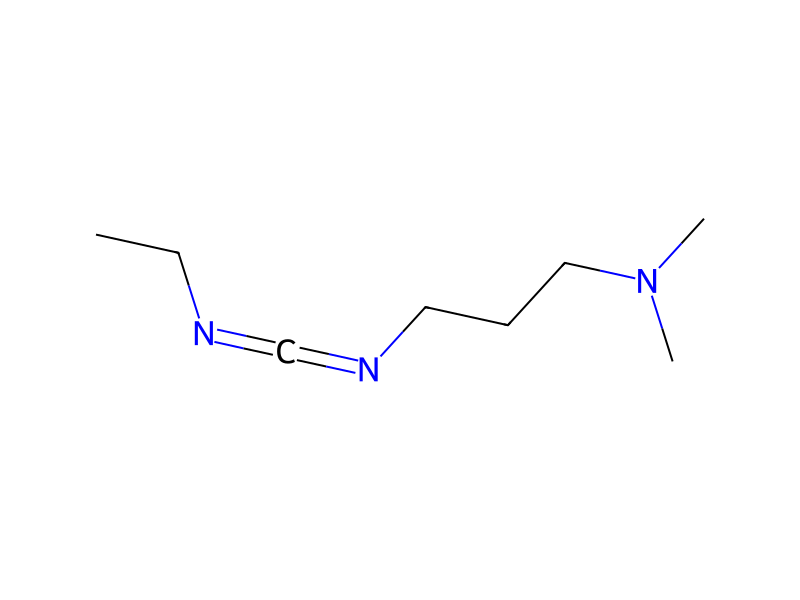
2-(4-chlorophenyl)benzo[d]oxazole-4-carboxylic acid 4 (0.137 g, 0.5 mmol) in dimethyl formamide (10 mL) was added was added HOBT (0.085 g, 0.55 mmol), EDCI (0.115 g, 0.6 mmol), DIPEA (0.194 g, 1.5 mmol) and ammonium chloride (0.0265 g, 0.5 mmol). The reaction mixture was stirred at room temperature for 20 hr, cooled and poured into water (10 mL). The solution was acidified to pH=3 with 1N aqueous hydrochloric acid. Then the solution was extracted with dichloromethane (70 mL×3). The organic layer was washed with brine, dried over anhydrous sodium sulfate, condensed in vacuum and separated by silica gel chromatography (ethyl acetate:methanol=1:0 to 10:1) to afford 10 mg 2-(4-chlorophenyl)benzo[d]oxazole-4-carboxamide (yield: 14.8%). 1H-NMR (400 MHz, DMSO-d6) δ 7.54-7.58 (t, J=8.0 Hz, 1H), 7.70-7.72 (d, J=8.0 Hz, 2H), 7.96-8.02 (m, 3H), 8.31-8.33 (d, J=8.0 Hz, 2H), 8.44 (s, 1H); LC-MS (ESI) m/z 273 [M+1]+.