HomeMCPWorkbenchSkills
HomeWorkbenchNotificationsMe
llms.txt · MCP GuidePrivacy Policy · Terms of Service · Supportv1.8.3
  1. Home
  2. /Reaction

Acrylonitrile → (R)-N,N-Diisopropyl-3-[2-benzyloxy-5-(2-cyanoethenyl)phenyl]-3-phenylpropylamine

HRID 428324
Print

Reaction equation

HRID 428324 reaction equation
[CH:1]([N:4]([CH:29]([CH3:31])[CH3:30])[CH2:5][CH2:6][C@@H:7]([C:14]1[CH:19]=[C:18](Br)[CH:17]=[CH:16][C:15]=1[O:21][CH2:22][C:23]1[CH:28]=[CH:27][CH:26]=[CH:25][CH:24]=1)[C:8]1[CH:13]=[CH:12][CH:11]=[CH:10][CH:9]=1)([CH3:3])[CH3:2].C(N(CC)CC)C.C1(C)C=CC=CC=1P(C1C=CC=CC=1C)C1C=CC=CC=1C.[C:61](#[N:64])[CH:62]=[CH2:63]>CN(C=O)C.CC([O-])=O.CC([O-])=O.[Pd+2]>[CH:1]([N:4]([CH2:5][CH2:6][C@@H:7]([C:14]1[CH:19]=[C:18]([CH:63]=[CH:62][C:61]#[N:64])[CH:17]=[CH:16][C:15]=1[O:21][CH2:22][C:23]1[CH:28]=[CH:27][CH:26]=[CH:25][CH:24]=1)[C:8]1[CH:13]=[CH:12][CH:11]=[CH:10][CH:9]=1)[CH:29]([CH3:31])[CH3:30])([CH3:3])[CH3:2]
ParticipantsConditionsProcedureWorkupSources & evidenceReaction notes

Participants

7

Reactant 4

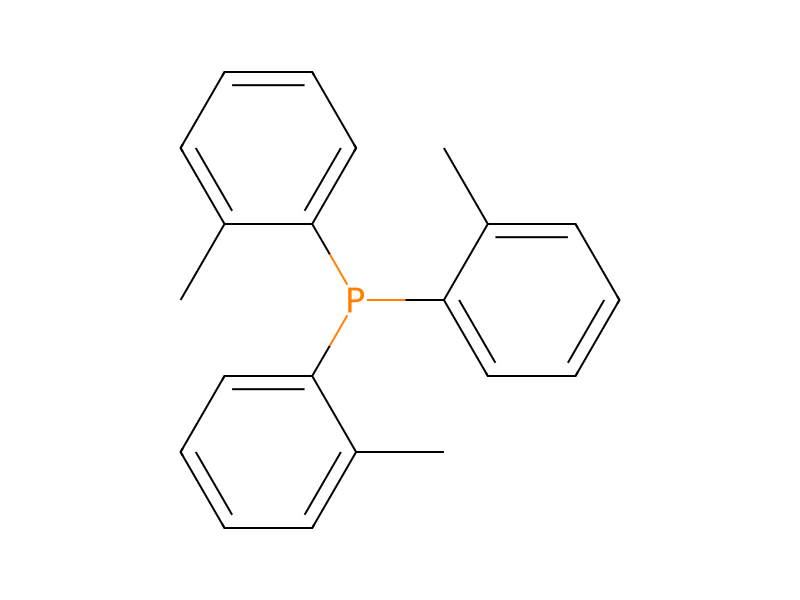
HCID 7855AcrylonitrileHCID 8471TriethylamineHCID 80271Tri-o-tolylphosphineHCID 24885301(R)-3-(2-benzyloxy)-5-bromophenyl)-N,N-diisopropyl-3-phenylpropan-1-amine

Product 1

HCID 54021240(R)-N,N-Diisopropyl-3-[2-benzyloxy-5-(2-cyanoethenyl)phenyl]-3-phenylpropylamine

Reagents, catalysts & solvents 2

HCID 167845palladium(II) acetateCatalyst
HCID 6228DimethylformamideSolvent

Conditions

Temperature
115 °C

Procedure

To a solution of (R)-N,N-diisopropyl-3-(2-benzyloxy-5-bromophenyl)-3-phenylpropanamine (13.87 g, 28.87 mmol) (prepared as described in WO 94/11337, Example 1) in DMF (140 mL) was added triethylamin (5.00 mL, 36.10 mmol), Pd(OAc)2 (0.32 g, 1.44 mmol), tri(o-tolyl)phosphine (1.76 g, 5.77 mmol) and acrylonitrile (2.39 mL, 36.10 mmol). The reaction mixture was stirred overnight at 115° C. in a sealed flask equipped with a reflux condenser under nitrogen atmosphere. The resulting mixture was concentrated, and the residue was dissolved in diethyl ether, washed with aqueous 2 M sodium hydroxide and water. The organic phase was dried (MgSO4) where after petroleum ether was added to the organic phase and a precipitate was formed. Recrystallisation from ethanol yielded 5.50 g (42%). 1H NMR (CDCl3) δ0.90 (s, 6H), 0.95 (s, 6H), 2.15 (q, 2H), 2.35 (q, 2H), 2.95 (m, 2H), 4.40 (t, 1H), 5.05 (s, 2H), 5.70 (d, 1H), 6.85 (d, 1H), 7.10-7.50 (m, 13H).

Workup

  1. customequipped with a reflux condenser under nitrogen atmosphere
  2. concentrationThe resulting mixture was concentrated
  3. dissolutionthe residue was dissolved in diethyl ether
  4. washwashed with aqueous 2 M sodium hydroxide and water
  5. dry with materialThe organic phase was dried (MgSO4) where after petroleum ether
  6. additionwas added to the organic phase
  7. customa precipitate was formed
  8. customRecrystallisation from ethanol
  9. customyielded 5.50 g (42%)

Sources & evidence

ORD record
ord-e81f58af9c3341f99abd810bd350d002
Source dataset
uspto-grants-2001_11
DOI
10.6084/m9.figshare.5104873.v1
Patent number
US06313132B1

Reaction notes

On this pageParticipantsConditionsProcedureWorkupSources & evidenceReaction notes