HomeMCPWorkbenchSkills
HomeWorkbenchNotificationsMe
llms.txt · MCP GuidePrivacy Policy · Terms of Service · Supportv1.8.3
  1. Home
  2. /Reaction

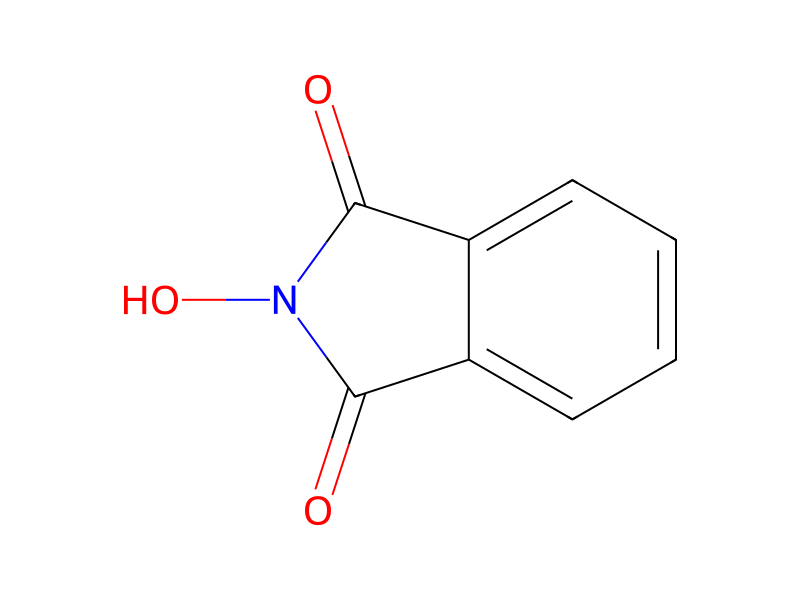
N-Hydroxyphthalimide → 5'-O-(t-Butyldimethylsilyl)-3'-O-Phthalimidothymidine

HRID 482121
Print

Reaction equation

HRID 482121 reaction equation
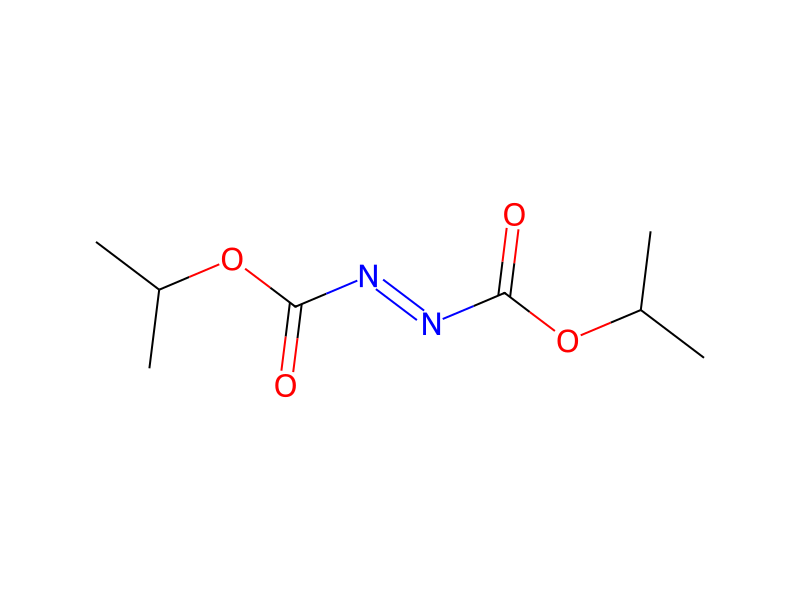
[Si:1]([O:8][CH2:9][C@H:10]1[O:14][C@@H:13]([N:15]2[CH:23]=[C:21]([CH3:22])[C:19](=[O:20])[NH:18][C:16]2=[O:17])[CH2:12][C@@H:11]1[OH:24])([C:4]([CH3:7])([CH3:6])[CH3:5])([CH3:3])[CH3:2].C1(P(C2C=CC=CC=2)C2C=CC=CC=2)C=CC=CC=1.O[N:45]1[C:49](=[O:50])[C:48]2=[CH:51][CH:52]=[CH:53][CH:54]=[C:47]2[C:46]1=[O:55].CC(OC(/N=N/C(OC(C)C)=O)=O)C>C1COCC1.CCOCC>[Si:1]([O:8][CH2:9][C@H:10]1[O:14][C@@H:13]([N:15]2[CH:23]=[C:21]([CH3:22])[C:19](=[O:20])[NH:18][C:16]2=[O:17])[CH2:12][C@@H:11]1[O:24][N:45]1[C:46](=[O:55])[C:47]2=[CH:54][CH:53]=[CH:52][CH:51]=[C:48]2[C:49]1=[O:50])([C:4]([CH3:7])([CH3:5])[CH3:6])([CH3:2])[CH3:3]
ParticipantsConditionsProcedureWorkupSources & evidenceReaction notes

Participants

7

Reactant 4

HCID 10665N-HydroxyphthalimideHCID 11776TriphenylphosphineHCID 5363146Diisopropyl azodicarboxylateHCID 102512595'-O-tert-Butyldimethylsilylthymidine

Product 1

HCID 186587155'-O-(t-Butyldimethylsilyl)-3'-O-PhthalimidothymidineYield 62%

Reagents, catalysts & solvents

2
HCID 3283Diethyl EtherSolvent2×HCID 8028TetrahydrofuranSolvent

Conditions

Temperature
0 °C

Procedure

To a solution of 5'-O-t-butyldimethylsilylthymidine [1, 21.36 g, 60 mmol, prepared according to the procedure of Nair, et al., Org. Prep. Procedures Int. 1990, 22, 57 in dry THF (750 ml)], triphenylphosphine (17.28 g, 66 mmol) and N-hydroxyphthalimide (10.74 g, 66 mmol) were added. The solution was cooled to 0° C. and diisopropylazodicarboxylate (15.15 g, 75 mmol) was added dropwise over a period of 3 hr while stirring under nitrogen. The reaction mixture was then stirred at room temperature for 12 hr. The solution was evaporated and the residue was dissolved in CH2 Cl2 (750 ml), extracted with sat. NaHCO3 (200 ml), and water (200 ml), dried (MgSO4), filtered and concentrated to furnish yellow oily residue. Silica gel column chromatography (100% hexanes, and then hexanes:Et2O gradient to 90% Et2O) of the residue gave compound 2 as a colorless glass (18.68 g, 62%); 1H NMR (CDCl3) δ 0.05 [2s, 6, (CH3)2 ], 0.91 [s, 9, (CH3)3 ], 2.0 (s, 3, CH3), 2.5-2.65 (m, 2, 2'CH2), 4.05-4.2 (m, 2, 5'CH2), 4.25-4.35 (m, 1, 4'H), 5.0 (m, 1, 3'H), 6.15 (m, 1'H), 8.6 (br s, 1, NH), and aromatic protons. Anal. Calcd. for C24H3 N3O7Si: C, 57.46;H, 6.23; N, 8.37. found : C, 57.20; H, 6.26; N, 8.27.

Workup

  1. stirringThe reaction mixture was then stirred at room temperature for 12 hr
  2. customThe solution was evaporated
  3. dissolutionthe residue was dissolved in CH2 Cl2 (750 ml)
  4. extractionextracted with sat. NaHCO3 (200 ml), and water (200 ml)
  5. dry with materialdried (MgSO4)
  6. filtrationfiltered
  7. concentrationconcentrated
  8. customto furnish yellow oily residue

Sources & evidence

ORD record
ord-2fd7300385de4d3a977b00ad76428de4
Source dataset
uspto-grants-1998_08
DOI
10.6084/m9.figshare.5104873.v1
Patent number
US05792844

Reaction notes

On this pageParticipantsConditionsProcedureWorkupSources & evidenceReaction notes