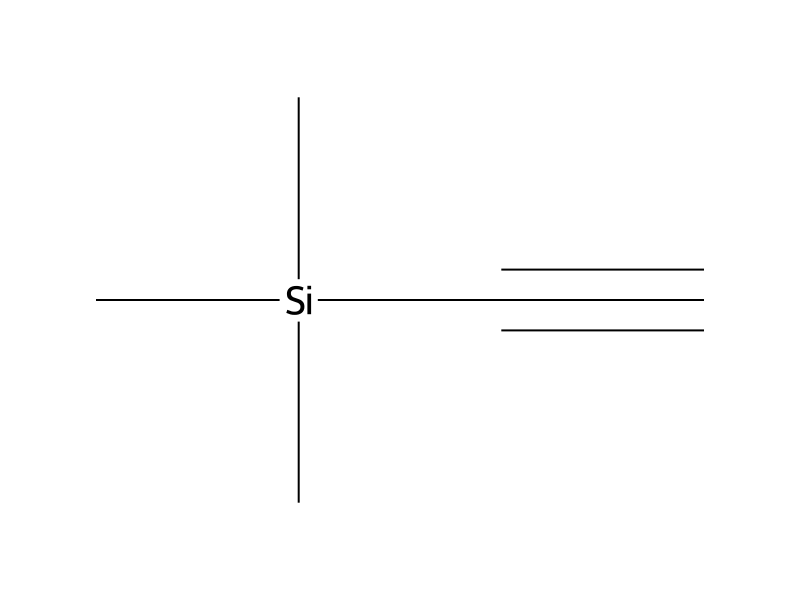
A solution of trimethylsilylacetylene (1.03 g, 29.4 mmol) in tetrahydrofuran (2 mL) was added dropwise to a cooled (water bath at ca. 15° C.) mixture of 3,5-dibromo-6-methyl-pyrazin-2-ylamine (7.48 g, 28 mmol), copper (I) iodide (1.07 g, 5.6 mmol), bis-triphenylphosphine palladium dichloride (1.97 g, 2.3 mmol), triethylamine (3.542 g, 35 mmol) and tetrahydrofuran (75 mL). The mixture was stirred under an atmosphere of argon, for 16 hours, during which time the reaction was allowed to warm to ambient temperature. The reaction mixture was poured onto water and extracted with hexanes-ethyl acetate (2:1). The organic layer was washed successively with saturated ammonium chloride solution, water, and then again with saturated ammonium chloride solution, water, then dried over anhydrous magnesium sulfate, treated with activated charcoal, filtered through celite and concentrated under reduced pressure. Purification by chromatography (silica, 20% ethyl acetate in hexanes) gave (6.19 g, 77%) of 5-bromo-6-methyl-3-trimethylsilanylethynyl-pyrazin-2-ylamine as an off white solid. 1H NMR (400 MHz, DMSO-d6) δ ppm 0.26 (s, 9H), 2.39 (s, 3H), 6.71 (br s, 2H, —NH2).