Reaction equation

[CH3:1][C:2]1([CH3:11])[O:6][C@H:5]([C:7]([O:9]C)=O)[CH2:4][O:3]1.[Cl:12][CH2:13]I.[Li+].CC([N-]C(C)C)C.[OH-].[Na+]>C1COCC1.CCOC(C)=O.C(O)(=O)C>[Cl:12][CH2:13][C:7]([C@@H:5]1[CH2:4][O:3][C:2]([CH3:1])([CH3:11])[O:6]1)=[O:9]Participants
Reactant 4
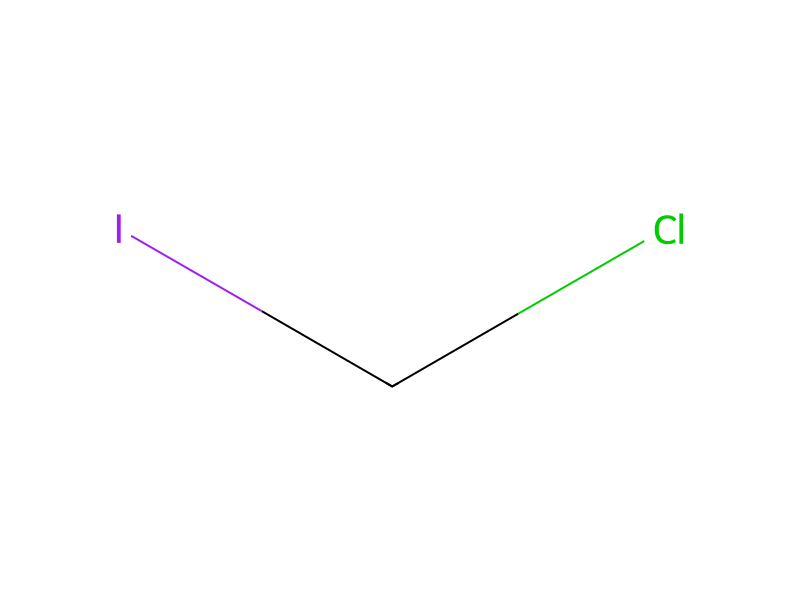



Product 1

Reagents, catalysts & solvents 3



Conditions
- Temperature
- -78 °C
Procedure
To a solution of (S)-methyl 2,2-dimethyl-1,3-dioxolane-4-carboxylate (1.3 g, 8.1 mmol) and chloroiodomethane (4.3 g, 24 mmol) in THF (50 mL) at −78° C. was added a solution of LDA (16.2 mL, 24 mmol) in portions over 10 minutes. The reaction was stirred at −78° C. for 10 minutes. To this mixture was added a 10% solution of acetic acid (50 mL) in THF at −78° C. After addition, the slurry was warmed to ambient temperature. The reaction was poured into EtOAc (200 mL) and the aqueous layer basified using 1 N NaOH. The organics were separated and washed with brine, dried over MgSO4 and concentrated in vacuo. The material was purified by chromatography using DCM as eluent to give (S)-2-chloro-1-(2,2-dimethyl-1,3-dioxolane-4-yl)ethanone (0.60 g, 3.4 mmol, 42% yield) as an oil.
Workup
- additionAfter addition
- temperaturethe slurry was warmed to ambient temperature
- customThe organics were separated
- washwashed with brine
- dry with materialdried over MgSO4
- concentrationconcentrated in vacuo
- customThe material was purified by chromatography
Sources & evidence
- ORD record
- ord-b7c4027cdc354a2db8ea9cd6545bf4b5
- Source dataset
- uspto-grants-2014_10
- Patent number
- US08853409B2
Linked notes
Loading…