HomeMCPWorkbenchSkills
HomeWorkbenchNotificationsMe
llms.txt · MCP GuidePrivacy Policy · Terms of Service · Supportv1.8.0
  1. Home
  2. /Reaction

Acetone → HCID 17842499, compound

HRID 546401
Notes
Print preview

Reaction equation

HRID 546401 reaction equation
CC(C)=[O:3].C[N+]1([O-])CCOCC1.[C:13]([O:17][C:18]([N:20]1[CH2:25][CH2:24][C:23]2[N:26]=[C:27](/[CH:29]=C/C3C=CC=CC=3)[O:28][C:22]=2[CH2:21]1)=[O:19])([CH3:16])([CH3:15])[CH3:14].S([O-])([O-])(=O)=S.[Na+].[Na+]>O1CCCC1.[Os](=O)(=O)(=O)=O.C(OCC)(=O)C.O>[C:13]([O:17][C:18]([N:20]1[CH2:25][CH2:24][C:23]2[N:26]=[C:27]([CH:29]=[O:3])[O:28][C:22]=2[CH2:21]1)=[O:19])([CH3:14])([CH3:15])[CH3:16]
ParticipantsProcedureWorkupSources & evidenceReaction notes

Participants

9

Reactant 4

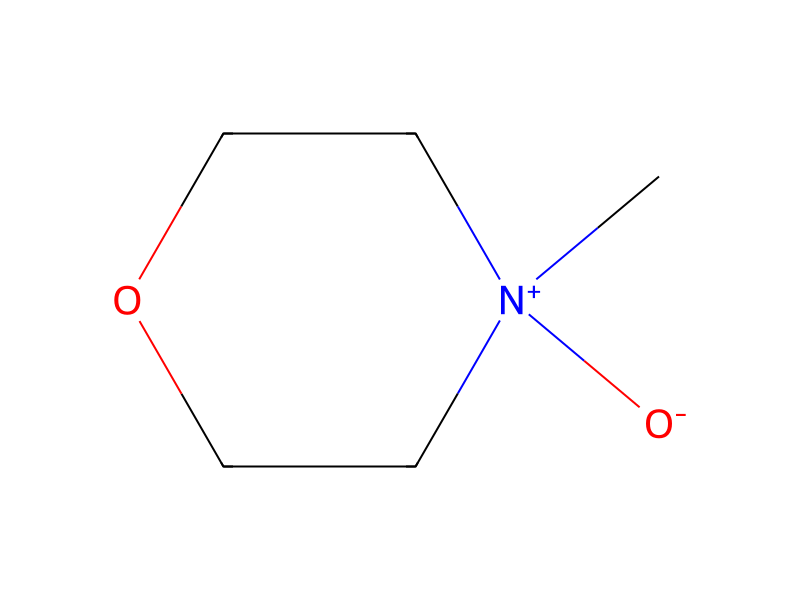
HCID 180AcetoneHCID 24477Sodium ThiosulfateHCID 82029Methyl morpholine oxideHCID 17842393HCID 17842393, compound

Product 1

HCID 17842499HCID 17842499, compound

Reagents, catalysts & solvents 4

HCID 30318Osmium Tetroxide
Catalyst
HCID 962WaterSolvent
HCID 8028TetrahydrofuranSolvent
HCID 8857Ethyl AcetateSolvent

Procedure

Acetone (8.0 ml), water (4.0 ml), N-methyl-morpholine oxide (577 mg) and osmium tetroxide (0.039 M, 3.20 ml) were added to a solution of 5-(tert-butoxy-carbonyl)-2-(trans-styryl)-4,5,6,7-tetrahydrooxazolo-[5,4-c]pyridine (803 mg) in tetrahydrofuran (16 ml) at room temperature, and the mixture was stirred overnight. Ethyl acetate (50 ml) and a 10% aqueous solution (50 ml) of sodium thiosulfate were added to the reaction mixture to separate an organic layer. The water layer was then extracted with ethyl acetate (30 ml). After the resultant organic layers were combined and dried over anhydrous sodium sulfate, the solvent was distilled off under reduced pressure. Methanol (8.0 ml), water (8.0 ml) and sodium metaperiodate (790 mg) were added to a solution of the residue in tetrahydrofuran (16 ml). After stirring for 3 hours, ethyl acetate (30 ml) and water (50 ml) were added to the reaction mixture to separate an organic layer. The water layer was extracted with ethyl acetate (20 ml). After the resultant organic layers were combined, washed with a saturated solution (50 ml) of sodium hydrogencarbonate and dried over anhydrous sodium sulfate, the solvent was distilled off under reduced pressure. The residue was purified by column chromatography on silica gel (hexane:ethyl acetate=4:1→2:1) to obtain the title compound (234 mg) as a colorless amorphous substance. Since this aldehyde was unstable, it was immediately used in the next reaction.


Workup

  1. customto separate an organic layer
  2. extractionThe water layer was then extracted with ethyl acetate (30 ml)
  3. dry with materialdried over anhydrous sodium sulfate
  4. distillationthe solvent was distilled off under reduced pressure
  5. additionMethanol (8.0 ml), water (8.0 ml) and sodium metaperiodate (790 mg) were added to a solution of the residue in tetrahydrofuran (16 ml)
  6. stirringAfter stirring for 3 hours
  7. additionethyl acetate (30 ml) and water (50 ml) were added to the reaction mixture
  8. customto separate an organic layer
  9. extractionThe water layer was extracted with ethyl acetate (20 ml)
  10. washwashed with a saturated solution (50 ml) of sodium hydrogencarbonate
  11. dry with materialdried over anhydrous sodium sulfate
  12. distillationthe solvent was distilled off under reduced pressure
  13. customThe residue was purified by column chromatography on silica gel (hexane:ethyl acetate=4:1→2:1)

Sources & evidence

ORD record
ord-b7f8a9c2eb814417a52c0215717c0e37
Source dataset
uspto-grants-2011_05
DOI
10.6084/m9.figshare.5104873.v1
Patent number
US07935824B2

Reaction notes

Loading…

On this pageParticipantsProcedureWorkupSources & evidenceReaction notes