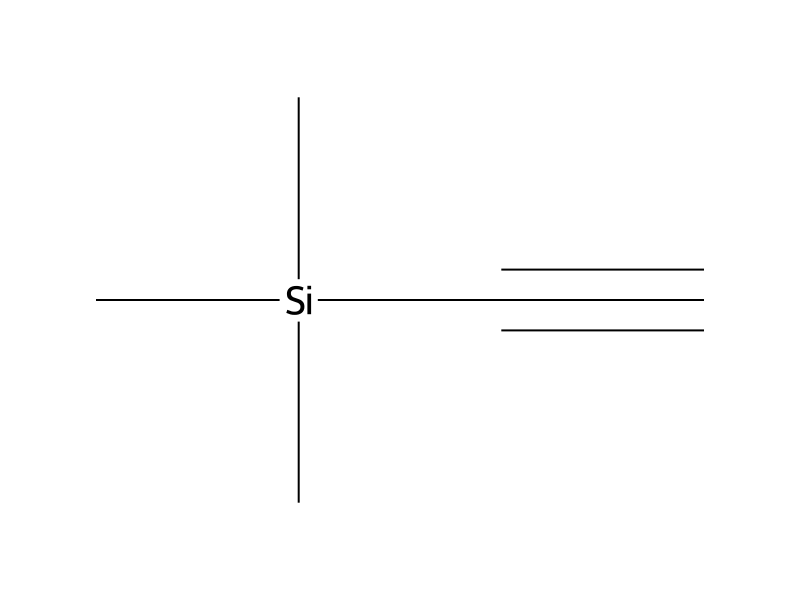
[NH2:1][C:2]1[C:7](Br)=[CH:6][CH:5]=[CH:4][N:3]=1.[CH3:9][Si:10](C#C)([CH3:12])[CH3:11].[CH:15](N(CC)C(C)C)(C)[CH3:16].O>CN1CCCC1=O.[Pd].C1(P(C2C=CC=CC=2)C2C=CC=CC=2)C=CC=CC=1.C1(P(C2C=CC=CC=2)C2C=CC=CC=2)C=CC=CC=1.C1(P(C2C=CC=CC=2)C2C=CC=CC=2)C=CC=CC=1.C1(P(C2C=CC=CC=2)C2C=CC=CC=2)C=CC=CC=1.[Cu]I>[CH3:9][Si:10]([CH3:12])([CH3:11])[C:7]1[C:2]([NH:1][C:15]#[CH:16])=[N:3][CH:4]=[CH:5][CH:6]=1To a solution of 2-amino-3-bromopyridine (5.72 g, 33.1 mmol) in N-methylpyrrolidinone (120 mL) were added trimethylsilyl acetylene (9.36 mL, 66.2 mmol), tetrakis(triphenyl phosphine) palladium (0) (1.91 g, 1.66 mmol), copper (I) iodide (630 mg, 3.31 mmol) and N,N-diisopropyl ethyl amine (11.5 mL, 66.2 mmol) at room temperature, which was stirred at 70° C for 6 hours under a nitrogen atmosphere. To the reaction solution was added water, and extracted with ethyl acetate. The organic layer was washed with water and saturated sodium chloride water, dried over anhydrous magnesium sulfate, and the solvent thereof was evaporated under a reduced pressure. The residue was purified by silica gel column chromatography (heptane:ethyl acetate=2:1) to obtain the title compound (5.94 g).