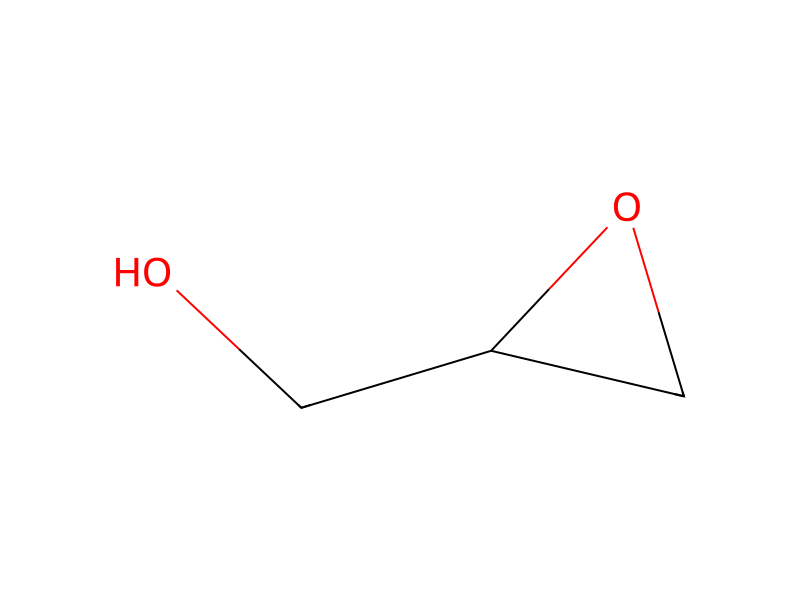
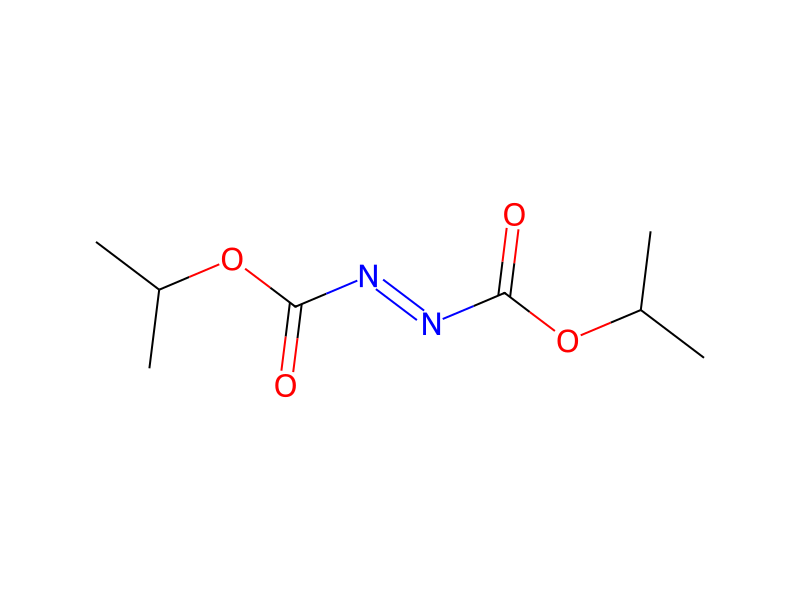
[N+:1]([C:4]1[CH:5]=[N:6][NH:7][CH:8]=1)([O-:3])=[O:2].[CH2:9]1[O:11][CH:10]1[CH2:12]O.C1(P(C2C=CC=CC=2)C2C=CC=CC=2)C=CC=CC=1.CC(OC(/N=N/C(OC(C)C)=O)=O)C>C1COCC1.C(OCC)(=O)C.O>[N+:1]([C:4]1[CH:5]=[N:6][N:7]([CH2:12][CH:10]2[CH2:9][O:11]2)[CH:8]=1)([O-:3])=[O:2]To a stirred, cooled (0° C.) solution of 4-nitro-1H-pyrazole (1.0 g, 8.8 mmol), glycidol (0.58 mL, 8.8 mmol) and triphenylphosphine (2.14 g, 10.6 mmol) in THF (40 mL) was added DIAD (2.25 mL, 11.4 mmol). After 24 h the reaction mixture was diluted with ethyl acetate and water. The aqueous layer was extracted with ethyl acetate and the combined organic layers were washed (brine), dried (anhydrous MgSO4) and concentrated. Flash chromatography (Isolera, silica, 50 g, 0-90% ethyl acetate in petroleum ether) afforded 4-nitro-1-(oxiran-2-ylmethyl)-1H-pyrazole as an off-white solid (0.71 g, 48% yield). LCMS (UPLC, low pH), RT=0.74 min.