HomeMCPSkillsWorkbenchOpenChem
HomeWorkbenchNotificationsMe
llms.txt · skill.md · MCP GuidePrivacy Policy · Terms of Service · Supportv1.8.5
  1. Home
  2. /Reaction

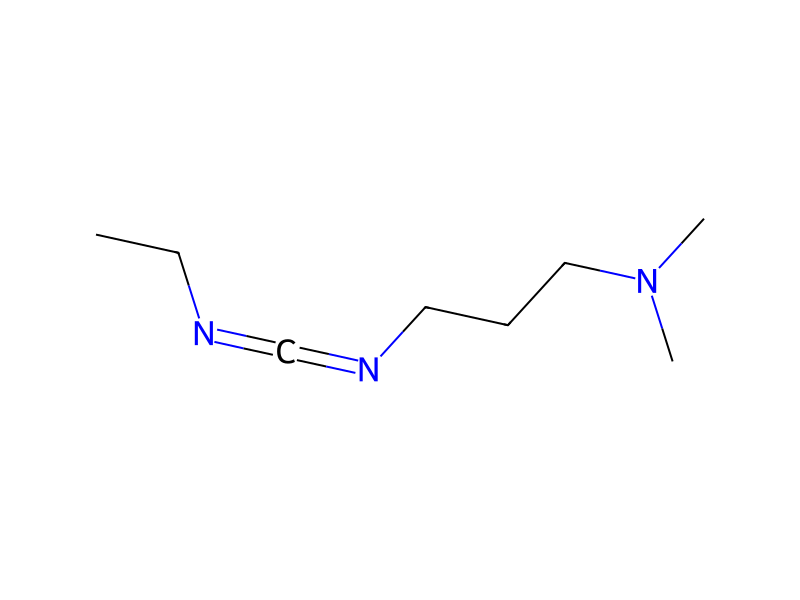
1-Ethyl-3-(3'-dimethylaminopropyl)carbodiimide → (R)-3-(Naphthalen-2-ylmethyl)piperazin-2-one

HRID 582424
Print

Reaction equation

C(OC([N:8]1[CH2:13][CH2:12][N:11](CCC2C=CC=CC=2)[C:10](=[O:22])[C@H:9]1[CH2:23][C:24]1[CH:33]=[CH:32][C:31]2[C:26](=[CH:27][CH:28]=[CH:29][CH:30]=2)[CH:25]=1)=O)(C)(C)C.C(=O)([O-])O.[Na+].C(OC(NC(C)(C)C/C=C/C(O)=O)=O)(C)(C)C.C1C=NC2N(O)N=NC=2C=1.CCN=C=NCCCN(C)C.CCN(C(C)C)C(C)C>C(O)(C(F)(F)F)=O.C(Cl)Cl>[CH:25]1[C:26]2[C:31](=[CH:30][CH:29]=[CH:28][CH:27]=2)[CH:32]=[CH:33][C:24]=1[CH2:23][C@H:9]1[NH:8][CH2:13][CH2:12][NH:11][C:10]1=[O:22]
ParticipantsProcedureWorkupSources & evidenceReaction notes

Participants

9

Reactant 6

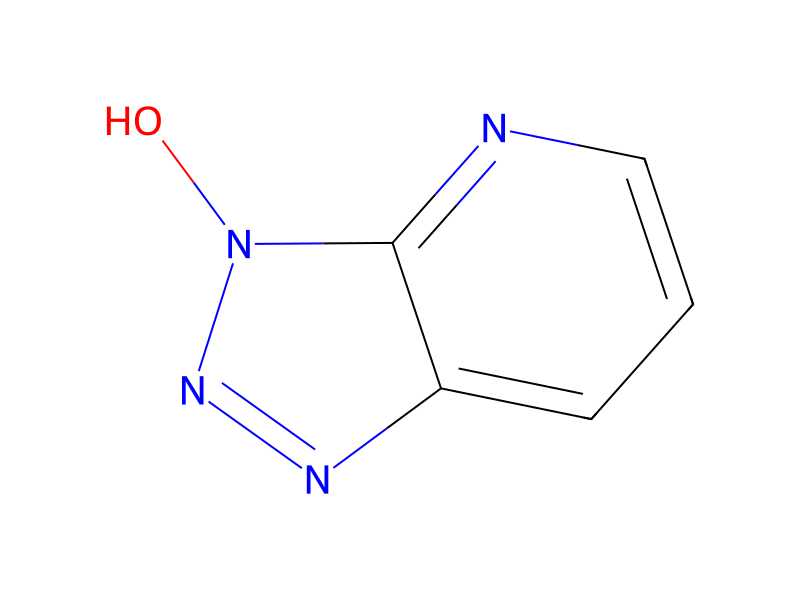
HCID 159081-Ethyl-3-(3'-dimethylaminopropyl)carbodiimideHCID 81531DiisopropylethylamineHCID 181649HOAtHCID 516892Sodium BicarbonateHCID 10670969(2R)-2-(2-naphthyl)methyl-3-oxo-4-phenethylpiperazine-1-carboxylic acid tert-butyl esterHCID 10847814(2E)-5-(tert-Butyloxycarbonylamino)-5-methylhex-2-enoic acid

Product 1

HCID 10633797(R)-3-(Naphthalen-2-ylmethyl)piperazin-2-oneYield 47.8%

Reagents, catalysts & solvents 2

HCID 6344DichloromethaneSolvent3×HCID 6422Trifluoroacetic acidSolvent

Procedure

(2R)-2-(2-naphthyl)methyl-3-oxo-4-phenethylpiperazine-1-carboxylic acid tert-butyl ester (1.2 g; 2.7 mmol) was dissolved in a mixture of TFA (5 ml) and methylene chloride (5 ml) and stirred for 15 min. Methylene chloride (30 ml) and aqueous sodium hydrogencarbonate (saturated) was added to pH 8. The mixture was extracted with methylene chloride (3×10 ml) and the combined aqueous phases were dried (magnesium sulphate) and the solvent was removed in vacuo. Part of the residue (400 mg 1.2 mmol) were added to a mixture of (2E)-5-(tert-butoxycarbonylamino)-5-methylhex-2-enoic acid (282 mg; 1.2 mmol); HOAt (158 mg; 1.2 mmol), EDAC (245 mg; 1.3 mmol) and DIEA (150 mg; 1.2 mmol) and stirred overnight. Methylene chloride (50 ml) was added and the mixture was washed with aqueous sodium hydrogensulphate (10%; 50 ml); aqueous sodium hydrogencarbonate (saturated; 50 ml) and water (50 ml). The organic phase was dried (magnesium sulphate) and the solvent removed in vacuo. The residue was chromatographed on silica (2×20 cm) and the residue was dissolved in a mixture of TFA (2 ml) and methylene chloride (2 ml) and stirred for 5 min. Methylene chloride and an aqueous solution of sodium hydrogenarbonate (sat.) was added to pH 8. The mixture was extracted with methylene chloride (2×10 ml). The organic phase was dried (magnesium sulphate) and the solvent was removed in vacuo to afford 310 mg of the title compound.

Workup

  1. extractionThe mixture was extracted with methylene chloride (3×10 ml)
  2. dry with materialthe combined aqueous phases were dried (magnesium sulphate)
  3. customthe solvent was removed in vacuo
  4. washthe mixture was washed with aqueous sodium hydrogensulphate (10%; 50 ml)
  5. dry with materialThe organic phase was dried (magnesium sulphate)
  6. customthe solvent removed in vacuo
  7. customThe residue was chromatographed on silica (2×20 cm)
  8. dissolutionthe residue was dissolved in a mixture of TFA (2 ml) and methylene chloride (2 ml)
  9. stirringstirred for 5 min
  10. additionMethylene chloride and an aqueous solution of sodium hydrogenarbonate (sat.) was added to pH 8
  11. extractionThe mixture was extracted with methylene chloride (2×10 ml)
  12. dry with materialThe organic phase was dried (magnesium sulphate)
  13. customthe solvent was removed in vacuo

Sources & evidence

ORD record
ord-d4640e8f09014896899b1adbbe661c66
Source dataset
uspto-grants-1999_07
DOI
10.6084/m9.figshare.5104873.v1
Patent number
US05922770

Reaction notes

On this pageParticipantsProcedureWorkupSources & evidenceReaction notes