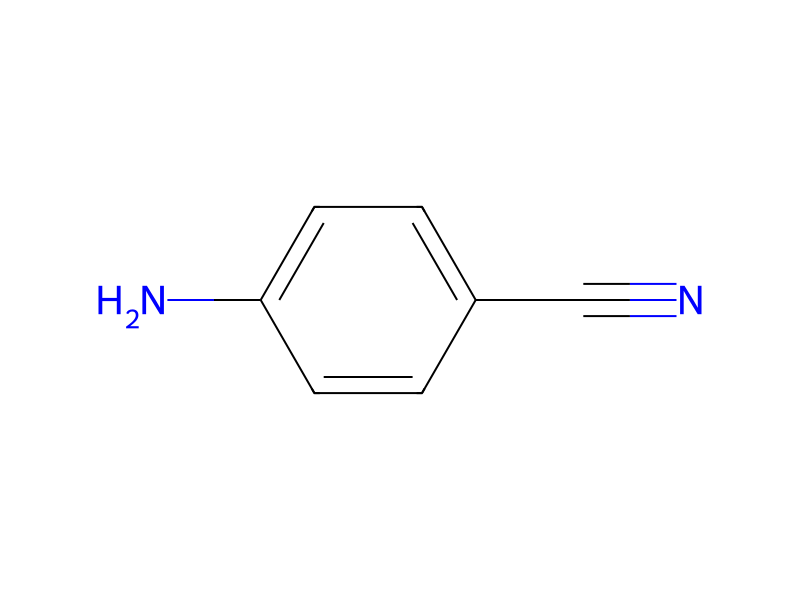
Cl[C:2]1[N:7]=[C:6]([O:8][CH3:9])[CH:5]=[CH:4][N:3]=1.[NH2:10][C:11]1[CH:18]=[CH:17][C:14]([C:15]#[N:16])=[CH:13][CH:12]=1.C1(C)C=CC(S(O)(=O)=O)=CC=1.C(=O)(O)[O-].[Na+]>C(O)(C)C.O1CCOCC1>[CH3:9][O:8][C:6]1[CH:5]=[CH:4][N:3]=[C:2]([NH:10][C:11]2[CH:18]=[CH:17][C:14]([C:15]#[N:16])=[CH:13][CH:12]=2)[N:7]=11,4-Dioxane (100 ml) was added to a mixture of 2-chloro-4-methoxypyrimidine (20 gm), 4-aminobenzonitrile (16.33 gm) and p-toluene sulfonic acid (42.12 gm). The mixture was then heated to 100 to 110° C. and stirred for 14 hours. The solution was then cooled to room temperature and basified with saturated sodium bicarbonate solution. The layers were separated and the aqueous layer was extracted with ethyl acetate. The combined organic layers were washed with water and then concentrated to obtain a residual solid. The residual solid obtained was slurried in isopropyl alcohol at room temperature for 30 minutes and filtered. The solid obtained was then dried to give 17.3 gm of 4-(4-methoxypyrimidin-2-ylamino)benzonitrile.