Reaction equation

[NH:1]1[CH2:6][CH2:5][NH:4][CH2:3][CH2:2]1.ClC[Si:9]([O:16][CH2:17][CH3:18])([O:13][CH2:14][CH3:15])[O:10][CH2:11][CH3:12].[SiH4].Cl.N1CCNC[CH2:22]1>C1(C)C(C)=CC=CC=1>[CH2:14]([O:13][Si:9]([O:16][CH2:17][CH3:18])([O:10][CH2:11][CH3:12])[N:1]1[CH2:6][CH2:5][NH:4][CH2:3][CH:2]1[CH3:22])[CH3:15]Participants
Reactant 4


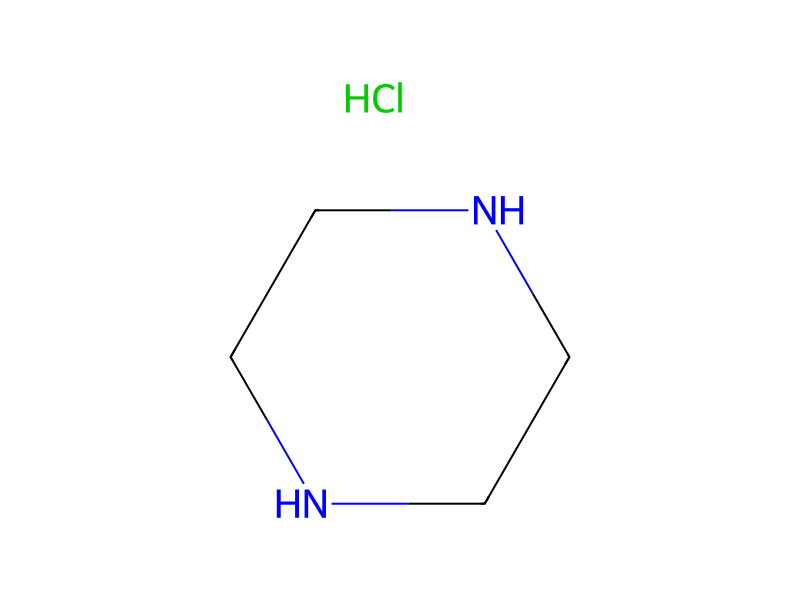

Product 1

Reagents, catalysts & solvents 1

Conditions
- Temperature
- 110 °C
Procedure
905.3 g (10.5 mol) of piperazine and 945 ml of xylene (anhydrous) as solvent are charged to a 4 liter 4-neck flask and subsequently innertized with nitrogen. The batch is heated to a temperature of 100° C., in the course of which the piperazine dissolves completely. Added dropwise at this temperature are 446.3 g (2.1 mol) of chloromethyltriethoxysilane, over the course of 1 h with thorough stirring. Following the addition of about ⅓ of the amount of silane, piperazine hydrochloride is precipitated as a salt, but the suspension remains readily stirrable until the end of the reaction. After the end of the addition, stirring is continued for a further 15 min. Subsequently the reaction mixture is heated to 110° C. and the precipitated salt is filtered off on a preheated filter.
Workup
- dissolutiondissolves completely
- additionAdded dropwise at this temperature
- customover the course of 1 h
- customis precipitated as a salt
- customthe suspension remains readily stirrable until the end of the reaction
- additionAfter the end of the addition
- filtrationthe precipitated salt is filtered off on a preheated filter
Sources & evidence
- ORD record
- ord-045ff6c78d274fb1a672d1d1591d8ae4
- Source dataset
- uspto-grants-2011_03
- Patent number
- US07906179B2
Linked notes
Loading…