HomeMCPWorkbenchSkills
HomeWorkbenchNotificationsMe
llms.txt · MCP GuidePrivacy Policy · Terms of Service · Supportv1.8.0
  1. Home
  2. /Reaction

Dimethylformamide → HCID 14477042, compound

HRID 620936
Notes
Print preview

Reaction equation

HRID 620936 reaction equation
[F:1][C:2]([CH:5]([C:9]1[CH:14]=CC=CC=1)[C:6](O)=O)([F:4])[F:3].[C:15](Cl)(=O)[C:16](Cl)=O.[C:21]1(=[O:28])[CH2:26][CH2:25][CH2:24][C:23](=[O:27])[CH2:22]1.[CH2:29](N(CC)CC)C.CN(C)[CH:38]=[O:39]>ClCCl.[C-]#N.[Zn+2].[C-]#N.C(#N)C>[F:4][C:2]([F:1])([F:3])[C:5]1[CH:6]=[CH:29][C:15]([CH2:16][C:38]([CH:22]2[C:23](=[O:27])[CH2:24][CH2:25][CH2:26][C:21]2=[O:28])=[O:39])=[CH:14][CH:9]=1
ParticipantsProcedureWorkupSources & evidenceReaction notes

Participants

9

Reactant 5

HCID 6228DimethylformamideHCID 8471TriethylamineHCID 104341,3-CyclohexanedioneHCID 65578Oxalyl chlorideHCID 2872493,3,3-Trifluoro-2-phenylpropanoic acid

Product 1

HCID 14477042HCID 14477042, compound

Reagents, catalysts & solvents 3

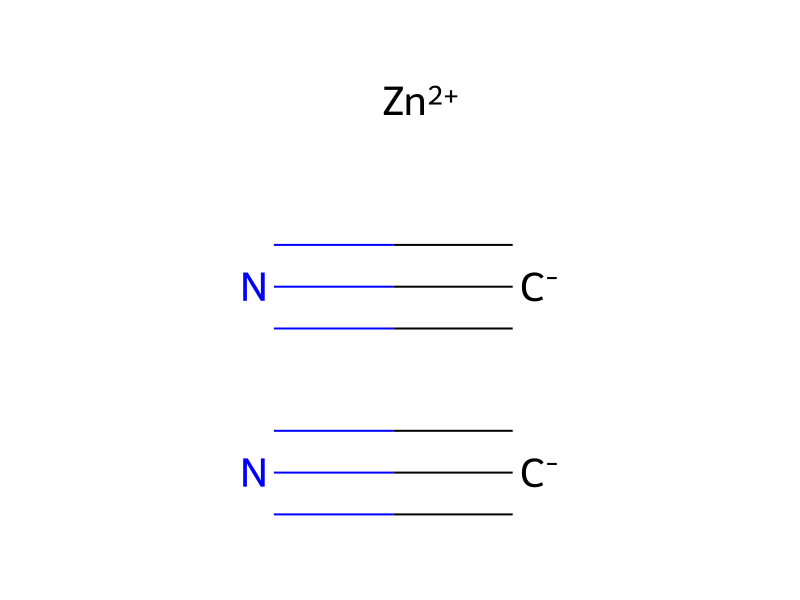
HCID 11186Zinc cyanide (Zn(CN)2)Catalyst
HCID 6342AcetonitrileSolvent
HCID 6344DichloromethaneSolvent

Procedure

To a solution of 10 g of trifluoromethylphenylacetic acid (0.049 mole) dissolved in 100 ml dichloromethane and 0.5 ml dimethylformamide was added 8.9 g (0.07 mole) of oxalyl chloride dropwise over 1/2 hour. After the evolution of gases had ceased, the liquid was roto-evaporated. To the residue was added 5.75 g (0.049 mole) of zinc cyanide and approximately 100 ml of acetonitrile. The mixture was stirred for 15 minutes at room temperature, and then 5.5 g (0.49 mole) of 1,3-cyclohexanedione was added, followed by dropwise addition of 6.06 g (0.06 mole) of triethylamine. After the exothermic reaction had subsided, the mixture was then refluxed for one hour. Thereafter it was cooled to room temperature and the acetonitrile was removed in vacuo. To the residue was added 2N hydrochloric acid, and the mixture was extracted with ether, after which the organic layer was washed with 5% potassium carbonate. The aqueous layer was acidified and the product obtained which was 2.4 g of substance, identified by suitable analytical techniques as being the subject compound.


Workup

  1. customthe liquid was roto-evaporated
  2. customAfter the exothermic reaction
  3. temperaturethe mixture was then refluxed for one hour
  4. temperatureThereafter it was cooled to room temperature
  5. customthe acetonitrile was removed in vacuo
  6. additionTo the residue was added 2N hydrochloric acid
  7. extractionthe mixture was extracted with ether
  8. washafter which the organic layer was washed with 5% potassium carbonate
  9. customthe product obtained which

Sources & evidence

ORD record
ord-dcb10bffc03c43b486bdd3e4532d07f5
Source dataset
uspto-grants-1989_04
DOI
10.6084/m9.figshare.5104873.v1
Patent number
US04822905

Reaction notes

Loading…

On this pageParticipantsProcedureWorkupSources & evidenceReaction notes