Reaction equation

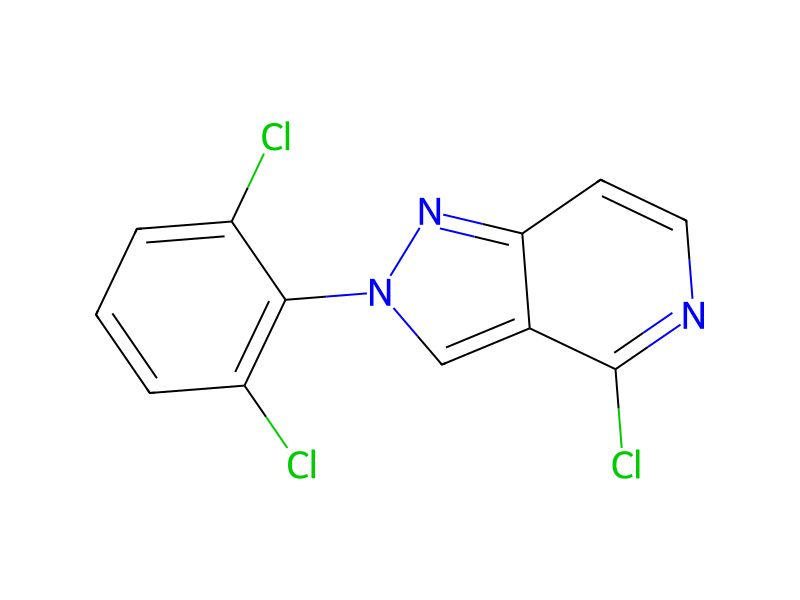
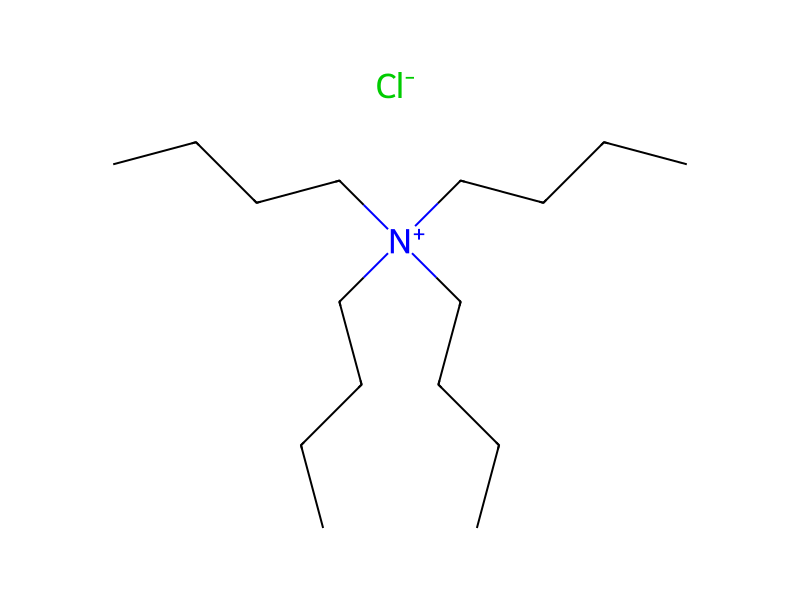
[Cl:1][C:2]1[CH:7]=[CH:6][CH:5]=[C:4]([Cl:8])[C:3]=1[N:9]1[CH:18]=[C:12]2[CH:13]=[N+:14]([O-])[CH:15]=[CH:16][C:11]2=[N:10]1.P(Cl)(Cl)([Cl:21])=O.C(=O)([O-])O.[Na+]>[Cl-].C([N+](CCCC)(CCCC)CCCC)CCC.C(OCC)(=O)C>[Cl:21][C:13]1[C:12]2=[CH:18][N:9]([C:3]3[C:2]([Cl:1])=[CH:7][CH:6]=[CH:5][C:4]=3[Cl:8])[N:10]=[C:11]2[CH:16]=[CH:15][N:14]=1Participants
Reactant 3



Product 1
Reagents, catalysts & solvents 2

Conditions
- Temperature
- 80 °C
Procedure
2-(2,6-Dichlorophenyl)-2H-pyrazolo[4,3-c]pyridine 5-oxide (1.12 g, 4 mmol) was slowly added to phosphorous oxychloride (8 mL). Tetrabutylammonium chloride (1.11 g, 4 mmol) was then added. The reaction mixture was heated at 80° C. for 5 hours and then cooled to room temperature. The reaction was poured into a mixture of ethyl acetate and sodium hydrogen carbonate (sat. aq.) and the layers were partitioned. The organic layer was washed with sodium hydrogen carbonate (sat. aq.) and brine, dried over anhydrous sodium sulfate, and concentrated under reduced pressure. The resultant residue was purified by silica gel flash chromatography (20% ethyl acetate in cyclohexane) to afford the title compound as a white solid (590 mg, 49% yield). 1H NMR (400 MHz, DMSO-d6): δ 9.33 (d, J=1.0 Hz, 1H), 8.11 (d, J=6.0 Hz, 1H), 7.83 (d, J=1.3 Hz, 1H), 7.82-7.81 (m, 1H), 7.75-7.71 (m, 1H). LCMS (Method D): RT=3.42 min, m/z: 298 [M+H+].
Workup
- temperaturecooled to room temperature
- customthe layers were partitioned
- washThe organic layer was washed with sodium hydrogen carbonate (sat. aq.) and brine
- dry with materialdried over anhydrous sodium sulfate
- concentrationconcentrated under reduced pressure
- customThe resultant residue was purified by silica gel flash chromatography (20% ethyl acetate in cyclohexane)
Sources & evidence
- ORD record
- ord-4dd650f0ed7046cb95d4f42a57c97827
- Source dataset
- uspto-grants-2016_04
- Patent number
- US09309240B2
Linked notes
Loading…