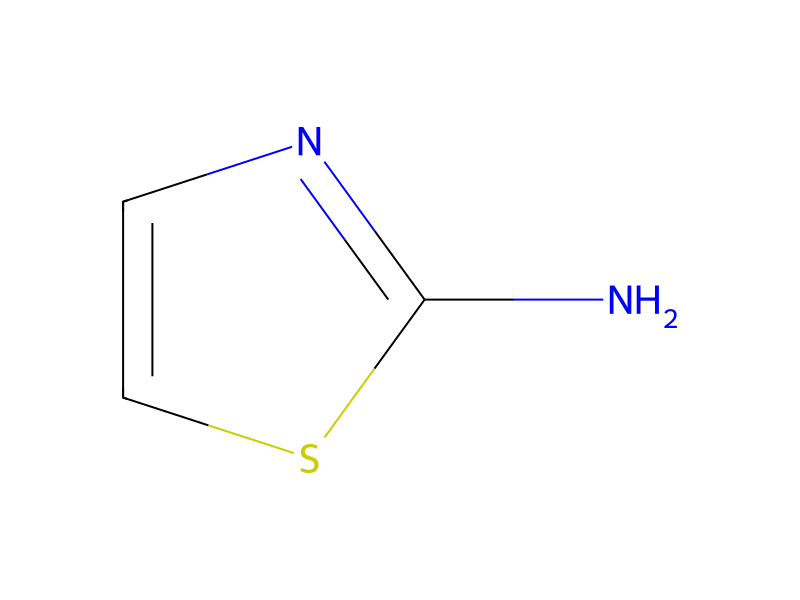
Prepared according to general procedure (I). To a mixture of N-acetyl-piperidone (1.4 g) and cyclopentylamine (0.9 g) and molecular sieves (5 g) in THF (8 mL) and methanol (8 mL) was added sodium cyanoborohydride (2.1 g) and the reaction was stirred overnight at room temperature. Insoluble material was removed by filtration and after removal of solvent in vacuo the crude secondary amine (0.57 g) was isolated. The urea coupling was performed in an similar manner to the synthesis of 1,1-dicyclopentyl-3-thiazol-2-yl-urea using carbonyl imidazole and 2-aminothiazole as starting material.