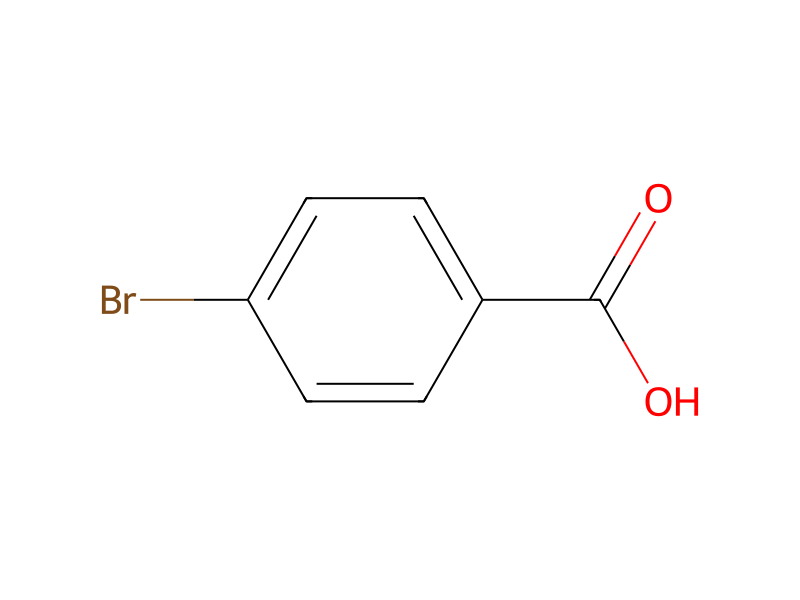
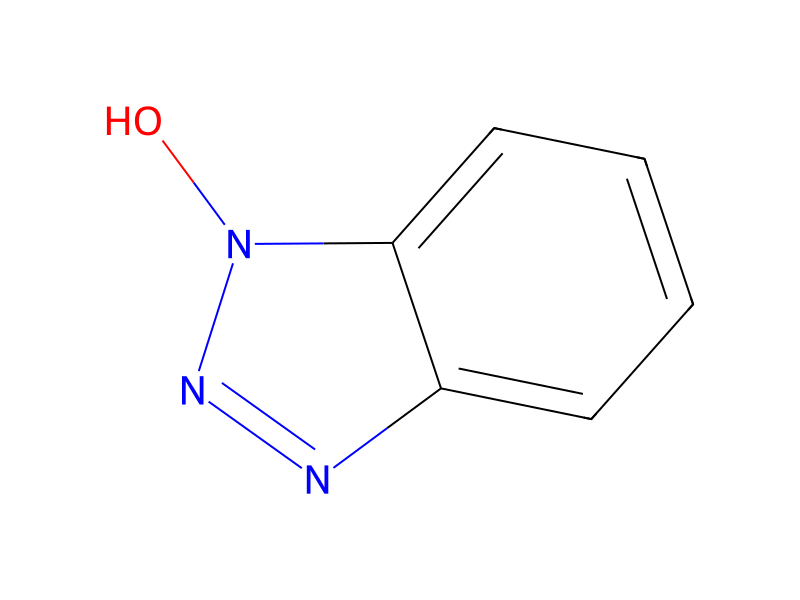
[Br:1][C:2]1[CH:10]=[CH:9][C:5]([C:6]([OH:8])=O)=[CH:4][CH:3]=1.Cl.[C:12]1([CH:18]2[CH2:23][CH2:22][CH2:21][NH:20][CH2:19]2)[CH:17]=[CH:16][CH:15]=[CH:14][CH:13]=1.C(Cl)CCl.C1C=CC2N(O)N=NC=2C=1.CCN(C(C)C)C(C)C>CN(C=O)C.O>[Br:1][C:2]1[CH:3]=[CH:4][C:5]([C:6]([N:20]2[CH2:21][CH2:22][CH2:23][CH:18]([C:12]3[CH:17]=[CH:16][CH:15]=[CH:14][CH:13]=3)[CH2:19]2)=[O:8])=[CH:9][CH:10]=1The above compound could be made in the following manner, analogous to Example 60. 1 eq. of p-Bromobenzoic acid could be combined with 1 eq. 3-Phenylpiperidine HCl, 1.1 equivalents EDC, 1.1 equivalents HOBt and 2.2 equivalents Hunig's Base in DMF (concentration of 1 mL of DMF/mmol acid) would be stirred at room temperature overnight. The solution would then be diluted with water and extracted with ethyl acetate. The organic layers would then be combined and washed with water, aqueous saturated sodium bicarbonate solution, 1N HCl and brine. The organic layers would be dried with sodium sulfate, filtered and concentrated. Purification would be done with flash chromatography to afford product.