Reaction equation

[NH:1]1[C:9]2[C:4](=[CH:5][CH:6]=[CH:7][CH:8]=2)[CH:3]=[CH:2]1.[Li+].C[Si]([N-][Si](C)(C)C)(C)C.[CH3:20][N:21]1[C:25](=[O:26])[C:24](Br)=[C:23]([Br:28])[C:22]1=[O:29].Cl>O1CCCC1>[Br:28][C:23]1[C:22](=[O:29])[N:21]([CH3:20])[C:25](=[O:26])[C:24]=1[C:3]1[C:4]2[C:9](=[CH:8][CH:7]=[CH:6][CH:5]=2)[NH:1][CH:2]=1Participants

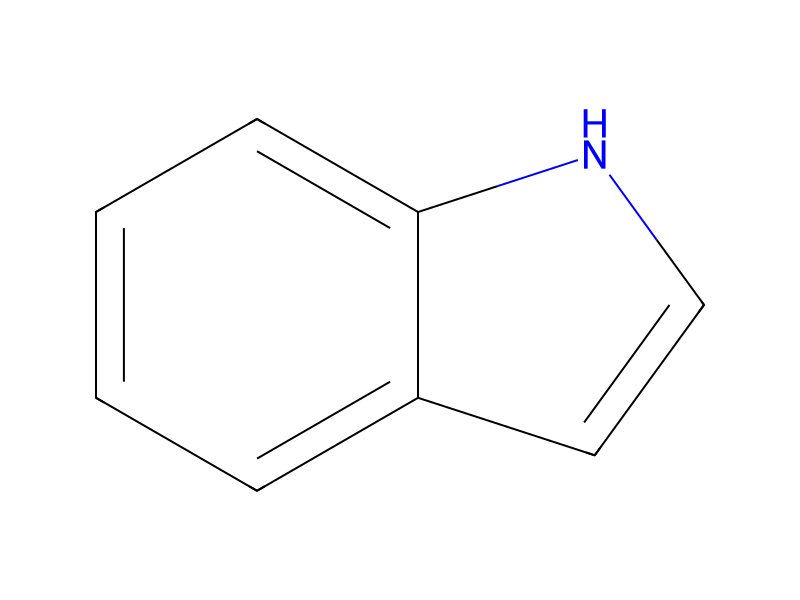




Procedure
A solution containing 1.445 g of indole, dissolved in 29 ml of dry tetrahydrofuran, is held between −20 and −10° C. under argon, and then 26 ml of LiHMDS (1M in hexane) are added, dropwise, over the course of 15 minutes. After 45 minutes at −10° C., the solution is diluted with 15 ml of additional tetrahydrofuran, and a solution containing 2 g of N-methyl-2,3-dibromomaleimide dissolved in 17 ml of tetrahydrofuran is added dropwise over the course of 30 minutes. After 15 minutes at −10° C. and 15 minutes at 0° C., the reaction is stopped by the addition, at 0° C., of 50 ml of 0.3N hydrochloric acid solution. The reaction mixture is extracted with ethyl acetate, and the organic phases are washed with saturated NaCl solution, dried over MgSO4 and then evaporated under reduced pressure. The desired product is precipitated using methanol.
Workup
- customis held between −20 and −10° C. under argon
- customover the course of 15 minutes
- additionis added dropwise over the course of 30 minutes
- waitAfter 15 minutes at −10° C.
- extractionThe reaction mixture is extracted with ethyl acetate
- washthe organic phases are washed with saturated NaCl solution
- dry with materialdried over MgSO4
- customevaporated under reduced pressure
- customThe desired product is precipitated
Sources & evidence
- ORD record
- ord-bfd87c0999824d1fa8392d94a5e2a949
- Source dataset
- uspto-grants-2006_02
- Patent number
- US07001906B2
Linked notes
Loading…