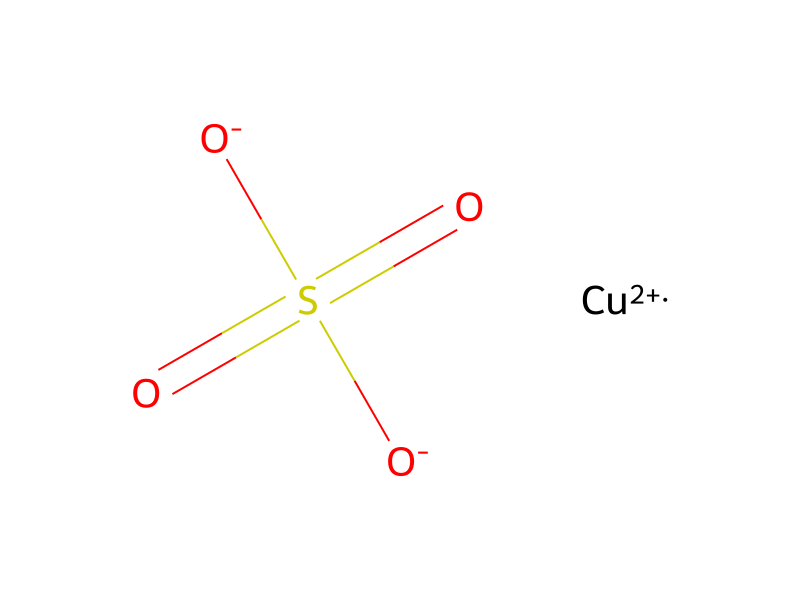
[NH2:1][C:2]1[CH:7]=[CH:6][CH:5]=[C:4]([CH:8]([CH3:10])[CH3:9])[C:3]=1[OH:11].[Br:12][C:13]1[CH:18]=[CH:17][C:16]([N:19]=[C:20]=S)=[CH:15][CH:14]=1.C(N(CC)CC)C.C(OCC)(=O)C>O1CCCC1.S([O-])([O-])(=O)=O.[Cu+2]>[Br:12][C:13]1[CH:18]=[CH:17][C:16]([NH:19][C:20]2[O:11][C:3]3[C:4]([CH:8]([CH3:9])[CH3:10])=[CH:5][CH:6]=[CH:7][C:2]=3[N:1]=2)=[CH:15][CH:14]=1A solution of 2-amino-6-isopropylphenol (0.354 g, 2.34 mmol) and 4-bromophenylisothiocyanate (0.500 g, 2.34 mmol) in tetrahydrofuran (35 mL) was stirred at room temperature for 3 h. Anhydrous copper (II) sulfate (3.361 g, 21.06 mmol), silica gel (3.361 g), and triethylamine (0.236 g, 0.33 mL, 2.34 mmol) were added, and the mixture stirred at room temperature for 18 h. The reaction mixture was filtered through a pad of Celite and the washed with diethyl ether (3×50 mL). The filtrate was concentrated to afford a brown solid. The solid material was applied to silica gel and passed through a pad a silica gel along with ethyl acetate (3×50 mL). The filtrate was concentrated to afford N2-(4-bromophenyl)-7-isopropyl-1,3-benzoxazol-2-amine (0.702 g, 91%). RP-HPLC Rt 18.066 min, 86% purity (5% to 85% acetonitrile/0.1M aqueous ammonium acetate, buffered to pH 4.5, over 20 min at 1 mL/min; λ=254 nm; Deltapak C18, 300 Å, 5 μm, 150×3.9 mm column); m/z 333 (MH+).