HomeMCPWorkbenchSkills
HomeWorkbenchNotificationsMe
llms.txt · MCP GuidePrivacy Policy · Terms of Service · Supportv1.8.0
  1. Home
  2. /Reaction

Cesium carbonate → 1-Boc-4-methylpiperazine

HRID 912163
Notes
Print preview

Reaction equation

HRID 912163 reaction equation
[C:1]([N:8]([C:16]1[C:21](F)=CC(Br)=CC=1F)[C:9]([O:11][C:12]([CH3:15])([CH3:14])[CH3:13])=[O:10])(OC(C)(C)C)=O.COC1C=CC=C(OC)C=1C1C=CC=CC=1P(C1CCCCC1)C1CCCCC1.C(=O)([O-])[O-].[Cs+].[Cs+].[CH3:60][N:61]1CCNC[CH2:62]1>C1(C)C=CC=CC=1.C([O-])(=O)C.[Pd+2].C([O-])(=O)C.C(OCC)(=O)C>[C:9]([N:8]1[CH2:16][CH2:21][N:61]([CH3:62])[CH2:60][CH2:1]1)([O:11][C:12]([CH3:15])([CH3:14])[CH3:13])=[O:10]
ParticipantsConditionsProcedureWorkupSources & evidenceReaction notes

Participants

8

Reactant 4

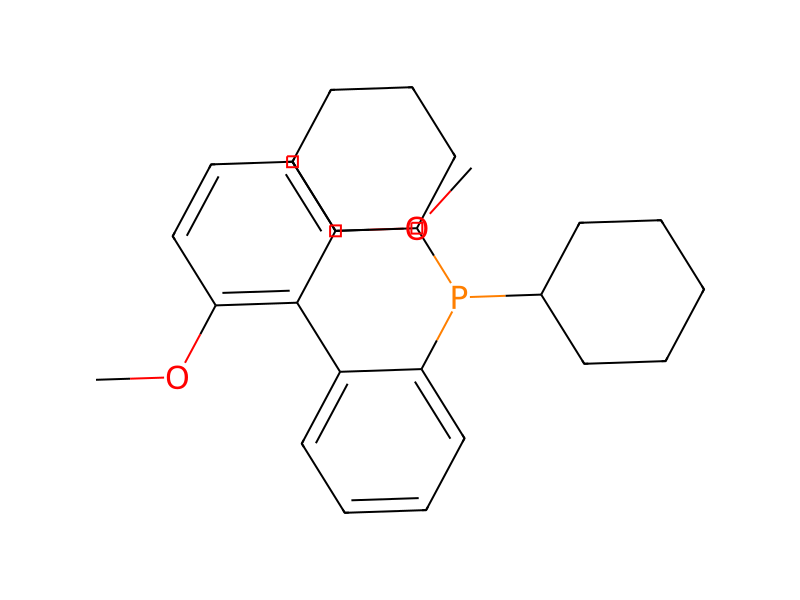
HCID 10796Cesium carbonateHCID 531671-MethylpiperazineHCID 112698722-Dicyclohexylphosphino-2',6'-dimethoxybiphenylHCID 59244410N,N-di-Boc-4-bromo-2,6-difluoro-phenylamine

Product 1

HCID 114013941-Boc-4-methylpiperazine

Reagents, catalysts & solvents 3

HCID 167845
palladium(II) acetate
Catalyst
HCID 1140TolueneSolvent
HCID 8857Ethyl AcetateSolvent

Conditions

Temperature
100 °C

Procedure

To a solution of N,N-di-Boc-4-bromo-2,6-difluoro-phenylamine (5.59 g, 13.7 mmol) obtained in Step A in Example 1-D-18, palladium acetate (308 mg, 1.37 mmol), S-Phos (1.12 g, 27.4 mmol) and cesium carbonate (8.93 g, 27.4 mmol) in toluene (100 ml), 1-methyl-piperazine (6.08 ml, 54.8 mmol) was added, followed by stirring at 100° C. for 16 hours. After cooling to room temperature, 100 ml of ethyl acetate was added, which was washed with water (100 ml) and saturated aqueous ammonium chloride solution (100 ml). The organic layer was dried over sodium sulfate, and subsequently the solvent was distilled off under reduced pressure. This was purified by silica gel column chromatography (dichloromethane/methanol=50/1 to 25/1), whereby a mixture of N-Boc-4-(4-methyl-piperazin-1-yl)-2,6-difluoro-phenylamine and 1-Boc-4-methylpiperazine was obtained. This was dissolved in ethyl acetate (60 ml), and 6M−HCl aqueous solution (30 ml) was added, followed by stirring at room temperature for 3 hours. To this, 5M-NaOH aqueous solution was added to adjust the pH to 8, followed by extraction with ethyl acetate (100 ml×2), and the organic layer was washed with brine. After the organic layer was dried over sodium sulfate, the solvent was distilled off under reduced pressure. This was purified by silica gel column chromatography (dichloromethane/methanol=50/1 to 20/1), to obtain the desired compound as a brown solid (2.16 g, 69%).


Workup

  1. temperatureAfter cooling to room temperature
  2. washwhich was washed with water (100 ml) and saturated aqueous ammonium chloride solution (100 ml)
  3. dry with materialThe organic layer was dried over sodium sulfate
  4. distillationsubsequently the solvent was distilled off under reduced pressure
  5. customThis was purified by silica gel column chromatography (dichloromethane/methanol=50/1 to 25/1), whereby
  6. additiona mixture of N-Boc-4-(4-methyl-piperazin-1-yl)-2,6-difluoro-phenylamine

Sources & evidence

ORD record
ord-a98f13a469fc419db3339e7f2424dca3
Source dataset
uspto-grants-2011_09
DOI
10.6084/m9.figshare.5104873.v1
Patent number
US08022205B2

Reaction notes

Loading…

On this pageParticipantsConditionsProcedureWorkupSources & evidenceReaction notes