HomeMCPWorkbenchSkills
HomeWorkbenchNotificationsMe
llms.txt · MCP GuidePrivacy Policy · Terms of Service · Supportv1.8.3
  1. Home
  2. /Reaction

Potassium Carbonate → 5,6a,8,11-Tetraazabenzo[a]fluorene

HRID 921049
Print

Reaction equation

HRID 921049 reaction equation
Cl[C:2]1[C:11]2[C:6](=[CH:7][CH:8]=[CH:9][CH:10]=2)[N:5]=[CH:4][N:3]=1.Br[C:13]1[CH:14]=[N:15][C:16](C(C)(C)C)=[CH:17][C:18]=1[NH2:19].C(=O)([O-])[O-].[K+].[K+].C1(P(C2C=CC=CC=2)C2C=CC=CC=2)C=CC=CC=1>CC1C=CC=CC=1C.C([O-])(=O)C.[Pd+2].C([O-])(=O)C>[CH:10]1[C:11]2[C:2]3[N:3]([CH:4]=[N:5][C:6]=2[CH:7]=[CH:8][CH:9]=1)[C:17]1[C:18](=[CH:13][CH:14]=[N:15][CH:16]=1)[N:19]=3
ParticipantsProcedureWorkupSources & evidenceReaction notes

Participants

7

Reactant 4

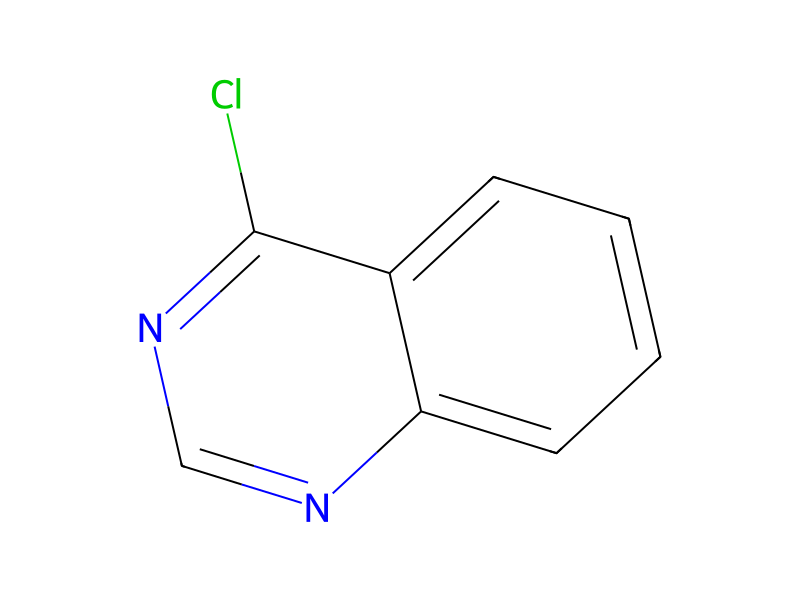
HCID 11430Potassium CarbonateHCID 11776TriphenylphosphineHCID 788644-Chloroquinazoline2×HCID 679958335-Bromo-2-tert-butylpyridin-4-amine

Product 1

HCID 866802585,6a,8,11-Tetraazabenzo[a]fluorene

Reagents, catalysts & solvents 2

HCID 167845
palladium(II) acetate
Catalyst
HCID 7237O-XyleneSolvent

Procedure

A vigorously stirred mixture of 100 mmol of the 4-chloroquinazoline derivative, 29.8 g (130 mmol) of 3-bromo-4-amino-6-tert-butylpyridine (S40), 35.0 g (250 mmol) of potassium carbonate, 200 g of glass beads (diameter 3 mm), 2.6 g (10 mmol) of triphenylphosphine and 450 mg (2 mmol) of palladium(II) acetate in 500 ml of o-xylene is heated under reflux until the 4-chloroquinazoline derivative has been consumed (typically 16 h). Aft er cooling, the solid is filtered off via a silica-gel bed, rinsed with 1000 ml of THF, and the filtrate is evaporated to dryness. The residue is dissolved in 75 ml of ethyl acetate at the boiling temperature, and 250 ml of n-heptane are slowly added. After cooling, the solid which has crystallised out is filtered off with suction, washed twice with 50 ml of n-heptane each time and dried in vacuo and subsequently passed through a silica-gel column (heptane:ethyl acetate, 3:1 vv). The solids obtained in this way are freed from low-boiling components and non-volatile secondary components by sublimation (p about 1×10⁻⁵ mbar, T about 150-230° C.). Purity according to 1H-NMR typically >99.5%.


Workup

  1. temperatureis heated
  2. customhas been consumed (typically 16 h)
  3. temperatureAft er cooling
  4. filtrationthe solid is filtered off via a silica-gel bed
  5. washrinsed with 1000 ml of THF
  6. customthe filtrate is evaporated to dryness
  7. dissolutionThe residue is dissolved in 75 ml of ethyl acetate at the boiling temperature, and 250 ml of n-heptane
  8. additionare slowly added
  9. temperatureAfter cooling
  10. customthe solid which has crystallised out
  11. filtrationis filtered off with suction
  12. washwashed twice with 50 ml of n-heptane each time
  13. customdried in vacuo
  14. customThe solids obtained in this way
  15. customare freed from low-boiling components and non-volatile secondary components by sublimation (p about 1×10⁻⁵ mbar, T about 150-230° C.)

Sources & evidence

ORD record
ord-d80e39617c0843b2ad381082090cb116
Source dataset
uspto-grants-2016_03
DOI
10.6084/m9.figshare.5104873.v1
Patent number
US09273080B2

Reaction notes

On this pageParticipantsProcedureWorkupSources & evidenceReaction notes