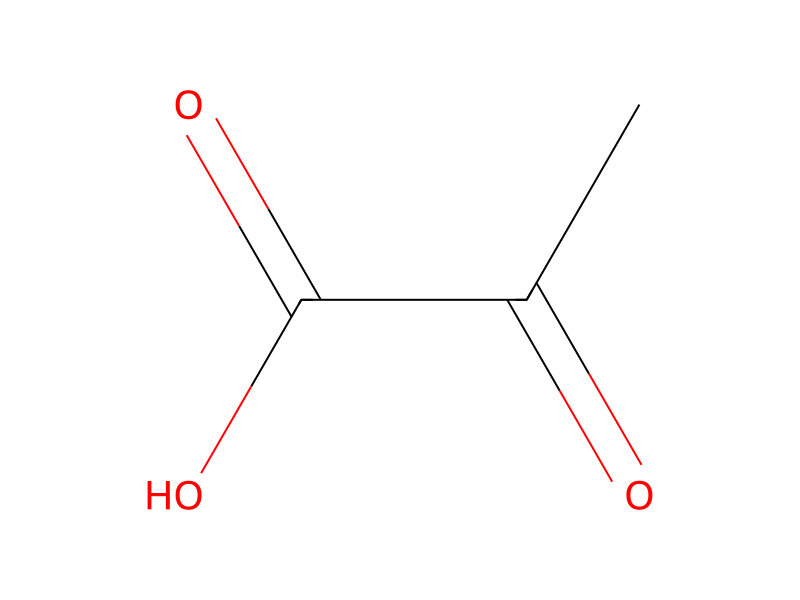
[NH2:1][C:2]1[C:3](=[O:11])[N:4]([CH3:10])[N:5]=[C:6]([Cl:9])[C:7]=1I.[C:12]([OH:17])(=[O:16])[C:13]([CH3:15])=O.N12CCN(CC1)CC2>CN(C)C=O.C([O-])(=O)C.[Pd+2].C([O-])(=O)C>[Cl:9][C:6]1[C:7]2[CH:15]=[C:13]([C:12]([OH:17])=[O:16])[NH:1][C:2]=2[C:3](=[O:11])[N:4]([CH3:10])[N:5]=1A mixture of Example 74b (0.59 g, 2.1 mmol), pyruvic acid (0.546 g, 6.2 mmol), 1,4-diazabicyclo[2.2.2]octane (0.695 g, 6.2 mmol), and palladium(II)acetate (0.046 g, 10 mol %) in dimethylformamide (8 mL) was degassed and back-filled with nitrogen three times. The reaction mixture was then heated at 105° C. overnight. The reaction mixture was cooled to room temperature and partitioned between ethyl acetate and water. The aqueous layer was extracted with additional ethyl acetate twice. The combined organic layers were washed with brine, dried over anhydrous magnesium sulfate, filtered, and concentrated. The residue was triturated in 30% ethyl acetate in hexanes to afford 0.25 g (53%) of the title compound.