HomeMCPWorkbenchSkills
HomeWorkbenchNotificationsMe
llms.txt · MCP GuidePrivacy Policy · Terms of Service · Supportv1.8.3
  1. Home
  2. /Reaction

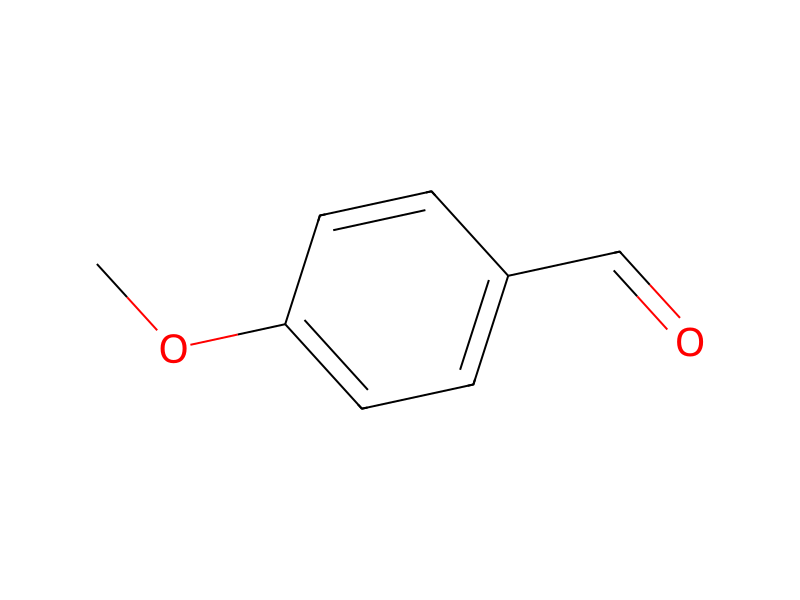
4-Methoxybenzaldehyde → (R)-1-((4-Methoxybenzyl)amino)propan-2-ol

HRID 968430
Print

Reaction equation

HRID 968430 reaction equation
[NH2:1][CH2:2][C@H:3]([OH:5])[CH3:4].[CH:6](=O)[C:7]1[CH:12]=[CH:11][C:10]([O:13][CH3:14])=[CH:9][CH:8]=1.C(O[BH-](OC(=O)C)OC(=O)C)(=O)C.[Na+]>O1CCCC1.C(O)(=O)C>[CH3:14][O:13][C:10]1[CH:11]=[CH:12][C:7]([CH2:6][NH:1][CH2:2][C@H:3]([OH:5])[CH3:4])=[CH:8][CH:9]=1
ParticipantsProcedureWorkupSources & evidenceReaction notes

Participants

6

Reactant 3

HCID 312444-MethoxybenzaldehydeHCID 439938(2R)-1-aminopropan-2-olHCID 5049666Sodium triacetoxyborohydride

Product 1

HCID 40761789(R)-1-((4-Methoxybenzyl)amino)propan-2-olYield 62.7%

Reagents, catalysts & solvents 2

HCID 176Acetic AcidSolvent
HCID 8028
Tetrahydrofuran
Solvent
2×

Procedure

A solution of (R)-(−)-1-amino-2-propanol (9.00 g, 0.12 mol) in tetrahydrofuran (40 ml) and acetic acid (5 ml) was added dropwise to a solution of p-anisaldehyde (5.45 g, 0.04 mol) in tetrahydrofuran (40 ml), and once addition was complete, the solution was stirred at room temperature for 2 hours. The solution was cooled in an ice-bath, and sodium triacetoxyborohydride (9.50 g, 0.0.045 mol) was added portionwise, and then the mixture was stirred at room temperature for 18 hours. The reaction mixture was concentrated under reduced pressure and the residue was partitioned between dichloromethane (150 ml) and sodium hydroxide solution (150 ml, 0.5N). The layers were separated and the aqueous phase was saturated with sodium chloride, then extracted with further dichloromethane (3×30 ml). The combined organic solutions were dried (MgSO4) and evaporated under reduced pressure. The residue was purified by chromatography on silica gel (gradient elution 98:2:0.2 to 97:3:0.3 dichloromethane:methanol:0.88 NH3) to afford an orange oil (4.9 g). 1H-NMR (CDCl3, 400 MHz) δ: 1.12 (d, 3H), 2.39 (dd, 1H), 2.70 (dd, 1H), 3.62-3.79 (m, 6H), 6.82 (d, 2H), 7.19 (d, 2H). LRMS: m/z (ES+) 196 [MH+].

Workup

  1. temperatureThe solution was cooled in an ice-bath
  2. stirringthe mixture was stirred at room temperature for 18 hours
  3. concentrationThe reaction mixture was concentrated under reduced pressure
  4. customthe residue was partitioned between dichloromethane (150 ml) and sodium hydroxide solution (150 ml, 0.5N)
  5. customThe layers were separated
  6. extractionextracted with further dichloromethane (3×30 ml)
  7. dry with materialThe combined organic solutions were dried (MgSO4)
  8. customevaporated under reduced pressure
  9. customThe residue was purified by chromatography on silica gel (gradient elution 98:2:0.2 to 97:3:0.3 dichloromethane:methanol:0.88 NH3)

Sources & evidence

ORD record
ord-5f61c7ecc3214ec3a608b5ed7fb77ae3
Source dataset
uspto-grants-2005_10
DOI
10.6084/m9.figshare.5104873.v1
Patent number
US06958402B2

Reaction notes

On this pageParticipantsProcedureWorkupSources & evidenceReaction notes


