基本情報
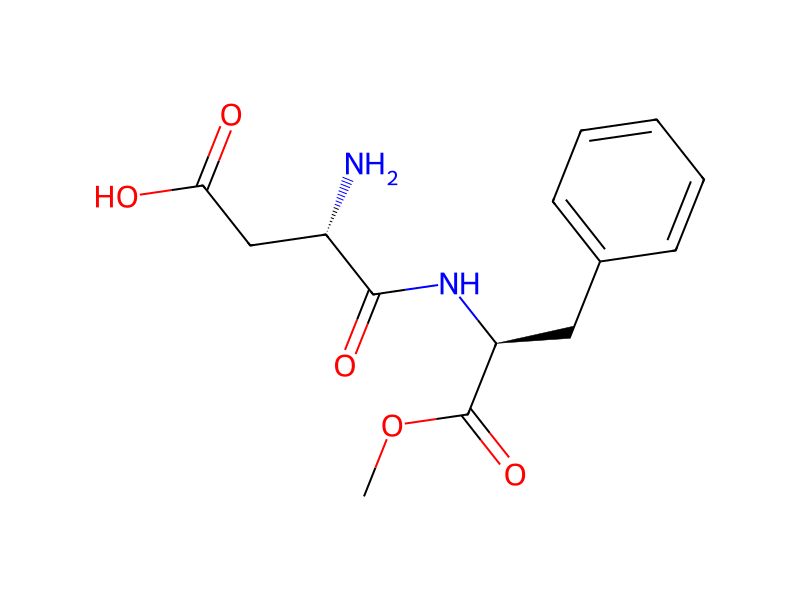
- 標準SMILES
COC(=O)[C@H](Cc1ccccc1)NC(=O)[C@@H](N)CC(=O)O- InChIKey
IAOZJIPTCAWIRG-QWRGUYRKSA-N- 分子式
- C14H18N2O5
- 平均分子量
- 294.3 g/mol
- 単同位体質量
- 294.12157168
概要
Aspartame is a dipeptide obtained by formal condensation of the alpha-carboxy group of L-aspartic acid with the amino group of methyl L-phenylalaninate. Commonly used as an artificial sweetener. It has a role as a micronutrient, a xenobiotic, a sweetening agent, a nutraceutical, an EC 3.1.3.1 (alkaline phosphatase) inhibitor, an apoptosis inhibitor and an environmental contaminant. It is a methyl ester, a carboxylic acid and a dipeptide. It is functionally related to a L-aspartic acid and a methyl L-phenylalaninate. It is a tautomer of an aspartame zwitterion.
名称と識別子
- 優先名称
- Aspartame
- IUPAC
- (3S)-3-amino-4-[[(2S)-1-methoxy-1-oxo-3-phenylpropan-2-yl]amino]-4-oxobutanoic acid
名称と別名
aspartame22839-47-0NutrasweetAsp-phe-omeAspartamAspartamoSweet dipeptideL-Aspartyl-L-phenylalanine methyl esterAspartamumDipeptide sweetenerEqualMethyl aspartylphenylalanate
名称をさらに表示
Aspartylphenylalanine methyl esterPal SweetSladexZero-calDTXSID0020107SC-18862Aspartame (e951)1-Methyl N-L-alpha-aspartyl-L-phenylalanate
データベース識別子
- CAS
22839-47-0- PubChem CID
- 134601
- DTXSID
DTXSID0020107- ChEMBL
CHEMBL171679- ChEBI
CHEBI:2877- UNII
- Z0H242BBR1
- EC Number
- 245-261-3
- Nikkaji
- J11.477D
物性
構造計算による物性
- XLogP
- -2.7
- 極性表面積
- 119 Ų
- 水素結合供与体数
- 3
- 水素結合受容体数
- 6
- 回転可能結合数
- 8
- 重原子数
- 21
- 形式電荷
- 0
- 複雑度
- 380
実験および物理化学的性質
Chemical ClassesOther Uses -> Food Additives
DrugsPharmaceuticals -> Listed in ZINC15
CosmeticsMasking
pH
Between 4,5 and 6,0 (1 in 125 solution)
0.8% Solution in water has a pH of about 5.3.
OdorOdorless
Taste
Sweet
In the presence of moisture it hydrolyzes to form aspartylphenylalanine and a diketopiperazine derivative, with a resulting loss of sweetness.
Food AdditivesFLAVOR ENHANCER, NON-NUTRITIVE SWEETENER -> FDA Substance added to food
Color/Form
Colorless needles from water
White crystalline powder from water or alcohol
Solubility
The solubility of aspartame in water is dependent on pH and temperature, the maximum solubility is reached at pH 2.2 (20 mg/mL at 25 °C) and the minimum solubility at pH 5.2 (pHi) is 13.5 mg/mL at 25 °C.
Slightly soluble in water and in ethanol
More soluble in acidic solutions and hot water; slightly soluble in alcohol; very slightly soluble in chloroform; practically insoluble in oils.
Solubility in water in mg/mL at 25 °C: 18.2 at pH 3.72; 16.1 at pH 4.00, 15.2 at pH 4.05, 14.5 at pH 4.27, 13.8 at pH 4.78, 13.5 at pH 5.30, 13.7 at pH 5.70 and 14.2 at pH 6.00; in distilled water, 10.20 mg/mL at pH 7.00
In water, 1.0X10+4 mg/L at pH 3 and room temperature
>44.1 [ug/mL] (The mean of the results at pH 7.4)
Human DrugsBreast Feeding; Lactation; Milk, Human; Artificial Sweeteners; Sweetening Agents
Animal DrugsPharmaceuticals -> UK Veterinary Medicines Directorate List
Decomposition
When heated to decomposition it emits toxic fumes of /nitroxides/.
Photodecomposition of aspartame in aqueous solutions under different conditions of light intensity and pH were studied. The effects of photosensitizers (riboflavin and methylene blue) and ascorbic acid on aspartame stability in aqueous solutions at different pH under light were also studied. Light illumination significantly increased aspartame degradation in an aqueous solution (pH 7), indicating that aspartame was very unstable under the illuminated conditions. In the dark, 91% of aspartame in an aqueous solution at pH 7 remained after 10 h of storage. Under 5500 lux of light, however, 39% of aspartame in the solution was destroyed after 10 h of storage. Aspartame degradation under light followed simple zero-order reaction kinetics. The higher the light intensity, the greater the degradation of aspartame. The relative reaction rate for the destruction of aspartame under 0, 1100, 3300 and 5500 lux was 1:1.42:2.80:4.61. The photodecomposition rate of aspartame varied with the pH of the system. Aspartame degradation was fastest at pH 7.0, followed by pH 4.0 and pH 6.0, in decreasing order. Addition of 4.8 ppm riboflavin or 4.8 ppm methylene blue significantly accelerated the aspartame decomposition at pH 7 in the presence of light. There were, however, no significant photosensitizing effects of these sensitizers on aspartame destruction at pH 6 and pH 4. Addition of 1.2x10⁻⁴ increased the aspartame degradation at pH 7.0, but did not affect the destruction rate of aspartame at pH 6.0 and pH 4.0.
安全と法規制
GHS分類
GHS Classification
This chemical does not meet GHS hazard criteria for 96.9% (186 of 192) of all reports.
Not Classified
Aggregated GHS information provided per 192 reports by companies from 4 notifications to the ECHA C&L Inventory.
危険有害性情報
Regulatory Information
Chemical: L-Phenylalanine, N-L-.alpha.-aspartyl-, 1-methyl ester
Hazard Traits - Carcinogenicity
Regulation (EC) No 1333/2008 (amended)
L-Phenylalanine, L-.alpha.-aspartyl-, 2-methyl ester is listed on the EPA's Chemical Data Reporting (CDR) system. Manufacturers and importers of L-Phenylalanine, L-.alpha.-aspartyl-, 2-methyl ester are required to report information about their production and use of this chemical to the EPA under the Toxic Substances Control Act (TSCA). (40 eCFR Part 711)
Aspartame: Does not have an individual approval but may be used under an appropriate group standard
Hazards Summary
Causes effects on fluid intake, degenerative changes to brain, and effects on phosphatases and true cholinesterase in acute oral studies of rats; [RTECS] An eye and mucous membrane irritant; [IUCLID] Acceptable daily intake (ADI) of 0-40 mg/kg; [JECFA] May cause irritation; [Alfa Aesar MSDS]
FDA Requirements
Aspartame is a food additive permitted for direct addition to food for human consumption, as long as 1) the quantity of the substance added to food does not exceed the amount reasonably required to accomplish its intended physical, nutritive, or other technical effect in food, and 2) any substance intended for use in or on food is of appropriate food grade and is prepared and handled as a food ingredient.
Special Reports
WHO Food Additives Series 15. Aspartame. This monograph contains summaries of data on aspartame examined by JECFA in 1975, 1976, 1977 and 1980.[Available from, as of August 3, 2010; http://www.inchem.org/documents/jecfa/jecmono/v15je03.htm]
WHO Food Additives Series 16. Aspartame. In 1980 JECFA evaluated additional animal studies and several human studies and an ADI of 0-40 mg/kg bw for aspertame and an ADI of 0-7.5 mg/kg bw for its breakdown product, diketopiperazine, were established. Additional studies that have since become available are summarized and discussed in this monograph addendum.[Available from, as of August 3, 2010; http://www.inchem.org/documents/jecfa/jecmono/v16je03.htm]
European Food Safety Authority; Report of the Meetings on Aspartame with National Experts. Question Number. This report summarizes the deliberations of a group of National Experts that met in 2009 to review existing published and unpublished information on aspartame, identify possible data gaps and discrepancies in the information, and consider options to address any outstanding issues.[Available from, as of August 3, 2010: http://www.efsa.europa.eu/en/scdocs/doc/af100423.pdf]
Hazard Classes and CategoriesNot Classified
安全と保護具
Storage Conditions
The bulk material should be stored in a well-closed container, in a cool, dry place.
Measures should be taken to minimize the potential for dust explosion.
Disposal Methods
SRP: Criteria for land treatment or burial (sanitary landfill) disposal practices are subject to significant revision. Prior to implementing land disposal of waste residue (including waste sludge), consult with environmental regulatory agencies for guidance on acceptable disposal practices.
Personal Protective Equipment (PPE)Eye protection is recommended.
Other Standards Regulations and Guidelines
On April 20, 2007, the U.S. FDA announced that it has completed its review concerning the long-term carcinogenicity study of aspartame entitled, "Long-Term Carcinogenicity Bioassays to Evaluate the Potential Biological Effects, in Particular Carcinogenic, of Aspartame Administered in Feed to Sprague-Dawley Rats," conducted by the European Ramazzini Foundation (ERF). ... Considering results from the large number of studies on aspartame's safety, including five previously conducted negative chronic carcinogenicity studies, a recently reported large epidemiology study with negative associations between the use of aspartame and the occurrence of tumors, and negative findings from a series of three transgenic mouse assays, FDA found no reason to alter its previous conclusion that aspartame is safe as a general purpose sweetener in food.
Aspartame sweetener and its breakdown products have been a matter of extensive investigation for more than 20 years including experimental animal studies, clinical research, intake and epidemiological studies and post-marketing surveillance. Aspartame was found to be safe for human consumption, a conclusion which was reconfirmed in the review carried out by the Scientific Committee on Food (SCF) in 2002. In 2007 the European Ramazzini Foundation in Bologna, Italy, published findings of a new study on the carcinogenicity of aspartame in rats. The European Food Safety Authority's (EFSA's) ANS Panel adopted an opinion on this study in January 2009. The ANS Panel subsequently updated its opinion in March 2009 taking into consideration data submitted by the Ramazzini Foundation in February 2009. The Panel concluded that on the basis of all the evidence currently available, including the ERF study published in 2007, there is no indication of any genotoxic or carcinogenic potential of aspartame and no reason to revise the previously established Acceptable Daily Intake for aspartame of 40 mg/kg body weight. At the 36th Advisory Forum meeting in May 2010 a report of the meetings on aspartame with national experts was presented along with comments from stakeholders received through the consultation on the report.... The national experts concluded that no new evidence was identified to suggest that the previous opinions of EFSA and the Scientific Committee on Food need to be reconsidered, but also recognised that the public concern relating to aspartame does not go away. Much of the concern expressed relates to the anecdotal reports of adverse effects. While EFSA and the national experts have made considerable efforts and invested time and resources to assess the anecdotal information, this information has proved to have severe limitations preventing effective analysis.
毒性情報
Interactions
... If mice are given aspartame in doses that elevate plasma phenylalanine levels more than those of tyrosine ... , the frequency of seizures following the administration of an epileptogenic drug, pentylenetetrazole, is enhanced. This effect is simulated by equimolar phenylalanine and blocked by concurrent administration of valine, which blocks phenylalanine's entry into the brain. Aspartame also potentiates the induction of seizures by inhaled fluorothyl or by electroconvulsive shock...
Antimutagenic effects of combination of aspartame (0.4 and 4 mg/kg) and beta-carotene (0.15-15 mg/kg) were studied by estimation of chromosome aberrations in bone marrow cells of C57Bl/6 mice. Single and 5-day treatment with this combination decreased the clastogenic effects of dioxidine and cyclophosphamide and produced a more potent and universal antimutagenic effect than its constituents.
The purpose of the present study was to investigate analgesic and anti-inflammatory properties of aspartame, an artificial sweetener and its combination with various opioids and NSAIDs for a possible synergistic response. The oral administration of aspartame (2-16 mg/kg, po) significantly increased the pain threshold against acetic acid-induced writhes in mice. Co-administration of aspartame (2mg/kg, po) with nimesulide (2 mg/kg, po) and naproxen (5 mg/kg, po) significantly reduced acetic acid-induced writhes as compared to effects per se of individual drugs. Similarly when morphine (1 mg/kg, po) or pentazocine (1 mg/kg, po) was co-administered with aspartame it reduced the number of writhes as compared to their effects per se. Aspartame (4,8,16 mg/kg, po) significantly decreased carrageenan-induced increase in paw volume and also reversed the hyperalgesic effects in rats in combination with nimesulide (2 mg/kg, po). The study indicated that aspartame exerted analgesic and anti-inflammatory effects on its own and have a synergistic analgesic response with conventional analgesics of opioid and non-opioid type, respectively.
Ochratoxin A (OTA) is a mycotoxin produced by Aspergillus ochraceus as well as other molds. This mycotoxin contaminates animal feed and food. OTA is immunosuppressive, genotoxic, teratogenic, carcinogenic and is nephrotoxic in all animal species studied so far. OTA inhibits protein synthesis and induces lipid peroxidation. Since it seems impossible to avoid completely contamination of foodstuffs by toxigenic fungi, it is necessary to investigate the possible ways of limiting such toxicity. An attempt to prevent OTA-induced nephrotoxic and genotoxic effects, mainly the karyomegaly, has been made in vivo using aspartame (L-aspartyl-L-phenylalanine methyl ester), a structural analogue of both OTA and phenylalanine. Aspartame (25 mg/kg bw) prevented most of the nephrotoxic effects induced by OTA (289 ug/kg bw). It also showed some utility in preventing morphological and histological damage, mainly the karyomegaly.
For more Interactions (Complete) data for Aspartame (9 total), please visit the HSDB record page.
Environmental Fate
TERRESTRIAL FATE: Based on a classification scheme(1), an estimated Koc value of 25(SRC), determined from a structure estimation method(2), indicates that aspartame is expected to have very high mobility in soil(SRC). Volatilization of aspartame from moist soil surfaces is not expected to be an important fate process(SRC) given an estimated Henry's Law constant of 2.5X10⁻¹⁸ atm-cu m/mole(SRC), using a fragment constant estimation method(3). Aspartame is not expected to volatilize from dry soil surfaces(SRC) based upon an estimated vapor pressure of 2.8X10⁻¹¹ mm Hg at 25 °C(SRC), determined from a fragment constant method(4). Biodegradation data were not available(SRC, 2010).
AQUATIC FATE: Based on a classification scheme(1), an estimated Koc value of 25(SRC), determined from a structure estimation method(2), indicates that aspartame is not expected to adsorb to suspended solids and sediment(SRC). Volatilization from water surfaces is not expected(3) based upon an estimated Henry's Law constant of 2.5X10⁻¹⁸ atm-cu m/mole(SRC), developed using a fragment constant estimation method(4). According to a classification scheme(5), an estimated BCF of 3.2(SRC), from an estimated log Kow of 0.07(6) and a regression-derived equation(2), suggests the potential for bioconcentration in aquatic organisms is low(SRC). The hydrolysis half-life of aspartame in water is about 1 day at 25 °C and pH 7(7). Biodegradation data were not available(SRC, 2010).
ATMOSPHERIC FATE: According to a model of gas/particle partitioning of semivolatile organic compounds in the atmosphere(1), aspartame, which has an estimated vapor pressure of 2.8X10⁻¹¹ mm Hg at 25 °C(SRC), determined from a fragment constant method(2), is expected to exist solely in the particulate phase in the ambient atmosphere. Particulate-phase aspartame may be removed from the air by wet or dry deposition(SRC). Aspartame does not contain chromophores that absorb at wavelengths >290 nm(3), and therefore is not expected to be susceptible to direct photolysis by sunlight(SRC).
Adverse EffectsIARC Carcinogen - Class 3: Chemicals are not classifiable by the International Agency for Research on Cancer.
Ongoing Test Status
The following link will take the user to the National Toxicology Program (NTP) Test Agent Search Results page, which tabulates all of the "Standard Toxicology & Carcinogenesis Studies", "Developmental Studies", and "Genetic Toxicity Studies" performed with this chemical. Clicking on the "Testing Status" link will take the user to the status (i.e., in review, in progress, in preparation, on test, completed, etc.) and results of all the studies that the NTP has done on this chemical.[Available from: http://ntp-apps.niehs.nih.gov/ntp_tox/index.cfm?fuseaction=ntpsearch.searchresults&searchterm=22839-47-0]
The UK Food Standards Agency has launched a pilot study to test individual sensitivity to aspartame through a double-blind placebo-controlled study. This study aims to record any effects from eating a food that may or may not contain aspartame, in a safe controlled clinical environment. It will be carried out both amongst individuals who report reactions following consumption of foods containing aspartame and individuals who normally consume foods containing aspartame without problems. This objective evidence base could provide further insights into the issue of possible sensitivity to aspartame and may be useful in providing pointers for any further study or additional work. The Advisory Forum agreed that it would be inappropriate to pre-judge the findings of the pilot study and to await its conclusions before reconsidering what further activity, if any, may be useful. It was therefore agreed that no further consideration of the issue would be undertaken in the meantime.
Soil Adsorption/Mobility
Using a structure estimation method based on molecular connectivity indices(1), the Koc of aspartame can be estimated to be 25(SRC). According to a classification scheme(2), this estimated Koc value suggests that aspartame is expected to have very high mobility in soil.
Human Toxicity Excerpts
/HUMAN EXPOSURE STUDIES/ Although aspartame has been reported to cause hyperactivity and behavioral problems in children, a double-blind controlled trial of 48 preschool-age children fed diets containing a daily intake of 38 +/- 13 mg/kg bw of aspartame for 3 weeks showed no adverse effects attributable to aspartame, or dietary sucrose, on children's behavior or cognitive function.
/HUMAN EXPOSURE STUDIES/ Neurobehavioral symptoms have been reported anecdotally with aspartame. This study sought to determine whether aspartame can disrupt cognitive, neurophysiologic, or behavioral functioning in normal individuals. Forty-eight healthy volunteers completed a randomized, double-blind, placebo-controlled, crossover study. The first month was aspartame free. Subjects then consumed sodas and capsules with placebo, aspartame, or sucrose for 20 days each. Order was randomized and subjects were assigned to either a high- (45 mg/kg bw/day) or low- (15 mg/kg bw/day) dose aspartame group. Neuropsychologic and laboratory testing was done on day 10 of each treatment period to determine possible acute effects and on day 20 for possible chronic effects. Plasma phenylalanine concentrations increased significantly during aspartame treatment. Neuropsychologic results; adverse experiences; amino acid, insulin, and glucose values; and electroencephalograms were compared by sex and by treatment. No significant differences were found for any dependent measure. Large daily doses of aspartame had no effect on neuropsychologic, neurophysiologic, or behavioral functioning in healthy young adults.
/HUMAN EXPOSURE STUDIES/ OBJECTIVE: To determine the effects of large doses of aspartame on behavior, cognition, and monoamine metabolism in children with attention deficit disorder. DESIGN: A randomized, double-blind, placebo-controlled crossover study of unmedicated children meeting Diagnostic and Statistical Manual of Mental Disorders (3rd ed) criteria for attention deficit disorder. SETTING: Behavioral assessments were performed in the child's home by their parents and in the classroom by a teacher. Cognitive tests were administered and blood drawing was performed during a 2-day inpatient admission to our Children's Study Center. INTERVENTIONS: Administration of aspartame (single morning dose, 34 mg/kg) or placebo for alternate 2-week periods. MAIN OUTCOME MEASURES: Behavioral and cognitive tests included the Matching Familiar Figures Test (MFFT), Children's Checking Task (CCT), the Airplane Test, the Wisconsin Card Sorting Test (WCST), the Subjects Treatment Emergent Symptom Scale (STESS), the Multigrade Inventory for Teachers (MIT), and the Conners Behavior Rating Scale. Blood was drawn for complete blood cell count and liver function tests, as well as amino acid, methanol, formate, serotonin, and monoamine metabolite analyses, and urine was collected for measurement of catecholamine and monoamine metabolite excretion. RESULTS: No clinically significant differences between aspartame and placebo were found for the STESS, MIT, or Conners ratings, or for the MFFT, CCT, WCST, or Airplane cognition tests. Also, no differences were noted for any of the biochemical measures, except for the expected increase in plasma phenylalanine and tyrosine following aspartame. CONCLUSIONS: The findings indicate that aspartame at greater than 10 times usual consumption has no effect on the cognitive and behavioral status of children with attention deficit disorder. In addition, aspartame does not appear to affect urinary excretion rates of monoamines and metabolites.
/HUMAN EXPOSURE STUDIES/ The effect of aspartame on the learning, behavior, and mood of children was evaluated in two experiments. After an overnight fast and a standard breakfast, 20 healthy 9- to 10-year-old children were given the treatments in a double-blind crossover design at 10:30 AM. Lunch was served at 12:00 noon. In experiment 1, the treatment consisted of an ice slurry of strawberry Kool-Aid containing 1.75 g/kg of carbohydrate (polycose) plus either aspartame (34 mg/kg) or the equivalent sweetness as sodium cyclamate and amino acids as alanine. In experiment 2, the treatment consisted of a drink of cold unsweetened strawberry Kool-Aid, containing either 1.75 g/kg of sucrose or 9.7 mg/kg of aspartame. Measures of associative learning, arithmetic calculation, activity level, social interaction, and mood were unaffected by treatment in experiment 1. In experiment 2, the only significant treatment effect was that on the frequency of minor and gross motor behaviors, which were less frequent after the consumption of sucrose than after aspartame. Thus, the effect of aspartame on the short-term behavior of healthy 9- to 10-year-old children appears to be related to its absence of metabolic consequences rather than to its amino acid composition and putative neurochemical impact.
For more Human Toxicity Excerpts (Complete) data for Aspartame (32 total), please visit the HSDB record page.
Artificial Pollution SourcesAspartame's production and use as a non-nutritive sweetener(1) may result in its release to the environment through various waste streams(SRC).
Carcinogen Classification
Aspartame
Group 2B: Possibly carcinogenic to humans
Volume 134: (2024) Aspartame, Methyleugenol, and Isoeugenol
2024 online
2023
Environmental Bioconcentration
An estimated BCF of 3.2 was calculated in fish for aspartame(SRC), using an estimated log Kow of 0.07(1) and a regression-derived equation(2). According to a classification scheme(3), this BCF suggests the potential for bioconcentration in aquatic organisms is low(SRC).
Volatilization from Water/Soil
The Henry's Law constant for aspartame is estimated as 2.5X10⁻¹⁸ atm-cu m/mole(SRC) using a fragment constant estimation method(1). This Henry's Law constant indicates that aspartame is expected to be essentially nonvolatile from water surfaces(2). Aspartame is not expected to volatilize from dry soil surfaces(SRC) based upon an estimated vapor pressure of 2.8X10⁻¹¹ mm Hg(SRC), determined from a fragment constant method(3).
Non-Human Toxicity Excerpts
/LABORATORY ANIMALS: Acute Exposure/ Aspartame did not affect food consumption at one hr following a single intragastric dose of 200 mg/kg in rats. There was no evidence of inhibition or stimulation of the gastric juice secretion rate, the concentration of gastric acid, acid output or proteolytic activity following an intragastric dose of 250 mg/kg in five-hr pylorus-ligated rats.
/LABORATORY ANIMALS: Subchronic or Prechronic Exposure/ Wistar rats were treated by gavage with ASP at daily doses of 75 and 125 mg/kg body weight for 30 days. Cerebrum and cerebellum were used to obtain microsomal fractions to analyze activity and protein levels of seven cytochrome P450 enzymes. Increases in activity were consistently found with the 75 mg/kg dose both in cerebrum and cerebellum for all seven enzymes, although not at the same levels: CYP 2E1-associated 4-nitrophenol hydroxylase (4-NPH) activity was increased 1.5-fold in cerebrum and 25-fold in cerebellum; likewise, CYP2B1-associated penthoxyresorufin O-dealkylase (PROD) activity increased 2.9- and 1.7-fold respectively, CYP2B2-associated benzyloxyresorufin O-dealkylase (BROD) 4.5- and 1.1-fold, CYP3A-associated erythromycin N-demethylase (END) 1.4- and 3.3-fold, CYP1A1-associated ethoxyresorufin O-deethylase (EROD) 5.5- and 2.8-fold, and CYP1A2-associated methoxyresorufin O-demethylase (MROD) 3.7- and 1.3-fold. Furthermore, the pattern of induction of CYP immunoreactive proteins by ASP paralleled that of 4-NHP-, PROD-, BROD-, END-, EROD- and MROD-related activities only in the cerebellum. Conversely, no differences in CYP concentration and activity were detected in hepatic microsomes of treated animals with respect to the controls, suggesting a brain-specific response to ASP treatment.
/LABORATORY ANIMALS: Subchronic or Prechronic Exposure/ The aim of this study was to determine the effects of the chronic ingestion of aspartame (ASP) on brain neuropeptide Y (NPY) concentrations, plasma hormones, food intake and body fat. Two groups of male Long-Evans rats, fed on a control (C) well-balanced diet, had to drink either a 0.1% ASP solution or water for a period of 14 weeks starting at weaning. Food intake and body weight were weekly recorded. At the end of the experiment, fat pads were sampled, leptin and insulin were measured in the plasma and NPY in several microdissected brain areas. Substituting ASP for water led to lower body weight (-8%; P < .004) and lower fat depot weight (-20%; P < .01) with no differences in energy intake or plasma insulin concentrations. Plasma leptin was significantly reduced by 34% (P < .05). Leptin concentrations were well-correlated with final body weight (r = .47; P < .025) and fat pad mass (r = .53; P < .01). NPY concentrations were 23% lower (P < .03) in the arcuate nucleus of ASP rats with no differences in other brain areas. The beneficial effects on body composition could be related to the decreased effects of NPY on lipid and energy metabolism, independently of insulin.
/LABORATORY ANIMALS: Subchronic or Prechronic Exposure/ The coagulation process, including thrombin, fibrin, as well as platelets, plays an important role in hemostasis, contributing to the general well-being of humans. Fibrin formation and platelet activation are delicate processes that are under the control of many small physiological events. Any one of these many processes may be influenced or changed by external factors, including pharmaceutical or nutritional products, e.g., the sweetener aspartame (L-aspartyl-L-phenylalanine methyl ester). It is known that phenylalanine is present at position P(9) and aspartate at position P(10) of the alpha-chain of human fibrinogen, and plays an important role in the conversion of fibrinogen to fibrin by the catalyst alpha-thrombin ... The effect of aspartame on platelet and fibrin ultrastructure /was investigated/ by using the rabbit animal model and the scanning electron microscope. Animals were exposed to 34 mg/kg of aspartame 26x during a 2 month period. Aspartame-exposed fibrin networks appeared denser, with a thick matted fine fiber network covering thick major fibers. Also, the platelet aggregates appeared more granular than the globular control platelet aggregates. /It was concluded/ that aspartame usage may interfere with the coagulation process and might cause delayed fibrin breakup after clot formation ... as the fibrin networks from aspartame-exposed rabbits are more complex and dense, due to the netlike appearance of the minor, thin fibers. Aspartame usage should possibly be limited by people on anti-clotting medicine or those prone to clot formation.
For more Non-Human Toxicity Excerpts (Complete) data for Aspartame (31 total), please visit the HSDB record page.
Populations at Special Risk
... There is some concern that phenylalanine released during the course of normal metabolism /of aspartame/ or generated during externally induced hydrolysis reactions may affect persons with phenylketonuria (PKU). About 1 in 10000 humans is afflicted with this genetically induced metabolic defect. As a result, they cannot metabolize phenylalanine and must restrict intake of this amino acid.
Aspartame is the methylester of a dipeptide composed of two amino acids, phenylalanine and aspartic acid. Persons with phenylketonuria, who must restrict carefully their phenylalanine intake, must be alerted to the presence of phenylalanine in the drug product and the amount of the ingredient in each dosage unit.
Persons suffering from phenylketonuria (phenylketonuria-homozygotes) on a phenylalanine restricted diet should avoid consumption of aspartame. Phenylketonuria homozygotes on the (less strict) phenylalanine liberalized diet should be made aware of the phenylalanine content of aspartame.
This study was designed to ascertain whether individuals with mood disorders are particularly vulnerable to adverse effects of aspartame. Although the protocol required the recruitment of 40 patients with unipolar depression and a similar number of individuals without a psychiatric history, the project was halted by the Institutional Review Board after a total of 13 individuals had completed the study because of the severity of reactions within the group of patients with a history of depression. In a crossover design, subjects received aspartame 30 mg/kg/day or placebo for 7 days. Despite the small n, there was a significant difference between aspartame and placebo in number and severity of symptoms for patients with a history of depression, whereas for individuals without such a history there was not. /It was/ concluded that individuals with mood disorders are particularly sensitive to this artificial sweetener, and its use in this population should be discouraged.
法規制情報
FDA Requirements
Aspartame is a food additive permitted for direct addition to food for human consumption, as long as 1) the quantity of the substance added to food does not exceed the amount reasonably required to accomplish its intended physical, nutritive, or other technical effect in food, and 2) any substance intended for use in or on food is of appropriate food grade and is prepared and handled as a food ingredient.
化学と産業
薬理情報
Pharmacodynamics
Aspartame (L-alpha-aspartyl-L-phenylalanine methyl ester) is a low-calorie sweetener used to sweeten a wide variety of low- and reduced-calorie foods and beverages, including low-calorie tabletop sweeteners. Aspartame is composed of two amino acids, aspartic acid and phenylalanine, as the methyl ester. Aspartic acid and phenylalanine are also found naturally in protein containing foods, including meats, grains and dairy products. Methyl esters are also found naturally in many foods such as fruits and vegetable and their juices. Upon digestion, aspartame breaks down into three components (aspartic acid, phenylalanine and methanol), which are then absorbed into the blood and used in normal body processes. Neither aspartame nor its components accumulates in the body. These components are used in the body in the same ways as when they are derived from common foods.
Mechanism of Action180 to 200 times sweeter than sucrose, it is metabolized as a protein and its subsequent amino-acids used up in there respective mechanisms.
Biological Half-LifeAt room temperature, aspartame is most stable at pH 4.3, where its half-life is nearly 300 days. At pH 7, its half-life is shortened to only a few days.
Metabolism/Metabolites
Approximately 10% of aspartame (by weight) is broken down into methanol in the small intestine. Most of the methanol is absorbed and quickly converted into formaldehyde. Approximately 50% of aspartame (by weight) is broken down into phenylalanine. Approximately 40% of aspartame (by mass) is broken down into aspartic acid.
Unlike some other intense sweeteners, aspartame is metabolized in the body and consequently has some nutritive value: 1 g provides approx 17 kJ (4 kcal). However, in practice, the small quantity of aspartame consumed provides a minimal nutritive effect.
The use of aspartame has been of some concern owing to the formation of the potentially toxic metabolites methanol, aspartic acid, and phenylalanine. Of these materials, only phenylalanine is produced in sufficient quantities, at normal aspartame intake levels, to cause concern.
Aspartame [SC-18862; 3-amino-N-(alpha-carboxyphenethyl) succinamic acid, methyl ester, the methyl ester of aspartylphenylalanine] is a sweetening agent that organoleptically has about 180 times the sweetness of sugar. The metabolism of aspartame has been studied in mice, rats, rabbits, dogs, monkeys, and humans. The compound was digested in all species in the same way as are natural constituents of the diet. Hydrolysis of the methyl group by intestinal esterases yielded methanol, which was oxidized in the one-carbon metabolic pool to CO2. The resultant dipeptide was split at the mucosal surface by dipeptidases and the free amino acids were absorbed. The aspartic acid moiety was transformed in large part to CO2 through its entry into the tricarboxylic acid cycle. Phenylalanine was primarily incorporated into body protein either unchanged or as its major metabolite, tyrosine.
Although aspartame was hydrolyzed in the gut of the monkey to its constituent moieties, methanol, aspartic acid, and phenylalanine, the ingestion of 15 or 60 mg/kg doses for 10 days did not modify phenylalanine metabolism. Aspartame had little effect on the disappearance of iv admin (14)C-phenylalanine from the plasma, it did not substantially affect the conversion of phenylalanine into tyrosine or carbon dioxide, and it did not alter the rate of incorporation of label into protein. The majority of phenylalanine derived from aspartame was incorporated into body protein, with only 20-25% of the compound being excreted. 60-80% of the derived methanol and aspartic acid was oxidized to carbon dioxide.
For more Metabolism/Metabolites (Complete) data for Aspartame (7 total), please visit the HSDB record page.
MeSH Pharmacological ClassificationSubstances that sweeten food, beverages, medications, etc., such as sugar, saccharine or other low-calorie synthetic products. (From Random House Unabridged Dictionary, 2d ed)
Absorption, Distribution and ExcretionAbsorbed in the small intestine, aspartame is metabolized and absorbed very quickly.
Tissue LocationsBrain
用途と製造
Uses
Used as a non-nutritive sweetener; [Merck Index] Used as a flavor enhancer and non-nutritive sweetener; [FDA]
A synthetic, non-nutritive sweetener approved by FDA for tabletop use and as a packaged food additive. The U.S., Canada and South Africa permit its use in carbonated beverages. A combination of aspartic acid and L-phenylalanine is said to be about 200 times sweeter than sugar. /Nutrasweet (TM)/
... Used as a table sweetener for coffee, tea, breakfast cereals, etc ... Other food applications identified include pre-sweetened breakfast cereals, chewing gum, and dry bases for beverages such as instant coffee and tea, gelatins, puddings and fillings, and dairy-product analogue whipped toppings.
ImpuritiesDiketopiperazine
U.S. Production2023: <50,000 lb
Consumption Patterns(1992) 8,040 tons in US
Industry UsesOther
Methods of Manufacturing
Aspartame is produced by coupling together L-phenylalanine (or L-phenylalanine methyl ester) and L-aspartic acid, either chemically or enzymatically. The former procedure yields both the sweet alpha-aspartame and nonsweet beta-aspartame from which the alpha aspartame has to be separated and purified. The enzymatic process yields only alpha-aspartame.
Production of aspartame normally starts from L-aspartic acid and L-phenylalanine or L-phenylalanine methyl ester. The production follows common routes of peptide synthesis, as the L-configuration of amino acids has to be retained (essential for sweetness). Common production routes require protective groups for aspartic acid. The protective groups commonly used in peptide synthesis have been suggested for aspartame synthesis, but simple protection for large-scale production can be obtained by use of formylaspartic acid anhydride. It can be reacted with phenylalanine methyl ester to N-formylaspartame, from which the protective group has to be removed. Especially simple production is possible from N-formylaspartic acid anhydride and L-phenylalanine. The resulting N-formylaspartylphenylalanine is treated with hydrochloric acid and methanol. The aspartame hydrochloride obtained can be crystallized for purification and transformed into aspartame after addition of a stoichiometric amount of a neutralizing agent. Adjustment of the solvent increases the yield by improving the ratio of alpha- to beta-isomers. Crystallization of alpha-aspartame hydrohalides is a suitable purification step, as beta-hydrohalides are more soluble.
Method for large-scale production of aspartame ... L-aspartic acid anhydride is condensed with L-phenylalanine methyl ester to form a mixture of beta-L-aspartyl-L-phenylalanine methyl ester and alpha-L-aspartyl-L-phenylalanine methyl ester. On acidification with hydrochloric acid, the latter precipitates and the precipitate is neutralized to form aspartame. /From table/
Formulations/Preparations
As a table-top sweetener ... /aspartame/ is spray-dried with partially hydrolyzed corn starch.
Canderel /Formulation name/
Equal /Formulation name/
NatraTaste /Formulation name/
For more Formulations/Preparations (Complete) data for Aspartame (9 total), please visit the HSDB record page.
Household Products
Cosmetics product ingredient: Aspartame
Information on 1 consumer products that contain Aspartame in the following categories is provided:
Use Classification
Food additives
Food Additives -> SWEETENER -> JECFA Functional Classes
Cosmetics -> Masking
General Manufacturing Information
Food, beverage, and tobacco product manufacturing
L-Phenylalanine, L-.alpha.-aspartyl-, 2-methyl ester: ACTIVE
Aspartame is the methylester of a dipeptide composed of two amino acids, phenylalanine and aspartic acid. When these two amino acids are so combined to form aspartame (1-methyl N -L-a-aspartyl-L-phenylalanine), they produce an intensely sweet-tasting substance, approximately 180 times as sweet as sucrose.
A combination of aspartame with either granular or fused mannitol in a 1:9 ratio can provide a suitable base for chewable tablets with respect to sweetness, mouth feel, absence of unpleasant aftertaste, and low caloric value. Both compounds are compatible with leucine.
... In the July 26, 1974, decision by the FDA to approve the use of aspartame, labeling provisions were made in which foods not containing protein or intended for admixture to protein sweetened with aspartame should bear the statement "contains protein."
関連反応
50 件




関連ノート
読み込み中…