
基本情報
- 標準SMILES
CCCCCCCCOc1ccc(C(=O)O)cc1- InChIKey
IALWCYFULVHLEC-UHFFFAOYSA-N- 分子式
- C15H22O3
- 平均分子量
- 250.33 g/mol
- 単同位体質量
- 250.15689456
概要
P-n-octyloxybenzoic acid is a white powder. (NTP, 1992)
名称と識別子
- 優先名称
- 4-(Octyloxy)benzoic acid
- IUPAC
- 4-octoxybenzoic acid
- 現地名
- 4-n-オクチルオキシ安息香酸
- 英語名
- 4-n-Octyloxybenzoic acid
- 分子式
- C15H22O3
- 分子量
- 250.33
名称と別名
2493-84-74-(Octyloxy)benzoic acid4-Octyloxybenzoic acid4-n-Octyloxybenzoic acidBenzoic acid, 4-(octyloxy)-p-(Octyloxy)benzoic acidp-Octoxybenzoic acidP-N-OCTYLOXYBENZOIC ACIDp-(n-Octyloxy)benzoic acidBenzoic acid, p-(octyloxy)-CCRIS 4690DTXSID1025807
名称をさらに表示
4-n-オクチルオキシ安息香酸4-オクチルオキシ安息香酸4-(オクチルオキシ)安息香酸p-(オクチルオキシ)安息香酸p-オクチルオキシ安息香酸4-n-オクチルオキシ安息香酸, 99%OOBATIMTEC-BB SBB008044RARECHEM AL BO 0490octyloxybenzoicacid4-octoxybenzoic acidLABOTEST-BB LT001144324-(octyloxy)-benzoicacip-n-octyloxybenzoicacid
04GD4OJ7FUoctyloxybenzoic acidNSC 142138NSC-142138DTXCID905807OCTYLOXYBENZOIC ACID, 4-P-(N-OCTOXY)BENZOIC ACIDRefChem:516529
データベース識別子
- CAS
2493-84-7- PubChem CID
- 17231
- DTXSID
DTXSID1025807- ChEMBL
CHEMBL1328156- ChEBI
CHEBI:170073- UNII
- 04GD4OJ7FU
- EC Number
- 607-462-8
- Nikkaji
- J26.912C
物性
構造計算による物性
- XLogP
- 5
- 極性表面積
- 46.5 Ų
- 水素結合供与体数
- 1
- 水素結合受容体数
- 3
- 回転可能結合数
- 9
- 重原子数
- 18
- 形式電荷
- 0
- 複雑度
- 220
実験および物理化学的性質
Chemical ClassesLiquid Crystal (LCM) Monomers
SpringerMaterials PropertiesChemical diffusion
Solubilityless than 1 mg/mL at 68 °F (NTP, 1992)
Melting Point226 °F (Turbid) (NTP, 1992)
Physical DescriptionP-n-octyloxybenzoic acid is a white powder. (NTP, 1992)
物理化学的性質
- 融点
- 101 · 101-105 °C (lit.)
- 沸点
- 353.47 °C · 353.47°C (rough estimate)
- 比重(密度)
- 1.0589 · 1.0589 (rough estimate)
- 屈折率
- 1.56 · 1.5600 (estimate)
- 貯蔵温度
- Sealed in dry,Room Temperature
- 溶解性
- almost transparency in hot Methanol
- 外見
- powder to crystal
- 酸解離定数(Pka)
- 4.48 · 4.48±0.10(Predicted)
- 色
- White to Almost white
- CAS データベース
- 2493 · 2493-84-7(CAS DataBase Reference)
- EPAの化学物質情報
- p-(Octyloxy)benzoic acid (2493-84-7)
化学的性質
化学的特性White to light yellow crystal powder
安全と法規制
GHS分類
GHS Classification
Warning
H315 (100%): Causes skin irritation [Warning Skin corrosion/irritation]
P264, P264+P265, P280, P302+P352, P305+P351+P338, P321, P332+P317, P337+P317, and P362+P364 (click each P-code to see the statement)
The GHS information provided by 1 company from 1 notification to the ECHA C&L Inventory.
危険有害性情報
Fire HazardsFlash point data for this chemical are not available, however it is probably combustible. (NTP, 1992)
Reactive GroupAcids, Carboxylic
Reactivity Profile
P-N-OCTYLOXYBENZOIC ACID is a carboxylic acid. Carboxylic acids donate hydrogen ions if a base is present to accept them. They react in this way with all bases, both organic (for example, the amines) and inorganic. Their reactions with bases, called "neutralizations", are accompanied by the evolution of substantial amounts of heat. Neutralization between an acid and a base produces water plus a salt. Carboxylic acids with six or fewer carbon atoms are freely or moderately soluble in water; those with more than six carbons are slightly soluble in water. Soluble carboxylic acid dissociate to an extent in water to yield hydrogen ions. The pH of solutions of carboxylic acids is therefore less than 7.0. Many insoluble carboxylic acids react rapidly with aqueous solutions containing a chemical base and dissolve as the neutralization generates a soluble salt. Carboxylic acids in aqueous solution and liquid or molten carboxylic acids can react with active metals to form gaseous hydrogen and a metal salt. Such reactions occur in principle for solid carboxylic acids as well, but are slow if the solid acid remains dry. Even "insoluble" carboxylic acids may absorb enough water from the air and dissolve sufficiently in it to corrode or dissolve iron, steel, and aluminum parts and containers. Carboxylic acids, like other acids, react with cyanide salts to generate gaseous hydrogen cyanide. The reaction is slower for dry, solid carboxylic acids. Insoluble carboxylic acids react with solutions of cyanides to cause the release of gaseous hydrogen cyanide. Flammable and/or toxic gases and heat are generated by the reaction of carboxylic acids with diazo compounds, dithiocarbamates, isocyanates, mercaptans, nitrides, and sulfides. Carboxylic acids, especially in aqueous solution, also react with sulfites, nitrites, thiosulfates (to give H2S and SO3), dithionites (SO2), to generate flammable and/or toxic gases and heat. Their reaction with carbonates and bicarbonates generates a harmless gas (carbon dioxide) but still heat. Like other organic compounds, carboxylic acids can be oxidized by strong oxidizing agents and reduced by strong reducing agents. These reactions generate heat. A wide variety of products is possible. Like other acids, carboxylic acids may initiate polymerization reactions; like other acids, they often catalyze (increase the rate of) chemical reactions.
Air and Water ReactionsInsoluble in water.
Hazard Classes and CategoriesSkin Irrit. 2 (100%)
安全と保護具
Fire FightingFires involving this compound can be controlled using a dry chemical, carbon dioxide or Halon extinguisher. (NTP, 1992)
First Aid
EYES: First check the victim for contact lenses and remove if present. Flush victim's eyes with water or normal saline solution for 20 to 30 minutes while simultaneously calling a hospital or poison control center. Do not put any ointments, oils, or medication in the victim's eyes without specific instructions from a physician. IMMEDIATELY transport the victim after flushing eyes to a hospital even if no symptoms (such as redness or irritation) develop.
Nonfire Spill Response
SMALL SPILLS AND LEAKAGE: Should a spill occur while you are handling this chemical, FIRST REMOVE ALL SOURCES OF IGNITION, then you should dampen the solid spill material with 60-70% ethanol and transfer the dampened material to a suitable container. Use absorbent paper dampened with 60-70% ethanol to pick up any remaining material. Seal the absorbent paper, and any of your clothes, which may be contaminated, in a vapor-tight plastic bag for eventual disposal. Solvent wash all contaminated surfaces with 60-70% ethanol followed by washing with a soap and water solution. Do not reenter the contaminated area until the Safety Officer (or other responsible person) has verified that the area has been properly cleaned.
Personal Protective Equipment (PPE)
RECOMMENDED RESPIRATOR: Where the neat test chemical is weighed and diluted, wear a NIOSH-approved half face respirator equipped with an organic vapor/acid gas cartridge (specific for organic vapors, HCl, acid gas and SO2) with a dust/mist filter. (NTP, 1992)
安全データ
- wgk
- 3
- tsca
- TSCA listed
- hs_code
- 29189990
- safety_code
- 24/25
化学と産業
用途と製造
General Manufacturing InformationBenzoic acid, 4-(octyloxy)-: INACTIVE
応用分野
使用Intermediate for the synthesis of liquid crystals including chiral ferroelectric benzoates. Used in the preparation of medicinal compounds.
一般的な説明P-n-octyloxybenzoic acid is a white powder. (NTP, 1992)
調製方法
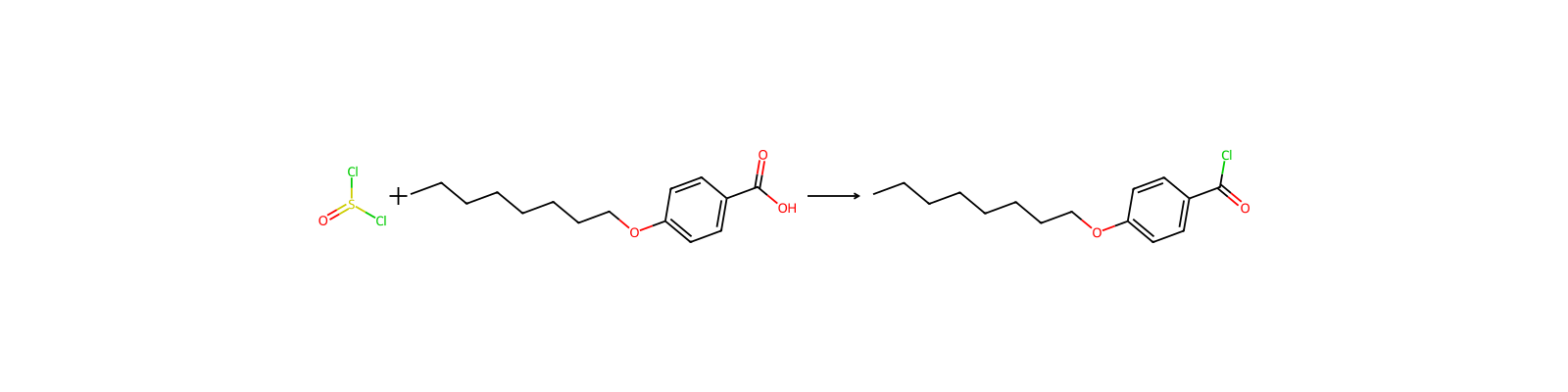
製造方法Synthesis of 4-(Octyloxy)benzoic acid: 1-bromooctane was synthesised using n-octanol as raw material and 1-bromooctane was reacted with methyl p-hydroxybenzoate and then hydrolysed to obtain 4-(Octyloxy)benzoic acid.
上流・下流製品情報
上流原料
サプライヤー50 社
梯希爱(上海)化成工业发展有限公司021-67121386 · [email protected]
南京世洲生物科技有限公司025-85560043 15850508050 · [email protected]
Career Henan Chemica Co+86-0371-86658258 +86-13203830695 · [email protected]
杭州品高化工有限公司0571-87658025 · [email protected]
杭州摩库生物医药科技有限公司+86-057181025280; +8617767106207 · [email protected]
Dayang Chem (Hangzhou) Co.,Ltd.+86-0571-88938639 17705817739 · [email protected]
山东利腾生物科技有限公司+86-18663721413 +86-15552573001 · [email protected]
毕佳索(上海毕得医药科技股份有限公司)400-6005915 · [email protected]
Syntechem Co.,Ltd[email protected]
上海迈瑞尔生化科技有限公司4006356688 18621169109 · [email protected]
北京索莱宝科技有限公司010-50973130 17801761073 · [email protected]
上海颖心实验室设备有限公司021-59178156 17002132182 · [email protected]
阿法埃莎(中国)化学有限公司400-6106006 · [email protected]
安耐吉化学&3A(安徽泽升科技股份有限公司)400-0056266 · [email protected]
石家庄斯迪亚诺精细化工有限公司0311-89250318 13582355795 · [email protected]
吉林中科研伸科技有限公司18143011203 · [email protected]
山东西亚化学有限公司13355009207 13355009207 · [email protected]
玛雅试剂+86 (573) 82222445 (0)18006601000 452520369 · [email protected]
赛默飞世尔科技(中国)有限公司800-810-5118 · [email protected]
上海遐瑞医药科技有限公司+86 21 61551611
TCI AMERICA800-4238616 · [email protected]
TOKYO CHEMICAL INDUSTRY CO., LTD.03-36680489 · [email protected]
TCI Europe320-37350700 · [email protected]
PT CHEM GROUP LIMITED+86-85511178; +86-85511178 · [email protected]
上海毕得医药科技股份有限公司400-164-7117 18317119277 · [email protected]
成都零六生物科技有限公司400-1166-196 13458535857 · [email protected]
上海鑫圭生物科技有限公司15121041756 · [email protected]
Sigma-Aldrich西格玛奥德里奇(上海)贸易有限公司021-61415566 800-8193336 · [email protected]
Henan Alfa Chemical Co., Ltd+8618339805032 · [email protected]
上海阿拉丁生化科技股份有限公司6206333 13167063860 · [email protected]
南京世洲生物科技有限公司025-85563444 18351873721 · [email protected]
科瑞希(天津)新材料技术有限公司022-83945173 18622315263 · [email protected]
北京华威锐科化工科技有限公司89508211 18501085097 · [email protected]
上海源叶生物科技有限公司13636370518 · [email protected]
上海麦克林生化科技股份有限公司50706066 15221275939 · [email protected]
山东西亚化学有限公司4009903999 13395398332 · [email protected]
石家庄晔晟化工科技有限公司18031147013 18031147013 · [email protected]
山东小野化学股份有限公司0539-6362799 20)
上海贤鼎生物科技有限公司021-021-52271985 17721149837 · [email protected]
Shaanxi Didu New Materials Co. Ltd+86-86-17392712779 +86-13289823923 · [email protected]
杭州洁汉化工有限公司+86-571-86217390; +8618058761490 · [email protected]
江苏艾康生物医药研发有限公司025-58859352 19370895928 · [email protected]
上海天时化工有限公司+86-021-57951555 +8618017249410 · [email protected]
厦门盈融达化工有限公司+86-0592-6210733 · [email protected]
天津希恩思生化科技有限公司400-6387771-6039 18920764717 · [email protected]
济南利恒生物科技有限公司0531-18763987518 18763987518 · [email protected]
广东翁江化学试剂有限公司0751-2815688 13927872512 · [email protected]
TCI Chemicals (India) Pvt. Ltd.[email protected]
Aladdin Scientific[email protected]
Aromsyn Co., Ltd.+86-0571-85585865 +86-13336024896 · [email protected]
関連反応
54 件


関連ノート
読み込み中…