4-Bromoaniline → 1-(4-Bromophenyl)pyrrolidin-2-one
Reaction equation

[Br:1][C:2]1[CH:8]=[CH:7][C:5]([NH2:6])=[CH:4][CH:3]=1.C(N(CC)CC)C.Cl[CH2:17][CH2:18][CH2:19][C:20](Cl)=[O:21].CC(C)([O-])C.[K+]>C1COCC1.C(OCC)(=O)C.C([O-])([O-])=O.[Na+].[Na+].O>[Br:1][C:2]1[CH:8]=[CH:7][C:5]([N:6]2[CH2:17][CH2:18][CH2:19][C:20]2=[O:21])=[CH:4][CH:3]=1Participants
Reactant 4
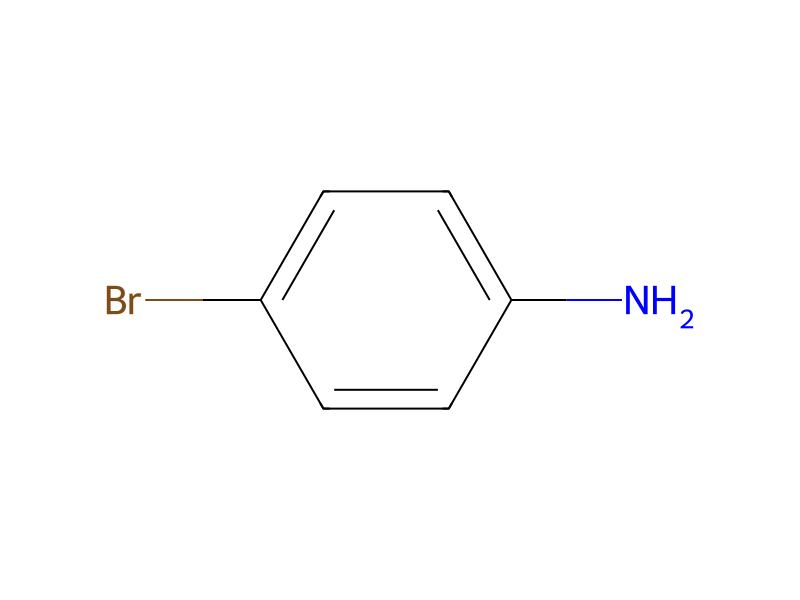

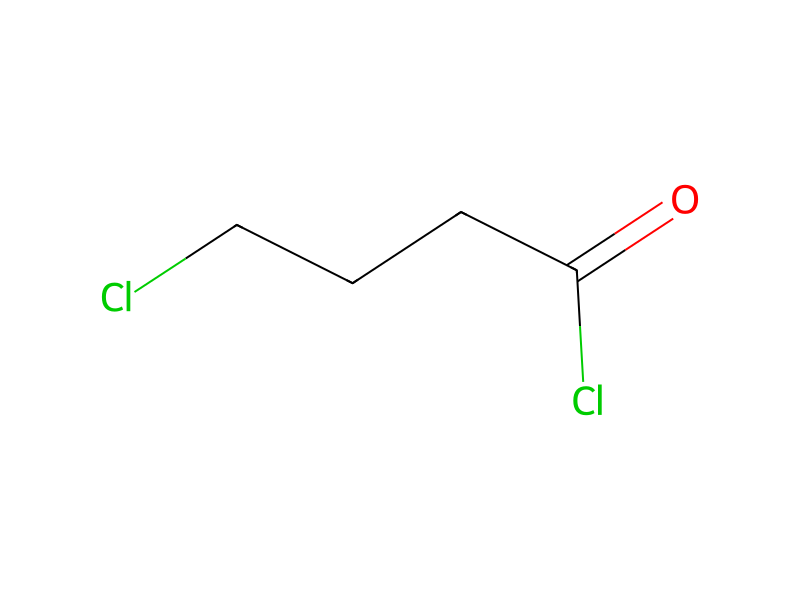

Product 1

Reagents, catalysts & solvents 4




Conditions
- Temperature
- 5 °C
Procedure
To a solution of 4-bromoaniline (10 g, 58 mmol) in dry THF (150 ml), under argon was added triethylamine (6 g, 59 mmol) and 4-chlorobutyryl chloride (8.2 g 58 mmol) at 5° C. The mixture was stirred at 5° C. for 40 mins and potassium tert-butoxide (16 g, 142 mmol) added in one portion. After 10 mins the mixture was warmed to 25° C. and stirred for 4 hours, then left to stand overnight. Water (10 ml) was added and the mixture stirred for 30 mins. The mixture was diluted with ethyl acetate (200 ml) and 3% Na2CO3 (aq) (120 ml). The aqueous layer was reextracted with ethyl acetate (100 ml) and the combined extracts dried over Na2SO4. The solvent was evaporated in vacuo to give a brown solid (12 g). Chromatography on silica gel (~200 g) using 30-60% ethyl acetate/hexane gradient elution gave the tide compound as a yellow crystalline solid (10.24 g, 74%).
Workup
- temperatureAfter 10 mins the mixture was warmed to 25° C.
- stirringstirred for 4 hours
- waitleft
- waitto stand overnight
- stirringthe mixture stirred for 30 mins
- dry with materialthe combined extracts dried over Na2SO4
- customThe solvent was evaporated in vacuo
Sources & evidence
- ORD record
- ord-e53a991a20c34d9ba8a1809a59cdfb58
- Source dataset
- uspto-grants-2000_04
- Patent number
- US06046210
Reaction notes
Loading…