Hydrochloric Acid → 3,4-Dihydroxybenzonitrile
Reaction equation

C[O:2][C:3]1[CH:4]=[C:5]([CH:8]=[CH:9][C:10]=1[OH:11])[C:6]#[N:7].[Br-].[Li+].CN(C=O)C.Cl>O>[OH:2][C:3]1[CH:4]=[C:5]([CH:8]=[CH:9][C:10]=1[OH:11])[C:6]#[N:7]Participants
Reactant 4


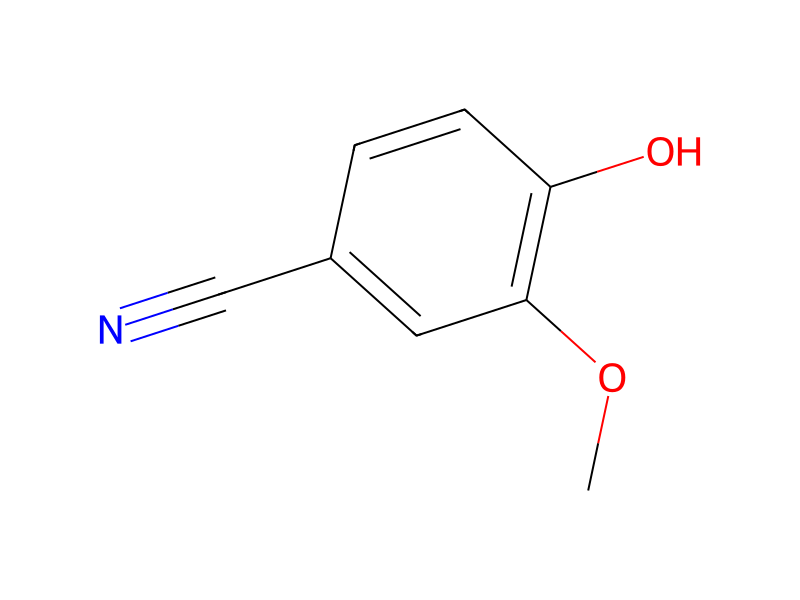
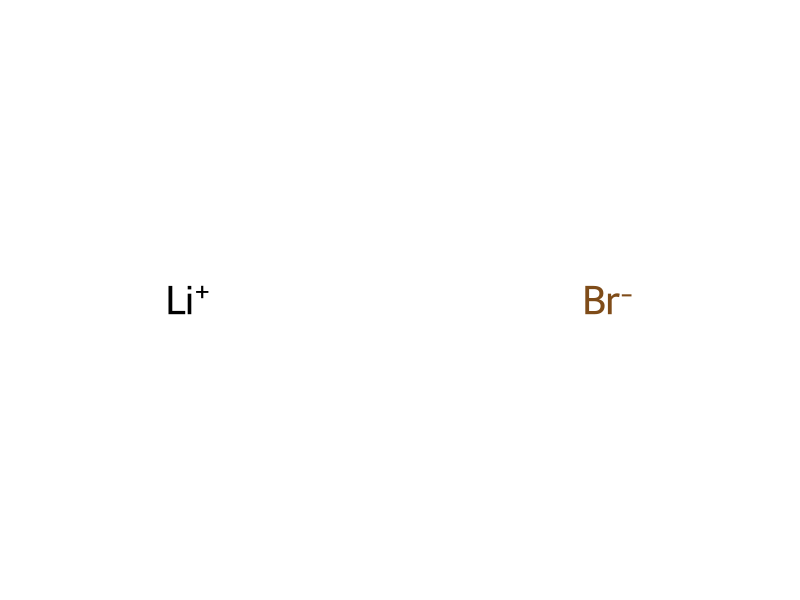
Product 1

Reagents, catalysts & solvents 1

Conditions
- Temperature
- 180 °C
Procedure
To a 4-necked 1 L round bottom flask equipped with a mechanical stirrer and a condenser, 3-methoxy-4-hydroxybenzonitrile 2a (70.7 g, 0.47 mole), lithium bromide (81.3 g, 0.94 mole), and N,N′-dimethylformamide (220 mL) were added successively at 25° C., followed by heating in an oil bath at 180° C. for 10 hours. The reaction mixture was allowed to cool to 85° C. Water (285 mL) was then added, and upon cooling to 25° C., and treatment with concentrated hydrochloric acid proceed. The resulting mixture was extracted with ethyl acetate (300 mL×2). The extract was concentrated under reduced pressure to give a pale brown solid. Water (430 mL) was added and the mixture was then heated till the mixture became homogeneous. After the reaction mixture was cooled down to approximately 40° C., 3,4-Dihydroxybenzonitrile was precipitated out and the reaction mixture was further cooled to 10° C. so as to ensure complete precipitation. The resulting solid was isolated by filtration and dried under reduced pressure. 3,4-Dihydroxybenzonitrile (42.5 g) was obtained as a white solid with a yield of 67% and a purity of greater than 99% as indicated by HPLC analysis.
Workup
- customTo a 4-necked 1 L round bottom flask equipped with a mechanical stirrer and a condenser
- temperatureto cool to 85° C
- temperatureupon cooling to 25° C.
- extractionThe resulting mixture was extracted with ethyl acetate (300 mL×2)
- concentrationThe extract was concentrated under reduced pressure
- customto give a pale brown solid
- temperaturethe mixture was then heated till the mixture
- temperatureAfter the reaction mixture was cooled down to approximately 40° C.
- custom3,4-Dihydroxybenzonitrile was precipitated out
- temperaturethe reaction mixture was further cooled to 10° C. so as
- customprecipitation
- customThe resulting solid was isolated by filtration
- customdried under reduced pressure
Sources & evidence
- ORD record
- ord-0ec6ebd70e564627933198d3dad64aea
- Source dataset
- uspto-grants-2004_09
- Patent number
- US06790977B2
Reaction notes
Loading…