Tetrahydrofuran → 2-Chloro-4-cyclopropylpyrimidine
Reaction equation

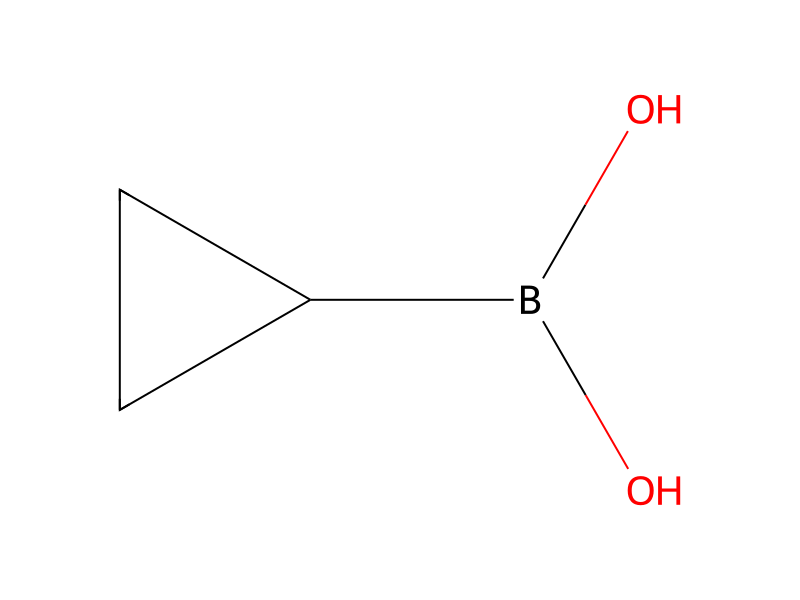
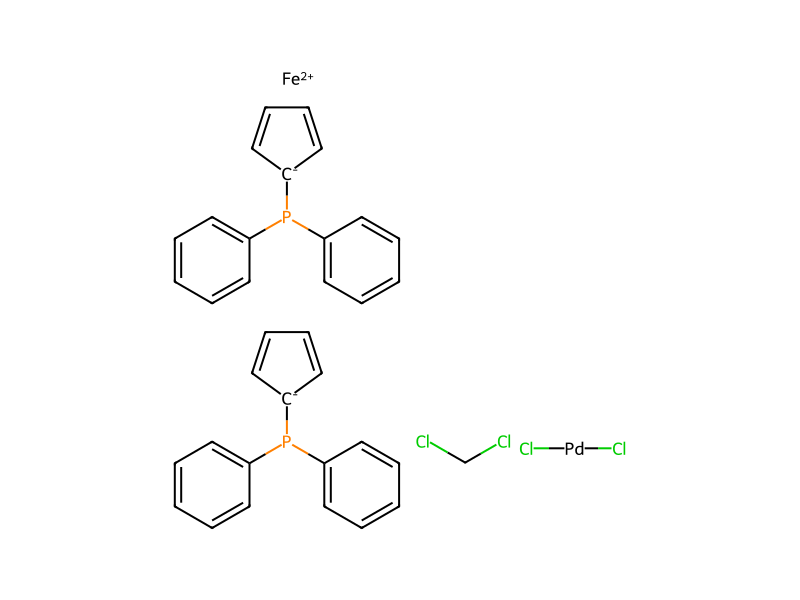
[Cl:1][C:2]1[N:7]=[C:6](Cl)[CH:5]=[CH:4][N:3]=1.[CH:9]1(B(O)O)[CH2:11][CH2:10]1.P([O-])([O-])([O-])=O.[K+].[K+].[K+].C1COCC1>C1C=CC(P(C2C=CC=CC=2)[C-]2C=CC=C2)=CC=1.C1C=CC(P(C2C=CC=CC=2)[C-]2C=CC=C2)=CC=1.Cl[Pd]Cl.[Fe+2].C(Cl)Cl.CCOC(C)=O>[Cl:1][C:2]1[N:7]=[C:6]([CH:9]2[CH2:11][CH2:10]2)[CH:5]=[CH:4][N:3]=1Participants
7
Reactant 4



Product 1

Reagents, catalysts & solvents 2

Procedure
2,4-Dichloropyrimidine (15 g, 101 mmol), cyclopropylboronic acid (8.65 g, 101 mmol), PdCl2(dppf)-CH2Cl2 adduct (8.22 g, 10.07 mmol), and potassium phosphate (53.4 g, 252 mmol) were combined in a 1 L flask. THF (503 mL) was added and the suspension was heated to reflux with stirring overnight. The reaction was then cooled to room temperature, concentrated to −100 mL under reduced pressure, extracted with ethyl acetate, washed with sat NaHCO3, brine, dried over anhydrous sodium sulfate, filtered and concentrated under reduced pressure. The residue was purified by column chromatography on silica gel eluting with EtOAc/Hexanes to give 2-chloro-4-cyclopropylpyrimidine (10.124 g, 58.3 mmol, 58% yield) as an 89:11 mixture with EtOAc.
Workup
- temperaturethe suspension was heated
- temperatureto reflux
- concentrationconcentrated to −100 mL under reduced pressure
- extractionextracted with ethyl acetate
- washwashed
- dry with materialdried over anhydrous sodium sulfate
- filtrationfiltered
- concentrationconcentrated under reduced pressure
- customThe residue was purified by column chromatography on silica gel eluting with EtOAc/Hexanes
Sources & evidence
- ORD record
- ord-0eae5335661748a4950b15686cf58fb2
- Source dataset
- uspto-grants-2014_05
- Patent number
- US08735417B2
Reaction notes
Loading…