Piperazine → (2-Fluoro-phenyl)-piperazin-1-yl-methanone
Reaction equation

[NH:1]1[CH2:6][CH2:5][NH:4][CH2:3][CH2:2]1.C(N(CC)CC)C.[F:14][C:15]1[CH:20]=[CH:19][CH:18]=[CH:17][C:16]=1[C:21](Cl)=[N:22][NH:23][C:24]1[CH:29]=[CH:28][CH:27]=[CH:26][CH:25]=1.C(=O)([O-])[O-:32].[K+].[K+]>ClC(Cl)Cl>[F:14][C:15]1[CH:20]=[CH:19][CH:18]=[CH:17][C:16]=1[C:21]([N:1]1[CH2:6][CH2:5][NH:4][CH2:3][CH2:2]1)=[O:32].[C:24]1([NH:23][NH2:22])[CH:29]=[CH:28][CH:27]=[CH:26][CH:25]=1Participants
7




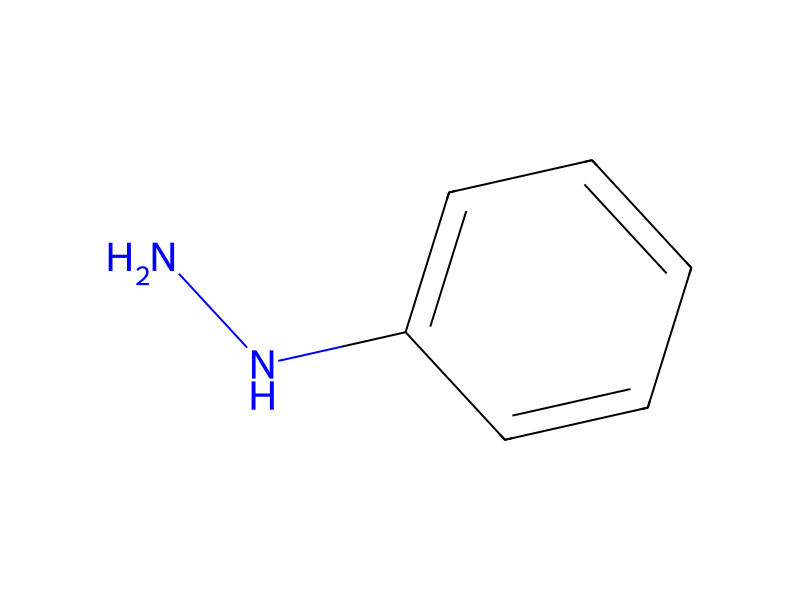


Procedure
To a stirred mixture of 12.5 parts of piperazine, 3.6 parts of N,N-diethylethanamine and 75 parts of trichloromethane was added a solution of 9 parts of 2-fluoro-N-phenyl-benzenecarbohydrazonoyl chloride in 75 parts of trichloromethane. The whole was stirred for 2 hours at room temperature. After the addition of 5 parts of potassium carbonate, the reaction mixture was stirred for 30 minutes at reflux temperature. The mixture was cooled, washed with 100 parts of water and the layers were separated. The organic layer was dried, filtered and evaporated, yielding 6 parts (55.8%) of 1-(2-fluorobenzoyl)-piperazine, 2-phenylhydrazine as a residue (int. 9).
Workup
- stirringthe reaction mixture was stirred for 30 minutes
- temperatureat reflux temperature
- temperatureThe mixture was cooled
- washwashed with 100 parts of water
- customthe layers were separated
- customThe organic layer was dried
- filtrationfiltered
- customevaporated
Sources & evidence
- ORD record
- ord-dd565b7f8f08445dba38c93306b8a538
- Source dataset
- uspto-grants-1990_09
- Patent number
- US04957916
Reaction notes
Loading…