Hydrochloric Acid → 6-(Decyloxy)naphthalen-2-OL
Reaction equation

[CH2:1](Br)[CH2:2][CH2:3][CH2:4][CH2:5][CH2:6][CH2:7][CH2:8][CH2:9][CH3:10].[OH:12][C:13]1[CH:22]=[CH:21][C:20]2[C:15](=[CH:16][CH:17]=[C:18]([OH:23])[CH:19]=2)[CH:14]=1.C(=O)([O-])[O-].[K+].[K+].Cl>O.CN(C)C=O>[CH2:1]([O:12][C:13]1[CH:22]=[CH:21][C:20]2[C:15](=[CH:16][CH:17]=[C:18]([OH:23])[CH:19]=2)[CH:14]=1)[CH2:2][CH2:3][CH2:4][CH2:5][CH2:6][CH2:7][CH2:8][CH2:9][CH3:10]Participants
7
Reactant 4

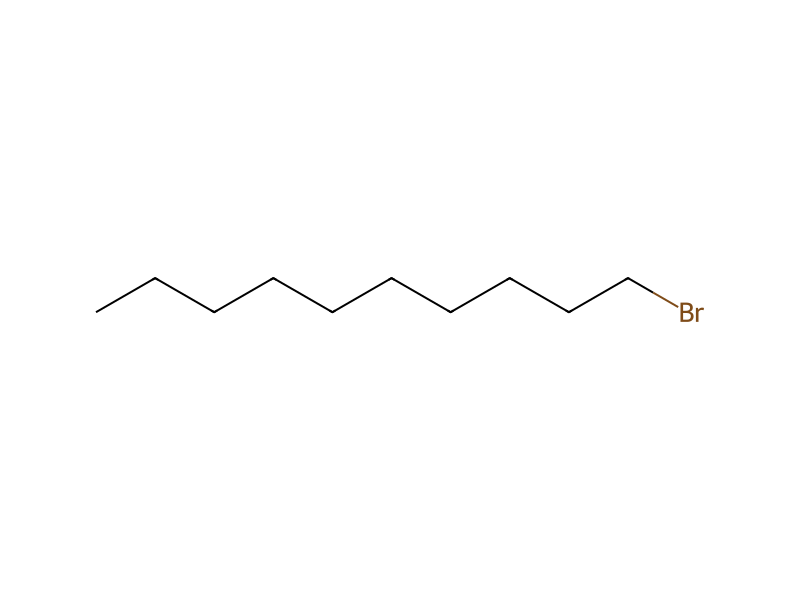


Product 1

Reagents, catalysts & solvents 2


Conditions
- Temperature
- 130 °C
Procedure
Decyl monobromide (7.0 g), 2,6-dihydroxynaphthalene (5.0 g) and anhydrous potassium carbonate (4.0 g) were added to 100 ml of dimethylformamide. After stirring at 130° C. for 2 hours, the reaction solution was poured into water. Dilute hydrochloric acid was added to neutralize the solution, which was extracted with diethyl ether. The extract was distilled to remove the solvent to obtain the titled compound as residue (8.0 g).
Workup
- extractionwas extracted with diethyl ether
- distillationThe extract was distilled
- customto remove the solvent
Sources & evidence
- ORD record
- ord-1366562e8714447b83ddf1f9ea2720fe
- Source dataset
- uspto-grants-1994_05
- Patent number
- US05310500
Reaction notes
Loading…