Acetone → Ethyl 1-isopropylpiperidine-4-carboxylate
Reaction equation

[NH:1]1[CH2:11][CH2:10][CH:4]([C:5]([O:7][CH2:8][CH3:9])=[O:6])[CH2:3][CH2:2]1.[CH3:12][C:13]([CH3:15])=O.C(O[BH-](OC(=O)C)OC(=O)C)(=O)C.[Na+].C([O-])(O)=O.[Na+]>ClCCCl>[CH3:12][CH:13]([N:1]1[CH2:2][CH2:3][CH:4]([C:5]([O:7][CH2:8][CH3:9])=[O:6])[CH2:10][CH2:11]1)[CH3:15]Participants
6





Procedure
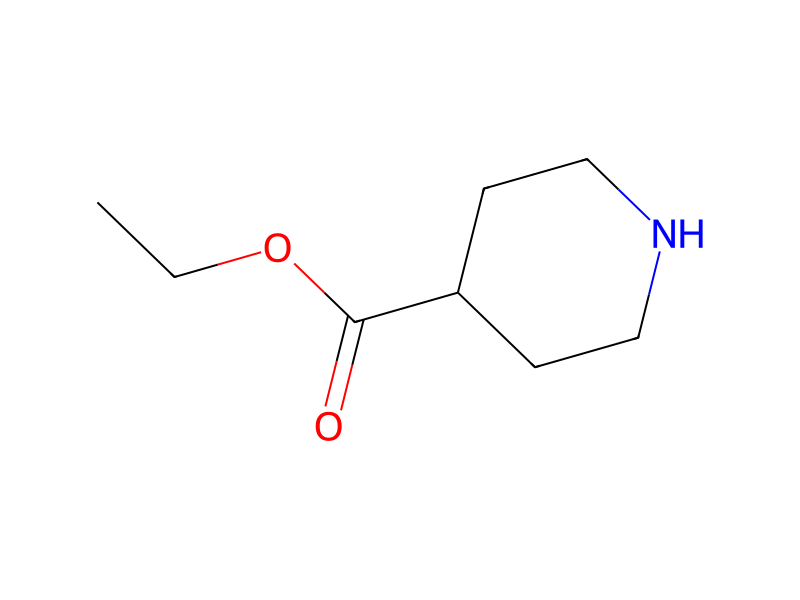
Ethyl isonipecotate (3.2 g, 20 mmol, 1 eq) was combined with acetone (5.8 g, 100 mmol, 5 eq), sodium triacetoxyborohydride (10.5 g, 50 mmol, 2.5 eq) and 1,2-dichloroethane (200 mL). The reaction mixture was stirred at rt for 72 h. Saturated aqueous NaHCO3 was added, and the mixture was extracted with CH2Cl2. The organic extracts were dried, filtered through a silica gel pad, and concentrated in vacuo to provide 3.72 g (93%) of ethyl 1-(1-methylethyl)-4-piperidine carboxylate as a colorless liquid.
Workup
- extractionthe mixture was extracted with CH2Cl2
- customThe organic extracts were dried
- filtrationfiltered through a silica gel pad
- concentrationconcentrated in vacuo
Sources & evidence
- ORD record
- ord-5d2185d5943d427bb76bd84db89ac2f7
- Source dataset
- uspto-grants-2003_02
- Patent number
- US06515004B1
Reaction notes
Loading…