Triphenylphosphine → 3-(Trimethylsilyl)ethynylbenzaldehyde
Reaction equation

Br[C:2]1[CH:3]=[C:4]([CH:7]=[CH:8][CH:9]=1)[CH:5]=[O:6].[C:10]([Si:12]([CH3:15])([CH3:14])[CH3:13])#[CH:11].C1(P(C2C=CC=CC=2)C2C=CC=CC=2)C=CC=CC=1>C([O-])(=O)C.[Pd+2].C([O-])(=O)C.C(N(CC)CC)C>[CH3:13][Si:12]([C:10]#[C:11][C:2]1[CH:3]=[C:4]([CH:7]=[CH:8][CH:9]=1)[CH:5]=[O:6])([CH3:15])[CH3:14]Participants
6





Procedure
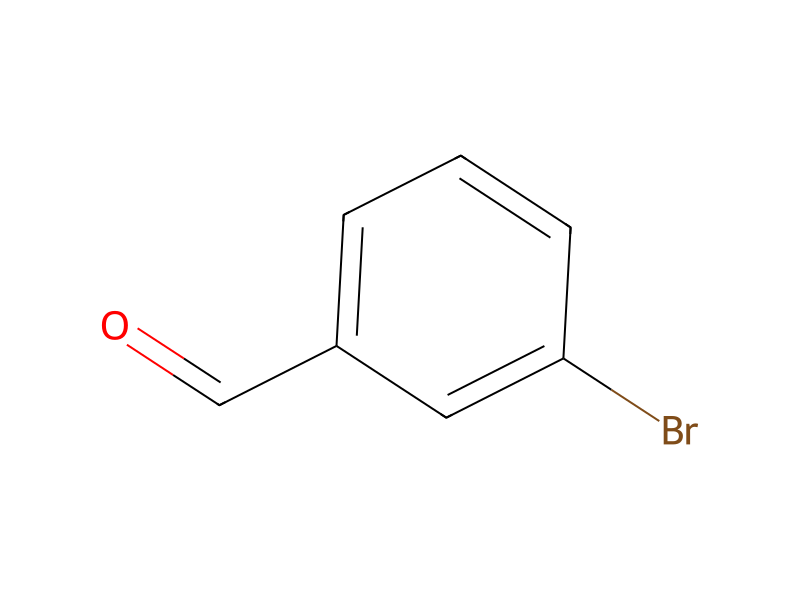
3-Bromobenzaldehyde (30 g, 162 mmol), ethynyl-trimethylsilane (30 mL, 211 mmol), triphenylphosphine (2.13 g, 8 mmol), palladium (II) acetate (0.91 g, 4 mmol) and triethylamine (540 mL, 0.3 M) were heated at 90° C. for 5 hours, after cooling to ambient temperature, the mixture was filtered. The filtrate was evaporated, and the residue was subjected to silica gel chromatography (hexane to 4:96 diethyl ether/hexane) to afford 3-trimethylsilanylethynyl-benzaldehyde 73(a1).
Workup
- filtrationthe mixture was filtered
- customThe filtrate was evaporated
Sources & evidence
- ORD record
- ord-5ff852fffb0f49989906a4f33ddb0949
- Source dataset
- uspto-grants-2005_11
- Patent number
- US06967198B2
Reaction notes
Loading…