Hydrochloric Acid → HCID 18551200, compound
Reaction equation

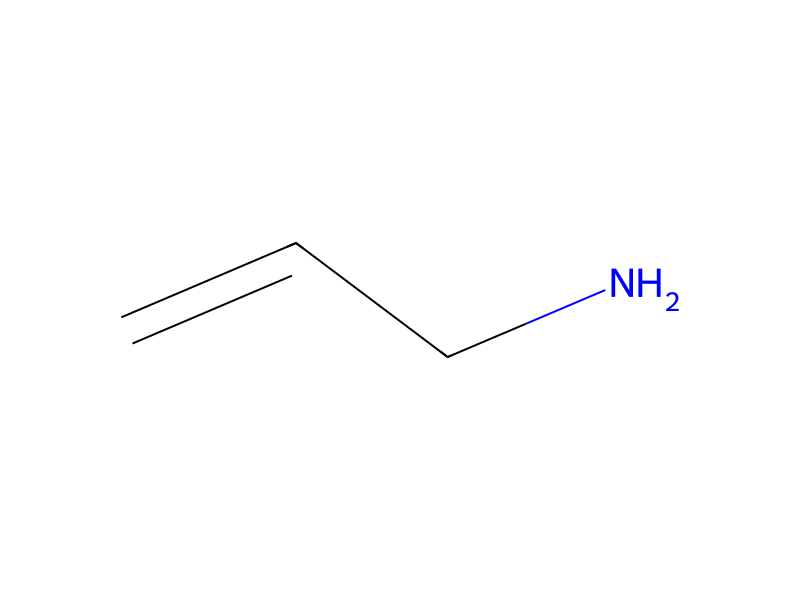
[Br:1][C:2]1[CH:10]=[C:9]([N+:11]([O-:13])=[O:12])[CH:8]=[CH:7][C:3]=1[C:4]([OH:6])=O.[CH2:14]([NH2:17])[CH:15]=[CH2:16].S(Cl)(Cl)=O.Cl>O1CCCC1.C(OCC)(=O)C>[CH2:14]([NH:17][C:4](=[O:6])[C:3]1[CH:7]=[CH:8][C:9]([N+:11]([O-:13])=[O:12])=[CH:10][C:2]=1[Br:1])[CH:15]=[CH2:16]Participants
7






Procedure
5 g of 2-bromo-4-nitrobenzoic acid is converted into acid chloride, which is dissolved in 50 ml of tetrahydrofuran and added in drops to 3 ml of allylamine in 20 ml of tetrahydro-furan, by 2 hours of boiling with 30 ml of thionyl chloride and distilling-off of excess thionyl chloride. After 20 hours at room temperature, it is dispersed between 1N hydrochloric acid and ethyl acetate, the ethyl acetate phase is washed with water, dried (Na2SO4) and concentrated by evaporation. The residue is crystallized with hexane. 5.6 g of 2-bromo-4-nitrobenzoic acid-allylamide, melting point 98-100° C., is obtained.
Workup
- washthe ethyl acetate phase is washed with water
- dry with materialdried (Na2SO4)
- concentrationconcentrated by evaporation
- customThe residue is crystallized with hexane
Sources & evidence
- ORD record
- ord-827fb0a26d264a3084bbcd55367cd345
- Source dataset
- uspto-grants-2001_06
- Patent number
- US06245804B1
Reaction notes
Loading…