Hydrochloric Acid → Ethyl oxo(pyridin-3-yl)acetate
Reaction equation

C([Li])CCC.Br[C:7]1[CH:8]=[N:9][CH:10]=[CH:11][CH:12]=1.[C:13](OCC)(=[O:19])[C:14]([O:16][CH2:17][CH3:18])=[O:15].Cl.C(=O)(O)[O-].[Na+]>C(OCC)(=O)C.CCCCCC.C(OCC)C>[N:9]1[CH:10]=[CH:11][CH:12]=[C:7]([C:13](=[O:19])[C:14]([O:16][CH2:17][CH3:18])=[O:15])[CH:8]=1Participants
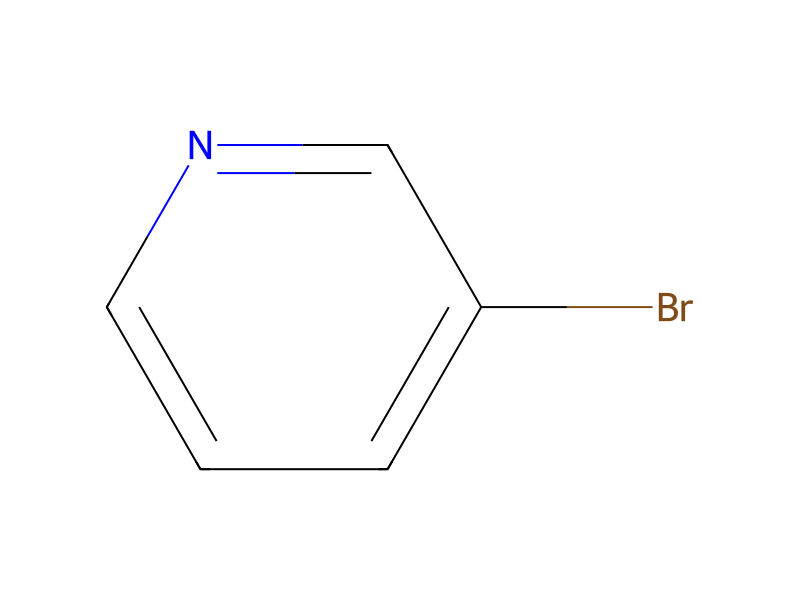
Reactant 5




Product 1

Reagents, catalysts & solvents 2


Conditions
- Temperature
- 0 °C
Procedure
n-Butyllithium (1.6N hexane solution, 108 ml) was added dropwise to a diethyl ether solution (400 ml) of 3-bromopyridine (25.7 g) at −78° C. over 1 hour under nitrogen atmosphere. After stirring for 30 minutes, a diethyl ether solution (100 ml) of diethyl oxalate (28.6 g) was added dropwise thereto at −78° C. over 1 hour. The reaction mixture was further mixed for 30 minutes, allowed to warm to 0° C., and 1N hydrochloric acid (200 ml) was added thereto. After stirring for 30 minutes, sodium bicarbonate was added thereto to neutralize the reaction mixture. The organic layer was separated, washed with an aqueous saturated solution of sodium chloride, dried (MgSO4) and concentrated. The residue was subjected to silica gel chromatography to obtain ethyl 3-pyridylglyoxylate (13.1 g, yield 45%) from an ethyl acetate-hexane (1:1, v/v)-eluted fraction.
Workup
- waitat −78° C. over 1 hour
- additionThe reaction mixture was further mixed for 30 minutes
- stirringAfter stirring for 30 minutes
- customThe organic layer was separated
- washwashed with an aqueous saturated solution of sodium chloride
- dry with materialdried (MgSO4)
- concentrationconcentrated
Sources & evidence
- ORD record
- ord-f612db15822a4201ba95bf86361da92c
- Source dataset
- uspto-grants-2001_06
- Patent number
- US06251926B1
Reaction notes
Loading…