Hydrochloric Acid → HCID 22763213, compound
Reaction equation

[C:1]1(=[O:10])[O:9][C:6]([CH3:8])([CH3:7])[O:5][C:3](=[O:4])[CH2:2]1.C(N(CC)CC)C.[F:18][C:19]([F:30])([F:29])[C:20]1[CH:25]=[CH:24][C:23]([N:26]=[C:27]=[O:28])=[CH:22][CH:21]=1.Cl>CS(C)=O.O>[CH3:7][C:6]1([CH3:8])[O:9][C:1](=[O:10])[C:2]([C:27](=[O:28])[NH:26][C:23]2[CH:24]=[CH:25][C:20]([C:19]([F:18])([F:30])[F:29])=[CH:21][CH:22]=2)=[C:3]([OH:4])[O:5]1Participants
7



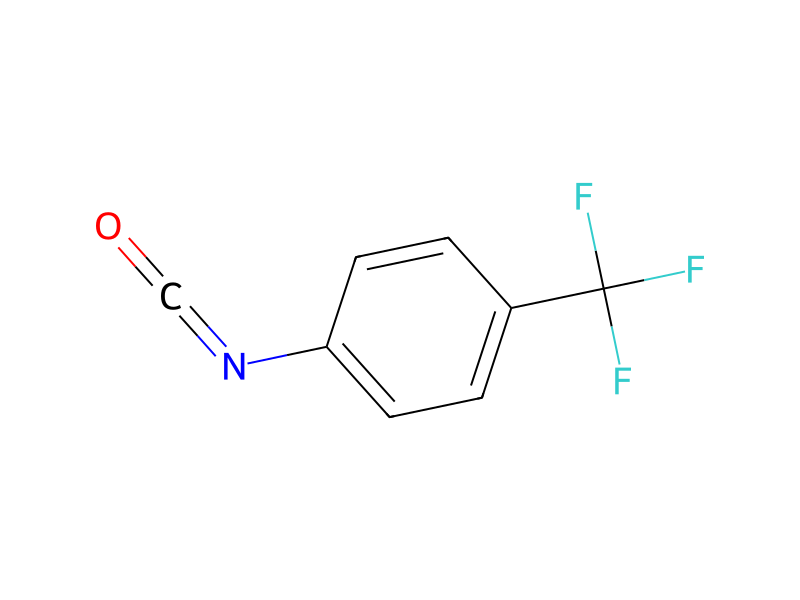



Procedure
To a solution of 14.4 g of isopropylidene malonate in 150 ml of dimethyl sulphoxide were added dropwise, at room temperature, 10.1 g of triethylamine and thereafter, at 20° to 30° C., 18.7 g of 4-trifluoromethylphenylisocyanate. The mixture was reacted for 12 to 15 hours at room temperature and the resultant solution was poured into a solution of 15 ml of concentrated hydrochloric acid in 350 ml of water. The precipitate which formed was collected with suction. Recrystallisation from 130 ml of acetone yielded the product of the formula ##STR5## with a melting point of 206°-208° C.
Workup
- customat 20° to 30° C.
- customThe mixture was reacted for 12 to 15 hours at room temperature
- customThe precipitate which formed
- customwas collected with suction
- customRecrystallisation from 130 ml of acetone
- customyielded the product of the formula ##STR5## with a melting point of 206°-208° C.
Sources & evidence
- ORD record
- ord-d4e87e1e7bc14752a6927b995263320b
- Source dataset
- uspto-grants-1978_10
- Patent number
- US04123551
Reaction notes
Loading…