Piperidine → 7-((R)-3-benzyloxy-2-methylaminopropylamino)-3-(2-trifluoromethylphenyl)-2H-isoquinolin-1-one
Reaction equation

CN([P+](ON1N=[N:19][C:14]2[CH:15]=[CH:16][CH:17]=[CH:18][C:13]1=2)(N(C)C)N(C)C)C.F[P-](F)(F)(F)(F)F.C([N:31]([CH2:35]C)[CH:32]([CH3:34])[CH3:33])(C)C.Cl.CNOC.C(N(C)[C@H](C(O)=O)C[O:62][CH2:63][C:64]1[CH:69]=[CH:68][CH:67]=[CH:66][CH:65]=1)(OCC1C2C(=CC=CC=2)C2C1=CC=CC=2)=O.[H-].[Al+3].[Li+].[H-].[H-].[H-].[Cl-].[NH4+].NC1C=C2C([CH:87]=[C:88]([C:94]3[CH:99]=[CH:98][CH:97]=[CH:96][C:95]=3[C:100]([F:103])([F:102])[F:101])[NH:89][C:90]2=[O:93])=CC=1.C([BH3-])#N.[Na+].C(=O)(O)[O-].[Na+].N1CCCCC1>ClCCl.C(O)(=O)C>[CH2:63]([O:62][CH2:34][C@H:32]([NH:31][CH3:35])[CH2:33][NH:19][C:14]1[CH:13]=[C:18]2[C:17]([CH:87]=[C:88]([C:94]3[CH:99]=[CH:98][CH:97]=[CH:96][C:95]=3[C:100]([F:101])([F:102])[F:103])[NH:89][C:90]2=[O:93])=[CH:16][CH:15]=1)[C:64]1[CH:69]=[CH:68][CH:67]=[CH:66][CH:65]=1Participants
Reactant 10
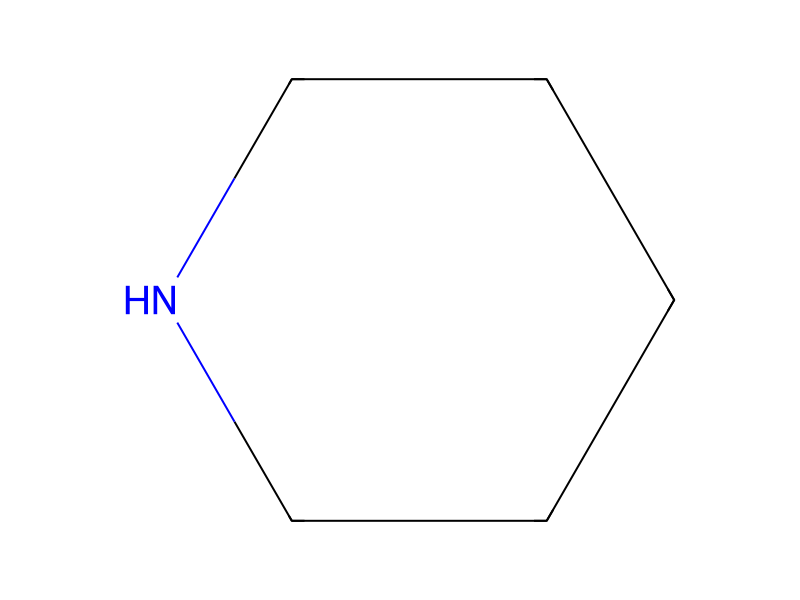 HCID 8082Piperidine
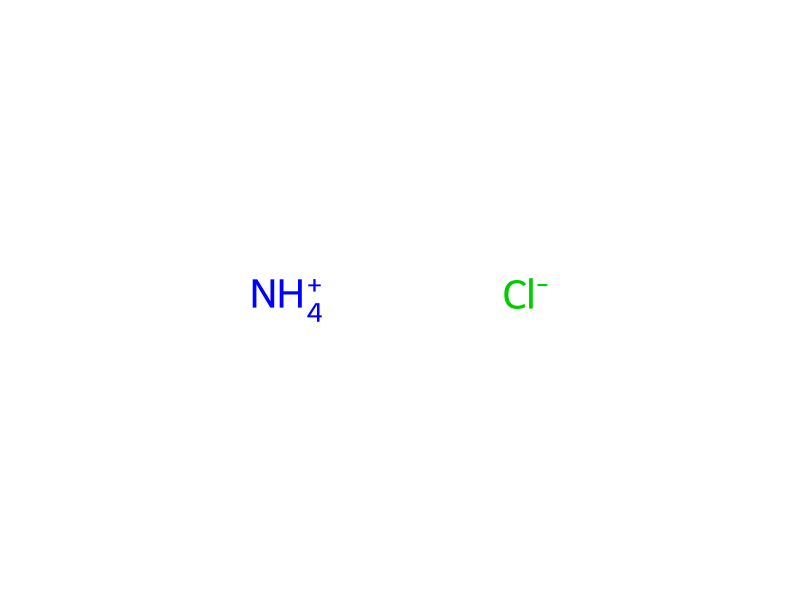 HCID 25517Ammonium Chloride
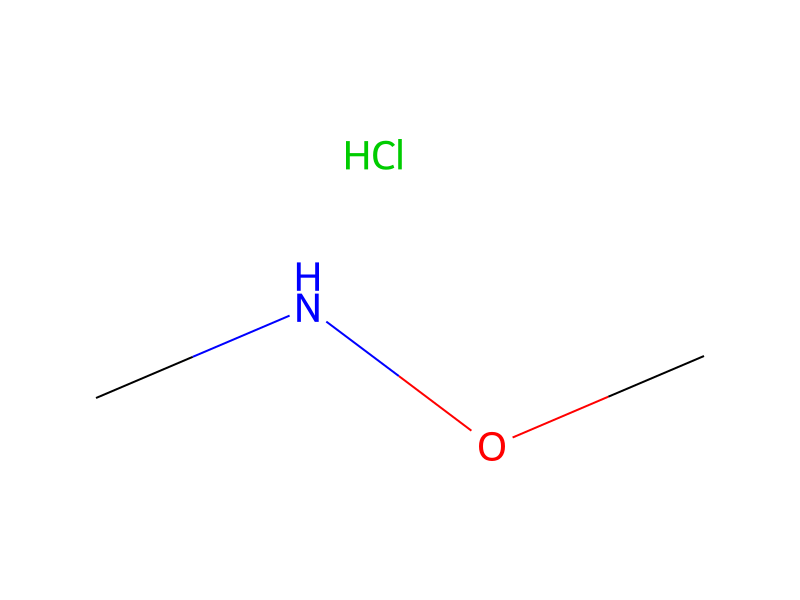 HCID 81138Methanamine, N-methoxy-, hydrochloride (1:1)
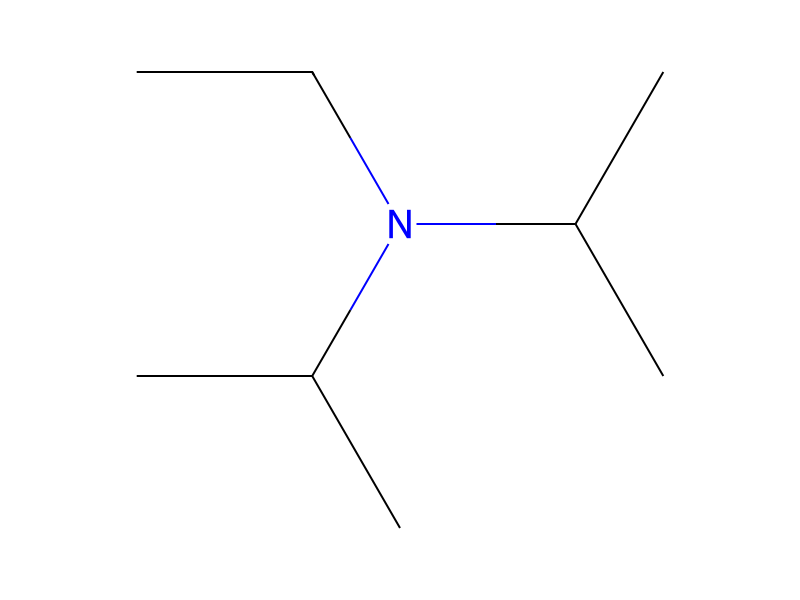 HCID 81531Diisopropylethylamine
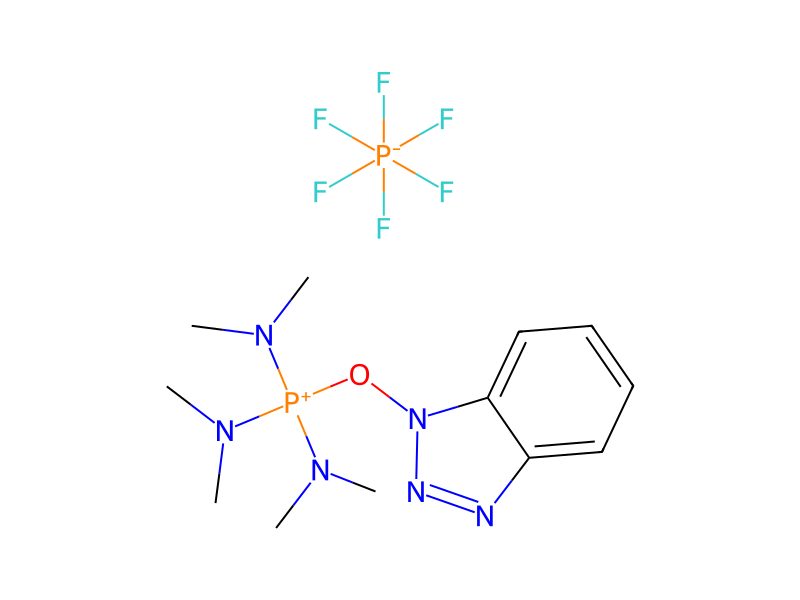 HCID 151348Benzotriazol-1-yloxy-tris(dimethylamino)phosphonium hexafluorophosphate
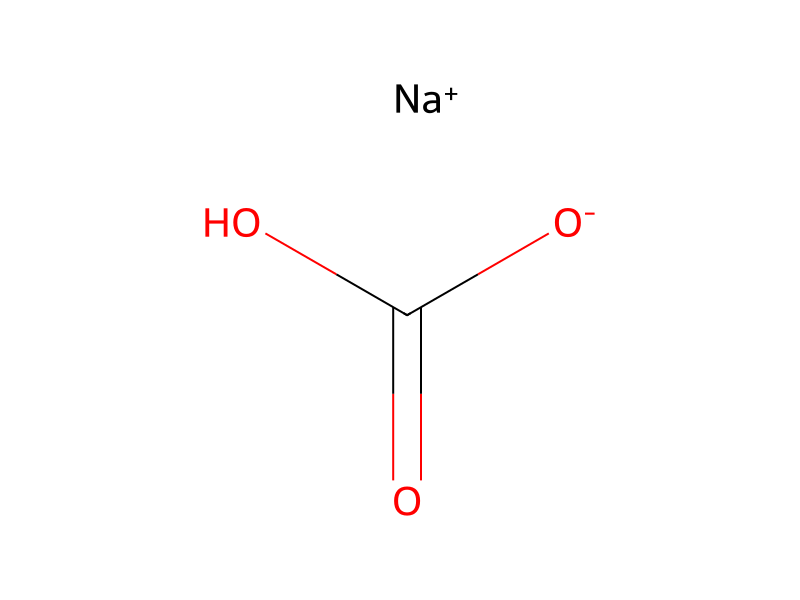 HCID 516892Sodium Bicarbonate
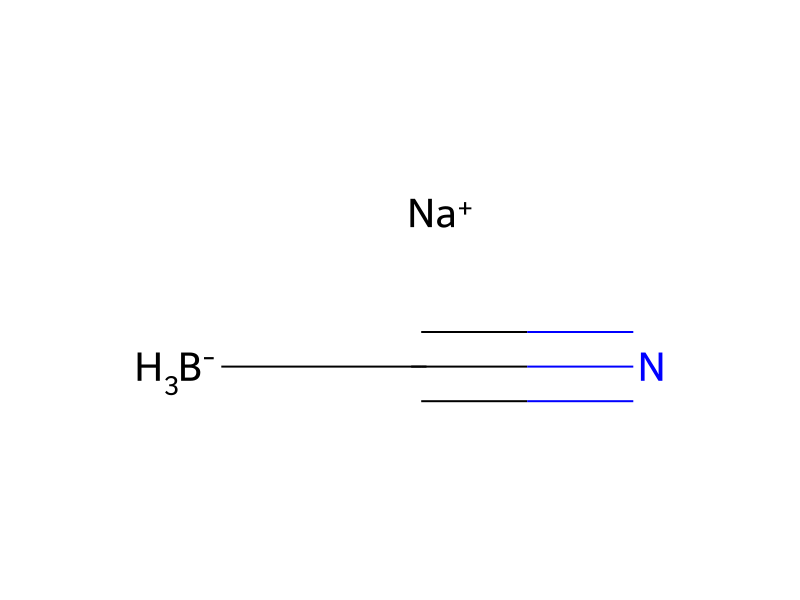 HCID 5003444Sodium cyanoborohydride
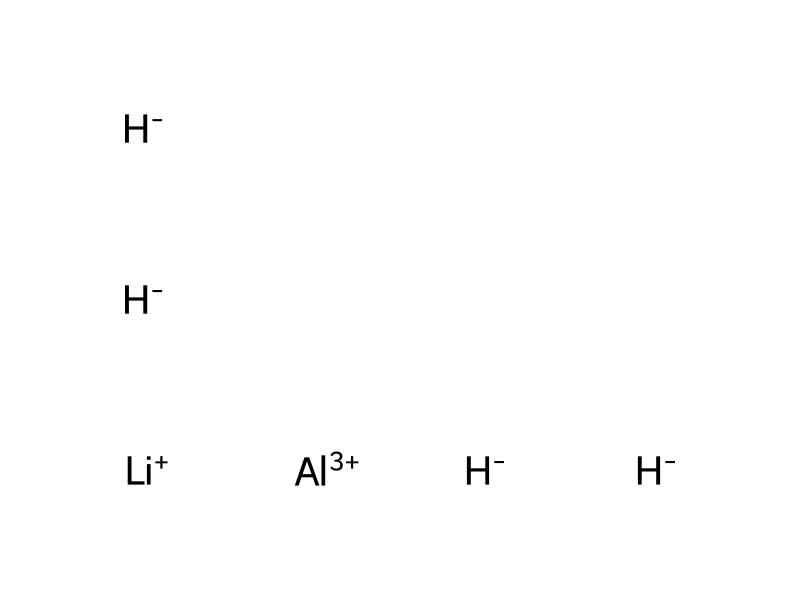 HCID 21226445Aluminium lithium hydride2×
 HCID 231567387-amino-3-(2-trifluoromethylphenyl)-2H-isoquinolin-1-one
 HCID 44593820Fmoc-MeSer(Bzl)-OH
Product 1

Reagents, catalysts & solvents 2
Procedure
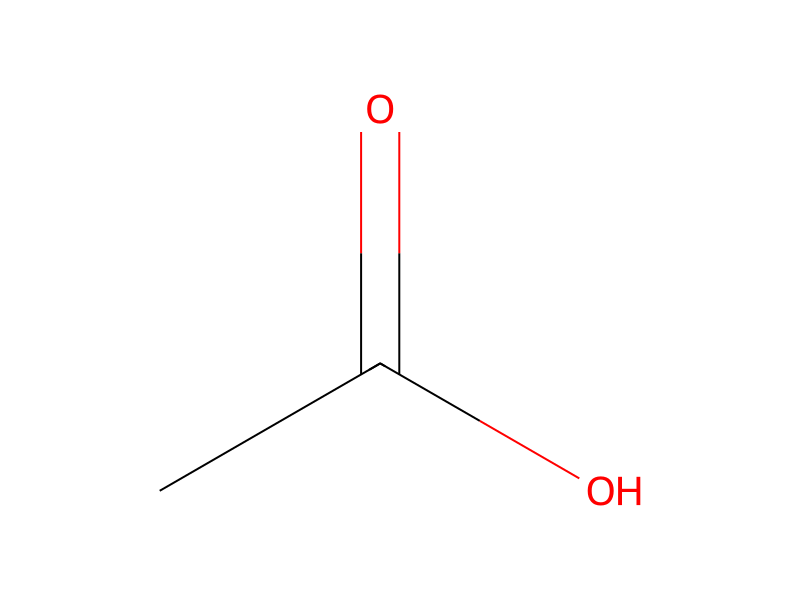
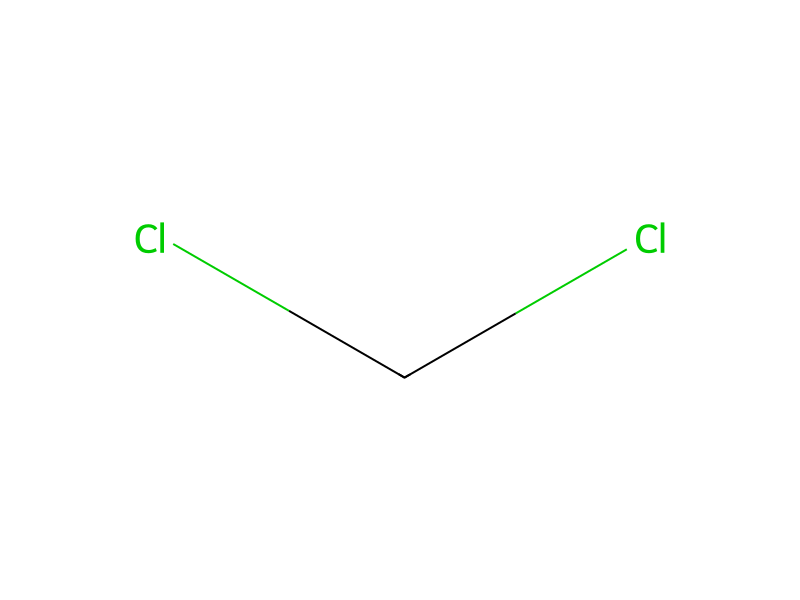
BOP Reagent (1.2 g, 2.8 mmol), N,N-diisopropylethylamine (0.5 ml, 3 mmol), and N,O-dimethylhydroxyamine hydrochloride (273 mg, 2.8 mmol) were added to a dichloromethane solution that contained Fmoc-MeSer(Bzl)-OH (1 g, 2.3 mmol). The obtained mixture was stirred at a room temperature for 1 day. Thereafter, the reaction solution was successively washed with 1 N hydrochloric acid, with a saturated sodium bicarbonate aqueous solution, and with a saturated saline solution. Thereafter, the resultant was dried over anhydrous sodium sulfate, and the solvent was distilled away under reduced pressure. The obtained residue was purified by silica gel column chromatography (ethyl acetate:hexane=1:2). 238 mg out of the obtained oil product (850 mg) was dissolved in THF (2 ml), and the obtained solution was added dropwise at −78° C. to a THF solution (8 ml) that contained lithium aluminum hydride (10 mg, 0.25 mmol). The obtained mixture was stirred at −78° C. for 1.5 hours. Thereafter, lithium aluminum hydride (10 mg, 0.25 mmol) was further added thereto, and the obtained mixture was stirred at −78° C. for 30 minutes. Thereafter, a saturated ammonium chloride aqueous solution was added to the reaction solution at −78° C., and the temperature of the obtained mixture was then increased to a room temperature. The mixture was filtered through celite, and the filtrate was then extracted with dichloromethane. The extract was washed with a saturated saline solution, and was dried over anhydrous sodium sulfate, followed by concentration under reduced pressure. The generated oil product was dissolved in 5 ml of methanol without being purified. Thereafter, 7-amino-3-(2-trifluoromethylphenyl)-2H-isoquinolin-1-one (100 mg, 0.33 mmol) and 1 ml of acetic acid were added thereto. Thereafter, sodium cyanoborohydride (135 mg, 2.1 mmol) was added to the mixture under cooling on ice, and the temperature of the obtained mixture was increased to a room temperature, followed by stirring for 3 hours. Thereafter, a saturated sodium bicarbonate aqueous solution was added to the reaction solution, and the mixture was then extracted with dichloromethane. The extract was dried over anhydrous sodium sulfate, and was then concentrated. The obtained residue was purified by silica gel column chromatography (ethyl acetate hexane=1:2 to 2:1), so as to obtain a yellow foaming substance. This yellow foaming substance was dissolved in dichloromethane (5 ml), and piperidine (1 ml) was then added to the solution. The obtained mixture was stirred at a room temperature. Four hours later, the reaction solution was concentrated, and 1 N hydrochloric acid (2 ml) and methanol (2 ml) were then added thereto, followed by stirring at 40° C. Six hours later, the reaction solution was neutralized with a 1 N sodium hydroxide aqueous solution under cooling on ice. A saturated sodium bicarbonate aqueous solution was added to the resultant, and the mixture was then extracted with dichloromethane. The extract was dried over anhydrous sodium sulfate, and was then concentrated. The obtained residue was purified by amino TLC used for preparative separation (Fuji Silysia Chemical Ltd., PLC05; dichloromethane:methanol=20:1), so as to obtain 7-((R)-3-benzyloxy-2-methylaminopropylamino)-3-(2-trifluoromethylphenyl)-2H-isoquinolin-1-one (48 mg; yield: 31%) in the form of a yellow foaming substance.
Workup
- washThereafter, the reaction solution was successively washed with 1 N hydrochloric acid, with a saturated sodium bicarbonate aqueous solution
- dry with materialThereafter, the resultant was dried over anhydrous sodium sulfate
- distillationthe solvent was distilled away under reduced pressure
- customThe obtained residue was purified by silica gel column chromatography (ethyl acetate:hexane=1:2)
- dissolution238 mg out of the obtained oil product (850 mg) was dissolved in THF (2 ml)
- additionthe obtained solution was added dropwise at −78° C. to a THF solution (8 ml) that
- stirringThe obtained mixture was stirred at −78° C. for 1.5 hours
- stirringthe obtained mixture was stirred at −78° C. for 30 minutes
- temperaturethe temperature of the obtained mixture was then increased to a room temperature
- filtrationThe mixture was filtered through celite
- extractionthe filtrate was then extracted with dichloromethane
- washThe extract was washed with a saturated saline solution
- dry with materialwas dried over anhydrous sodium sulfate
- concentrationfollowed by concentration under reduced pressure
- dissolutionThe generated oil product was dissolved in 5 ml of methanol
- customwithout being purified
- temperatureunder cooling on ice
- temperaturethe temperature of the obtained mixture was increased to a room temperature
- stirringby stirring for 3 hours
- extractionthe mixture was then extracted with dichloromethane
- dry with materialThe extract was dried over anhydrous sodium sulfate
- concentrationwas then concentrated
- customThe obtained residue was purified by silica gel column chromatography (ethyl acetate hexane=1:2 to 2:1)
- customso as to obtain a yellow foaming substance
- stirringThe obtained mixture was stirred at a room temperature
- concentrationFour hours later, the reaction solution was concentrated
- addition1 N hydrochloric acid (2 ml) and methanol (2 ml) were then added
- stirringby stirring at 40° C
- customSix hours
- temperatureunder cooling on ice
- additionA saturated sodium bicarbonate aqueous solution was added to the resultant
- extractionthe mixture was then extracted with dichloromethane
- dry with materialThe extract was dried over anhydrous sodium sulfate
- concentrationwas then concentrated
- customThe obtained residue was purified by amino TLC
- customused for preparative separation (Fuji Silysia Chemical Ltd., PLC05; dichloromethane:methanol=20:1)
Sources & evidence
- ORD record
- ord-2fa66c95b60140e0af16a566e8f7e7bb
- Source dataset
- uspto-grants-2010_10
- Patent number
- US07820693B2
Reaction notes
Loading…