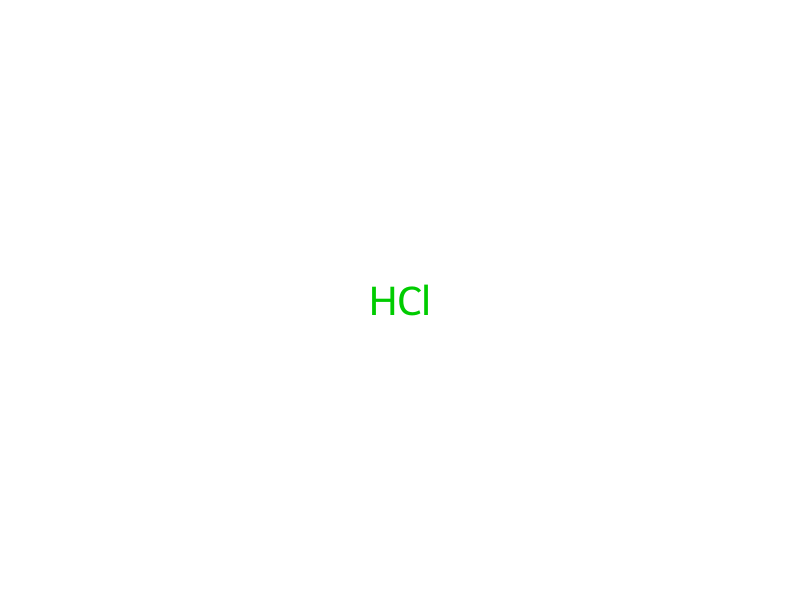
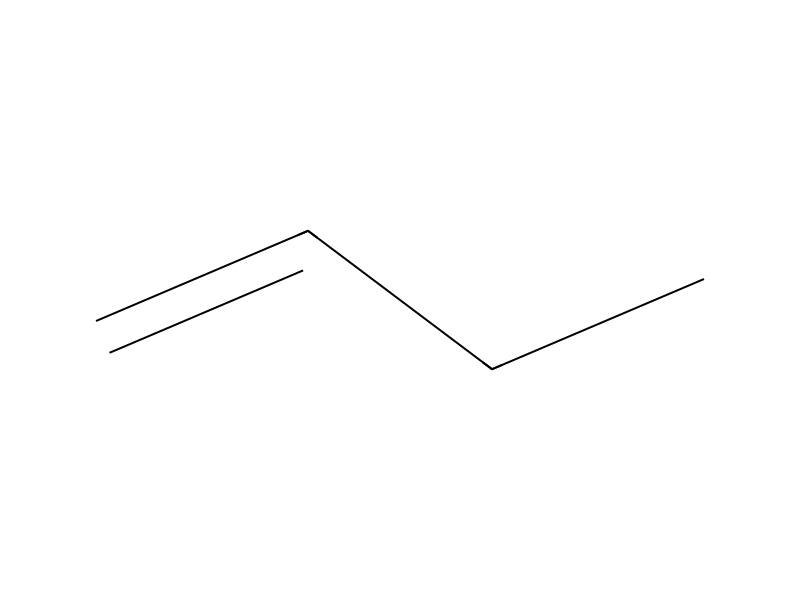
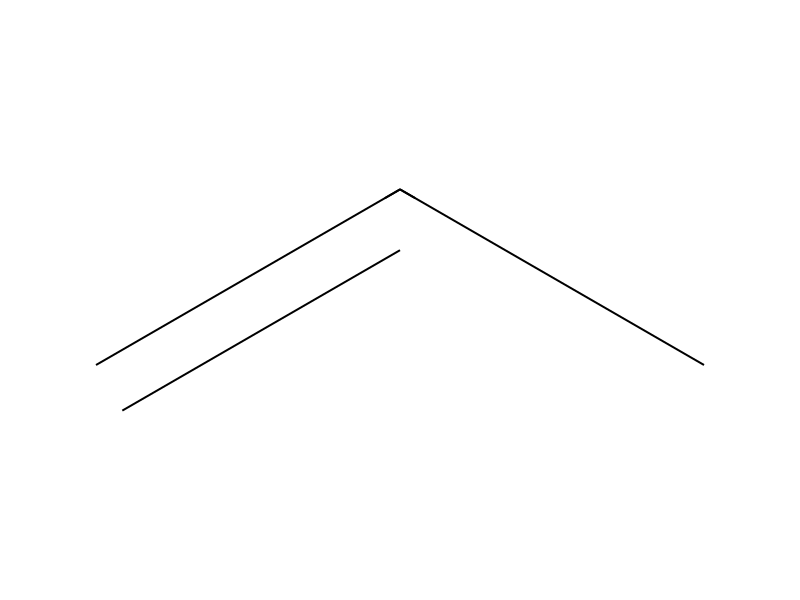
Hydrochloric Acid → Ethene propene 1-butene
반응식

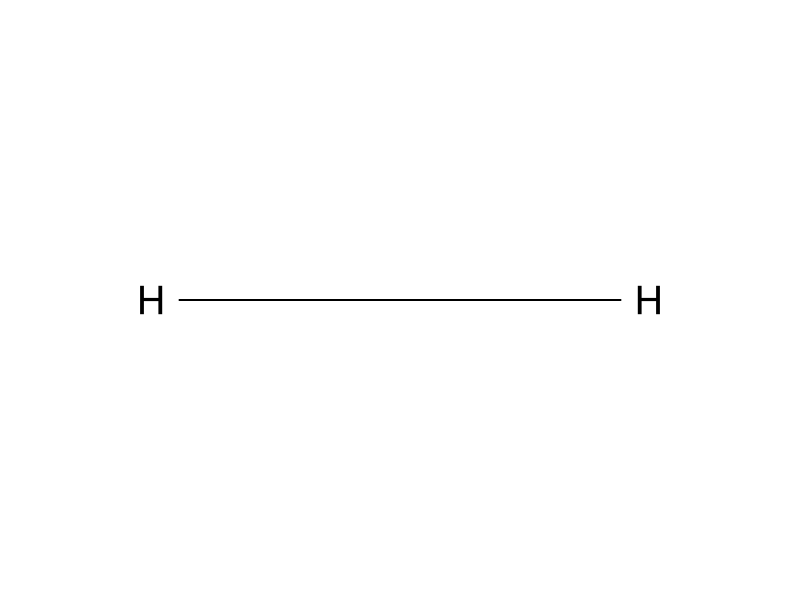
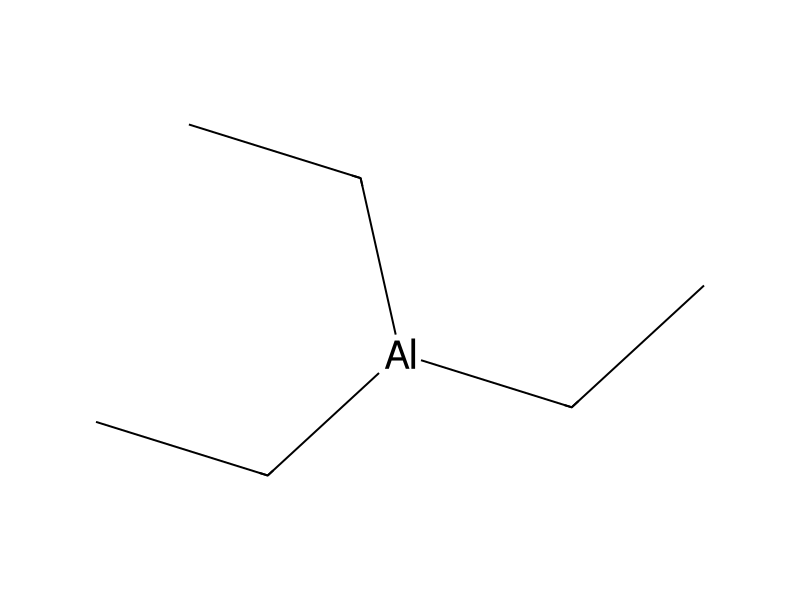
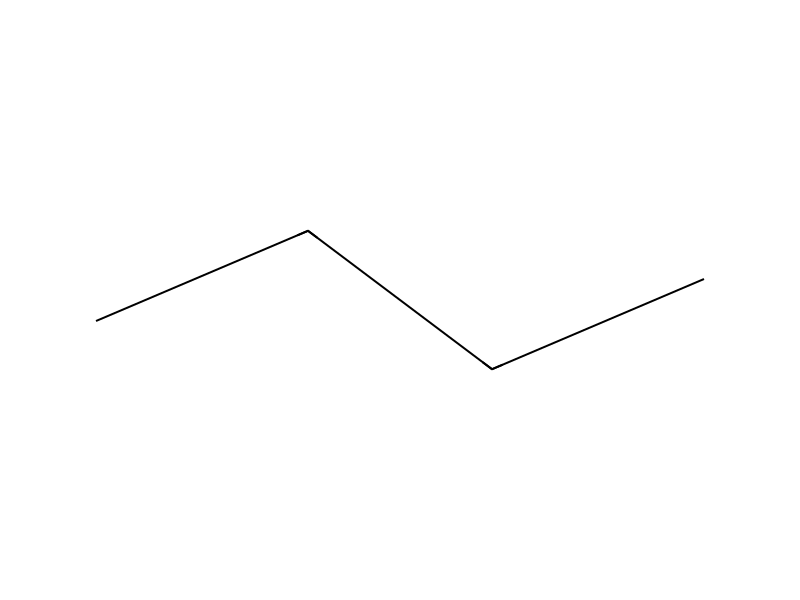
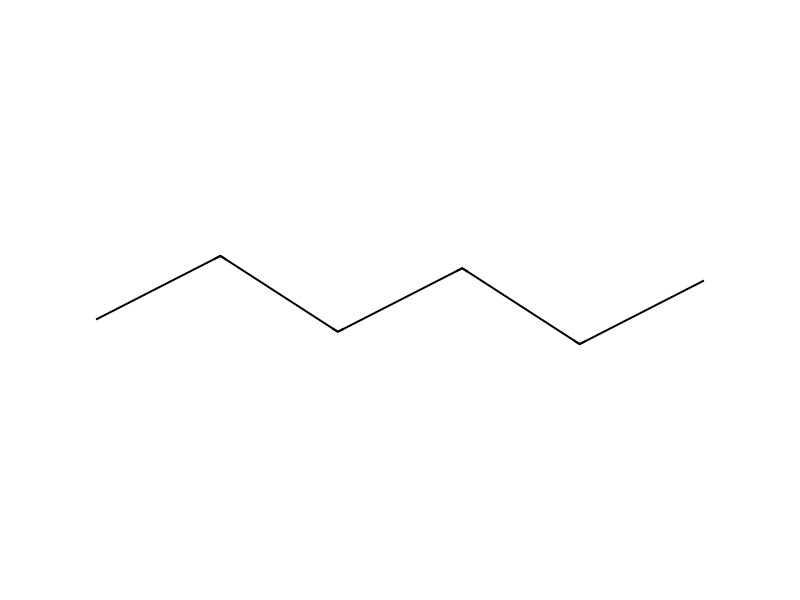
[H][H].C=C.Cl.[CH2:6]=[CH:7]C.[CH2:9]=[CH:10][CH2:11][CH3:12].[Al+3].[Cl-].[Cl-].[Cl-]>[Al+3].[Cl-].[Cl-].[Cl-].CCCCCC.CCCC.Cl[Ti](Cl)(Cl)Cl.[Al](CC)(CC)CC.[Al](Cl)(CC)CC>[CH2:6]=[CH2:7].[CH2:9]=[CH:10][CH3:11].[CH2:9]=[CH:10][CH2:11][CH3:12]참가 물질
반응물 6

생성물 1

시약·촉매·용매 6


반응 조건
- 온도
- 130 °C
실험 절차
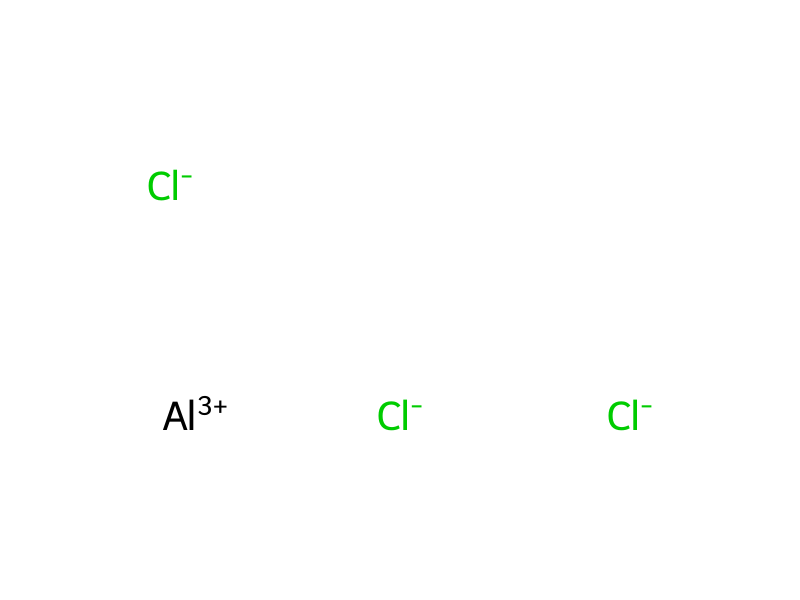
The polymerization is carried out in the apparatus described in Example 1. Per hour, 100 kg of n-butane are introduced into the 0.25 m3 polymerization kettle via a pump. 5.0 g per hour of a TiCl3.0.5 AlCl3 catalyst (obtained by reducing 1 mol of TiCl4 with 0.7 mol of Al(C2H5)3Cl3 (as a 20 percent strength solution in hexane) at 0° C. using a reaction time of 6 hours, and a post-reaction time of 6 hours at 0° to 10° C., heating at 130° C. (6 hours) and subsequent isolation), are metered into the stream of n-butane. Separately therefrom, 17 g of Al(C2H5)3 are introduced into the n-butane per hour. 600 l (S.T.P.) of hydrogen are introduced per hour into the polymerization kettle. Ethene is added until the pressure is 20 bars, and this value is maintained by further addition of ethene. The polymerization temperature is kept at 85° C. by jacket cooling and circulatory gas cooling. The polyethene suspension obtained in this polymerization kettle is introduced continuously, through a slide valve regulated by the level in the kettle, into a horizontal 2 m3 reactor equipped with a mixing stirrer. The suspension contains 54 kg of polyethene in 46 kg of n-butane. The reactor is equipped with jacket cooling and circulatory gas cooling. By these means, the polymerization temperature is kept at 80° C. Per hour, 50 l (S.T.P.) of hydrogen, 3.3 l (S.T.P.) of hydrogen chloride, 50 kg of propene, 5 g of TiCl3.0.5 AlCl3 (in 50 g of n-butane) and 5 g of Al(C2H5)2Cl are introduced into the reactor. The solids content in this reactor rises to 61 kg of polyolefin in 39 kg of the dispersion medium. This free-flowing powder is introduced continuously, through a pressure lock, into a fluidized bed having a reaction space of 2 m3, in which the polyolefin is fluidized by means of 1-butene, the as yet unpolymerized propene and the n-butane, these constituents being cooled to 25° C., and circulated, in a circuit comprising a cooler. The polymerization is continued at 75° C. under a pressure of 7 bar. Per hour, 5 g of Al(C2H5)2Cl and 50 l (S.T.P.) of hydrogen are introduced into the circulating gas through a vaporizer. Per hour, a suspension of 10.0 g of TiCl3.0.5 AlCl3 in 50 g of n-butane is added to the fluidized polyolefin. The pressure of 7 bar is maintained by adding 1-butene. The hydrocarbons which have partially condensed in the cooler of the circuit are separated off. The remaining volatile hydrocarbons are removed as described in Example 1. Per hour, 184 kg of an ethene/propene/1-butene block copolymer are obtained; this copolymer comprises a polyethene block, a polypropene block and a block of a propene/1-butene copolymer and has the following properties:
후처리
- waitPer hour
- customat 0° C.
- customa reaction time of 6 hours
- customis kept at 85° C. by jacket
- temperaturecooling
- temperaturecirculatory gas cooling
- customThe polyethene suspension obtained in this polymerization kettle
- additionis introduced continuously, through a slide valve
- customregulated by the level in the kettle, into a horizontal 2 m3 reactor
- customequipped with a mixing stirrer
- customThe reactor is equipped with jacket
- temperaturecooling
- temperaturecirculatory gas cooling
- customis kept at 80° C
- waitPer hour
- additionThis free-flowing powder is introduced continuously, through a pressure lock, into a fluidized bed
- customis continued at 75° C. under a pressure of 7 bar
- waitPer hour
- waitPer hour
- temperatureThe pressure of 7 bar is maintained
- customcondensed in the cooler of the circuit
- customare separated off
- customThe remaining volatile hydrocarbons are removed
- waitPer hour
출처 및 근거
- ORD 기록
- ord-9ed317c8f819496f9f669a0f136f5f36
- 출처 데이터셋
- uspto-grants-1983_01
- 특허 번호
- US04368291
반응 노트
불러오는 중…