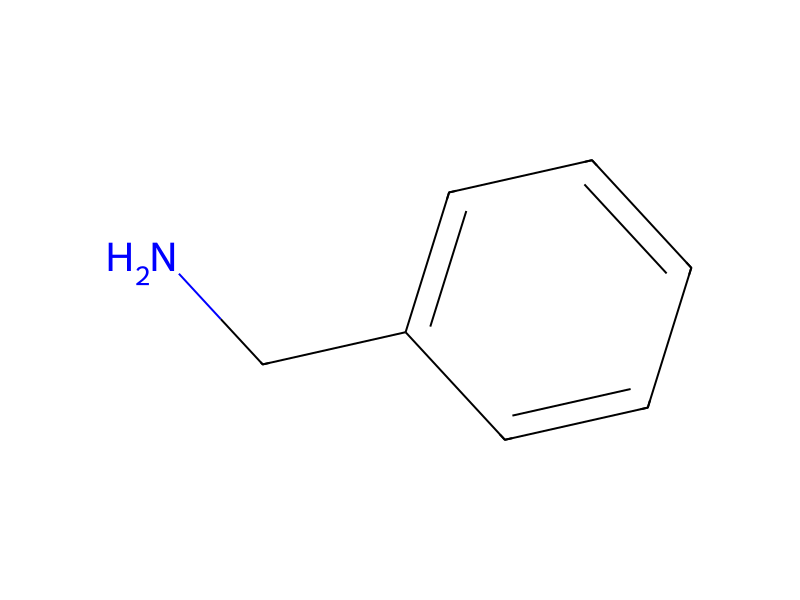
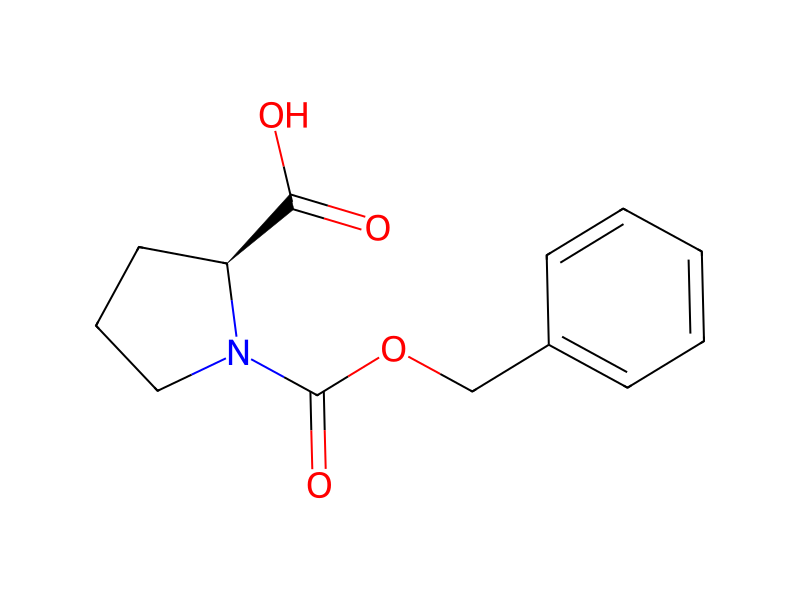
Benzylamine → (S)-2-Benzylcarbamoyl-pyrrolidine-1-carboxylic acid benzyl ester
Reaction equation

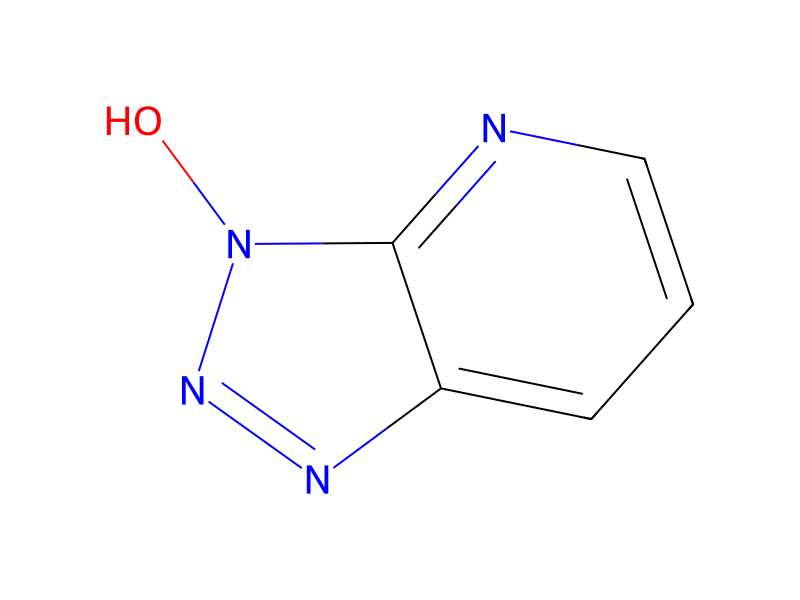
[N:1]1([C:9]([O:11][CH2:12][C:13]2[CH:18]=[CH:17][CH:16]=[CH:15][CH:14]=2)=[O:10])[CH2:8][CH2:7][CH2:6][C@H:2]1[C:3]([OH:5])=O.C1C=NC2N(O)N=NC=2C=1.CCN(C(C)C)C(C)C.[CH2:38]([NH2:45])[C:39]1[CH:44]=[CH:43][CH:42]=[CH:41][CH:40]=1>CN(C=O)C.C(Cl)CCl>[CH2:12]([O:11][C:9]([N:1]1[CH2:8][CH2:7][CH2:6][C@H:2]1[C:3](=[O:5])[NH:45][CH2:38][C:39]1[CH:44]=[CH:43][CH:42]=[CH:41][CH:40]=1)=[O:10])[C:13]1[CH:18]=[CH:17][CH:16]=[CH:15][CH:14]=1Participants
7




Procedure
To a solution of 5.00 g Z-Pro-OH in 50 ml DMF were added 3.84 g EDC, 2.73 g HOAt, 7.3 ml DIPEA and 2.2 ml benzylamine at 0° C. After stirring for 2 h the reaction mixture was concentrated, the residue was dissolved in dichloromethane and subsequently extracted with aqueous LiCl (4%), 0.1 M HCl and saturated NaHCO3. The crude product obtained after evaporation of the solvent was pure enough for the subsequent transformation. Yield: 7.11 g colorless amorphous solid.
Workup
- concentrationwas concentrated
- dissolutionthe residue was dissolved in dichloromethane
- extractionsubsequently extracted with aqueous LiCl (4%), 0.1 M HCl and saturated NaHCO3
Sources & evidence
- ORD record
- ord-40c2e35be2fb4f2aa26dcfaca1482282
- Source dataset
- uspto-grants-2014_03
- Patent number
- US08669266B2
Reaction notes
Loading…