Cyclobutylamine → HCID 68601180, compound
Reaction equation

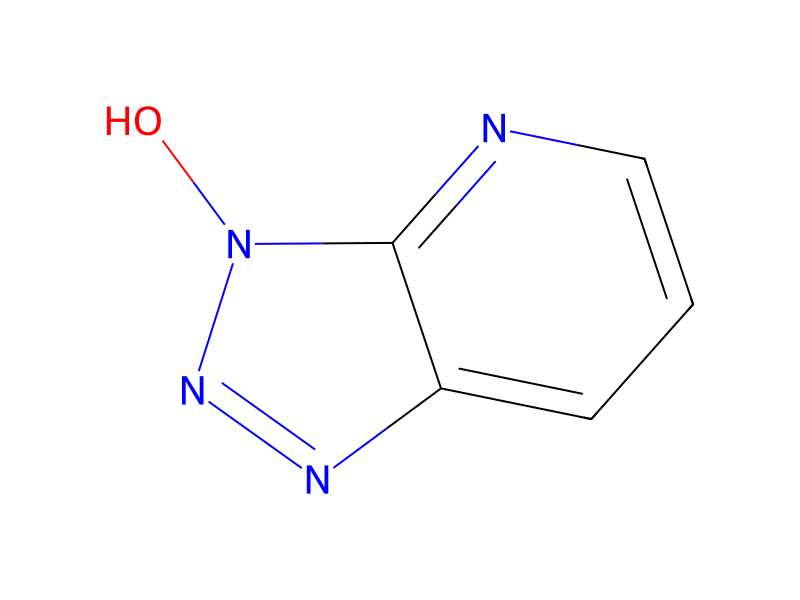
[C:1]([N:8]1[CH2:15][C@@H:14]([OH:16])[CH2:13][C@H:9]1[C:10]([OH:12])=O)([O:3][C:4]([CH3:7])([CH3:6])[CH3:5])=[O:2].[CH:17]1[CH:22]=NC2N(O)N=[N:25][C:19]=2[CH:18]=1.CCN(C(C)C)C(C)C.C1(N)CCC1>CN(C=O)C.C(Cl)CCl>[C:4]([O:3][C:1]([N:8]1[CH2:15][C@@H:14]([OH:16])[CH2:13][C@H:9]1[C:10](=[O:12])[NH:25][CH:19]1[CH2:18][CH2:17][CH2:22]1)=[O:2])([CH3:5])([CH3:6])[CH3:7]Participants
7
Reactant 4



Product 1

Reagents, catalysts & solvents 2


Procedure
To a solution of 4.98 g N-Boc-cis-4-hydroxy-L-proline in 50 ml DMF were added 4.13 g EDC, 2.93 g HOAt, 3.75 ml DIPEA and 1.53 g cyclobutylamine at 0° C. After stirring for 2 h the reaction mixture was concentrated, the residue was dissolved in ethyl acetate and subsequently extracted with aqueous LiCl (4%), 0.1 M HCl and saturated aqueous NaHCO3. The crude product obtained after evaporation of the solvent was pure enough for the subsequent transformation. Yield: 3.32 g colorless amorphous solid.
Workup
- concentrationwas concentrated
- dissolutionthe residue was dissolved in ethyl acetate
- extractionsubsequently extracted with aqueous LiCl (4%), 0.1 M HCl and saturated aqueous NaHCO3
Sources & evidence
- ORD record
- ord-8c9ebf07ca6e4055a90a46a5fbf83173
- Source dataset
- uspto-grants-2014_03
- Patent number
- US08669266B2
Reaction notes
Loading…