Hydrochloric Acid → HCID 19103760, compound
Reaction equation

C([Li])CCC.[F:6][C:7]1[CH:12]=[CH:11][CH:10]=[CH:9][C:8]=1[F:13].[CH2:14]([CH:17]1[CH2:22][CH2:21][C:20](=O)[CH2:19][CH2:18]1)[CH2:15][CH3:16].[CH2:24]([C@H:28]1[CH2:33][CH2:32][C@H:31](C2C=CC(C(OC3C=CC(CCCCC)=C(F)C=3F)=O)=CC=2)[CH2:30][CH2:29]1)[CH2:25][CH2:26]C.Cl>CCCCCC.O1CCCC1>[CH2:14]([CH:17]1[CH2:22][CH2:21][C:20]([C:9]2[CH:10]=[CH:11][C:12]([C:31]3[CH2:32][CH2:33][CH:28]([CH2:24][CH2:25][CH3:26])[CH2:29][CH:30]=3)=[C:7]([F:6])[C:8]=2[F:13])=[CH:19][CH2:18]1)[CH2:15][CH3:16]Participants
8







Procedure
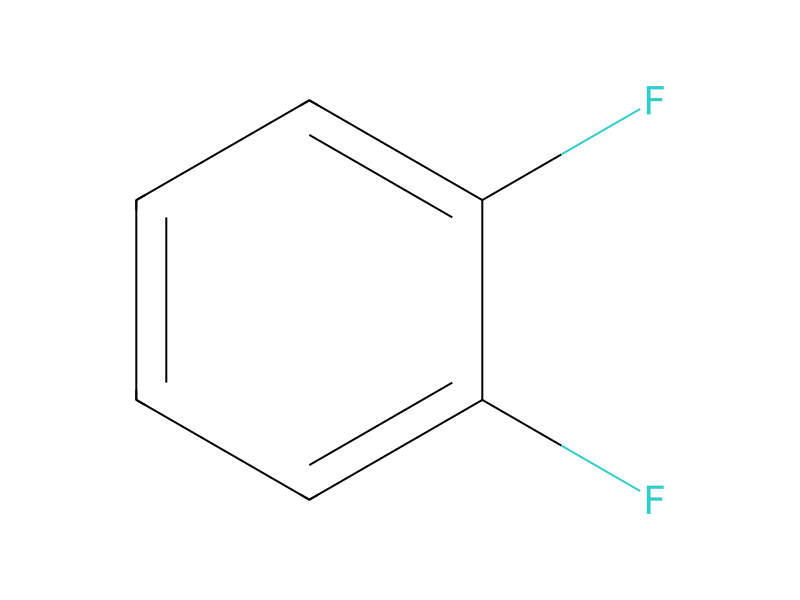
A solution of 0.2 mol of n-butyllithium in 65 ml of hexane is added to a mixture of 0.1 mol of 1,2-difluorobenzene, 0.2 mol of potassium tert.-butylate and 100 ml of tetrahydrofuran at -100° C. After the mixture has been stirred for 10 minutes, a mixture of 0.2 mol of 4-propylcyclohexanone and 20 ml of tetrahydrofuran is added at -90° C. After the mixture has been stirred at -40° C. for 2 hours, it is warmed to room temperature and 30 ml of 2 normal hydrochloric acid solution are added. Heating for 2 hours and customary working up give 1,4-bis-(4-propylcyclohex-1-enyl)-2,3-difluorobenzene, C 59° N 120° I.
Workup
- additionis added at -90° C
- stirringAfter the mixture has been stirred at -40° C. for 2 hours
- temperatureHeating for 2 hours
Sources & evidence
- ORD record
- ord-386a19f958234d6a875a20132a71608f
- Source dataset
- uspto-grants-1994_01
- Patent number
- US05279764
Reaction notes
Loading…