Triethylamine → HCID 18329179, compound
Reaction equation

[OH:1][C:2]1[CH:7]=[CH:6][C:5]([CH:8]=[CH:9][C:10]([O:12][CH3:13])=[O:11])=[CH:4][CH:3]=1.C(N(CC)CC)C.[C:21](Cl)(=[O:25])[C:22]([CH3:24])=[CH2:23]>O1CCCC1.CN(C)C1C=CN=CC=1>[CH3:24][C:22](=[CH2:23])[C:21]([O:1][C:2]1[CH:3]=[CH:4][C:5](/[CH:8]=[CH:9]/[C:10]([O:12][CH3:13])=[O:11])=[CH:6][CH:7]=1)=[O:25]Participants
Reactant 3

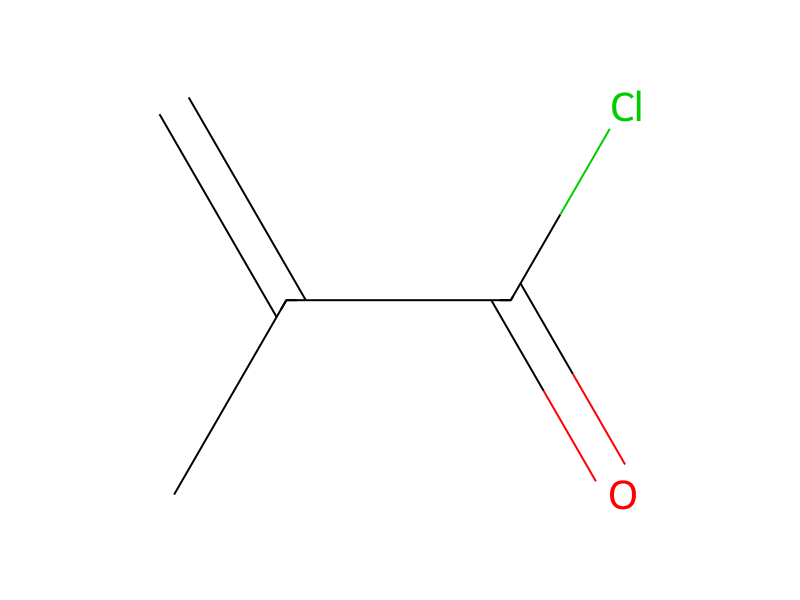

Product 1

Reagents, catalysts & solvents 2


Conditions
- Temperature
- 15 °C
Procedure
10.5 g (59 mmol) of methyl 3-(4-hydroxy-phenyl)-acrylate were dissolved in 170 ml of tetrahydrofuran and treated in succession with 9.1 ml (65 mmol) of triethylamine and 0.079 g (0.65 mmol) of 4-dimethylamino-pyridine (DMAP). 6.8 g (65 mmol) of methacryloyl chloride were added dropwise to the solution, cooled to about 15° C., over a period of minutes. The reaction batch was stirred at room temperature overnight and subsequently filtered over a thin silica gel layer. The silica gel layer was rinsed thoroughly with THF. After evaporation of the solvent the crude product was recrystallized from about 200 ml of ethanol. It was filtered off, dried and recrystallized once more from ethanol. Filtration and drying at 50° C. in a water-jet vacuum gave 10.3 g of 4-[(E)-2-methoxycarbonyl-vinyl]-phenyl 2-methyl-acrylate as white crystals with a melting point of 76-80° C. and an absorption maximum of λmax. (in CH2Cl2)=281.7 nm (ε=24290 l/mol cm).
Workup
- filtrationsubsequently filtered over a thin silica gel layer
- washThe silica gel layer was rinsed thoroughly with THF
- customAfter evaporation of the solvent the crude product
- customwas recrystallized from about 200 ml of ethanol
- filtrationIt was filtered off
- customdried
- customrecrystallized once more from ethanol
- filtrationFiltration
- dry with materialdrying at 50° C. in a water-jet vacuum
Sources & evidence
- ORD record
- ord-54adc1cb735d4bb09412b04528cddbc7
- Source dataset
- uspto-grants-2002_01
- Patent number
- US06335409B1
Reaction notes
Loading…