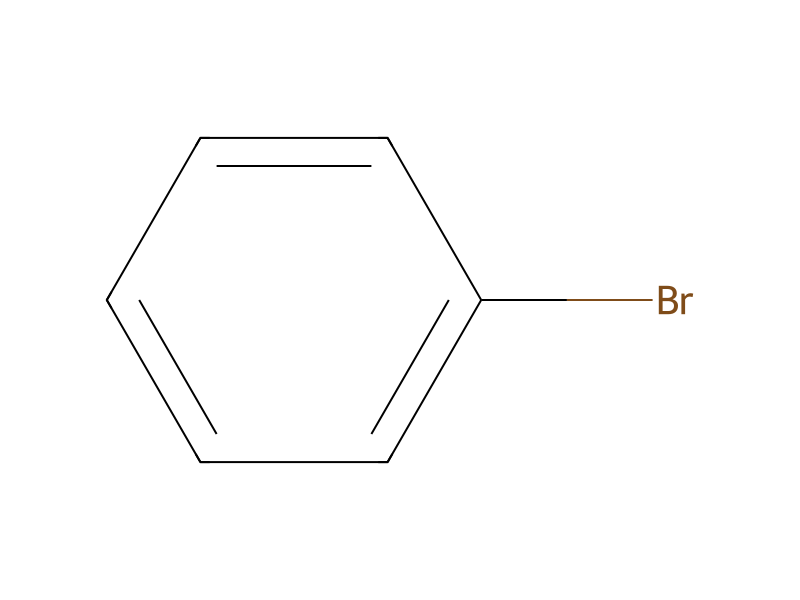
Bromobenzene → HCID 9996016, compound
Reaction equation

[C:1]([N:4]1[CH2:9][CH2:8][CH:7]([C:10]2[C:18]3[C:13](=[CH:14][CH:15]=[CH:16][CH:17]=3)[NH:12][CH:11]=2)[CH2:6][CH2:5]1)(=[O:3])[CH3:2].Br[C:20]1[CH:25]=[CH:24][CH:23]=[CH:22][CH:21]=1.C(=O)([O-])[O-].[K+].[K+]>CN(C)C=O.C(Cl)(Cl)Cl.[Cu]=O>[C:1]([N:4]1[CH2:5][CH2:6][CH:7]([C:10]2[C:18]3[C:13](=[CH:14][CH:15]=[CH:16][CH:17]=3)[N:12]([C:20]3[CH:25]=[CH:24][CH:23]=[CH:22][CH:21]=3)[CH:11]=2)[CH2:8][CH2:9]1)(=[O:3])[CH3:2]Participants
7





Procedure
A mixture of 3-(1-acetyl-4-piperidyl)indole (10.0 g), bromobenzene (6.48 g), potassium carbonate (5.70 g) and copper(II) oxide (0.26 g) in anhydrous N,N-dimethylformamide (10 ml) was refluxed for 30 minutes. The reaction mixture was cooled and diluted with chloroform, and the insoluble material was filtered off. The filtrate was concentrated under reduced pressure and the residue was subjected to column chromatography on alumina (400 g) followed by elution with a mixture of toluene and ethyl acetate (20:1 V/V). The fractions containing the desired compound were combined and concentrated under reduced pressure to give 3-(1-acetyl-4-piperidyl)-1-phenylindole (10.19 g).
Workup
- temperaturewas refluxed for 30 minutes
- temperatureThe reaction mixture was cooled
- filtrationthe insoluble material was filtered off
- concentrationThe filtrate was concentrated under reduced pressure
- washfollowed by elution with a mixture of toluene and ethyl acetate (20:1 V/V)
- additionThe fractions containing the desired compound
- concentrationconcentrated under reduced pressure
Sources & evidence
- ORD record
- ord-4a91f50281c5418d9e6814f93775e029
- Source dataset
- uspto-grants-1988_05
- Patent number
- US04742057
Reaction notes
Loading…