Hydroquinone → 1-Decanol
Reaction equation

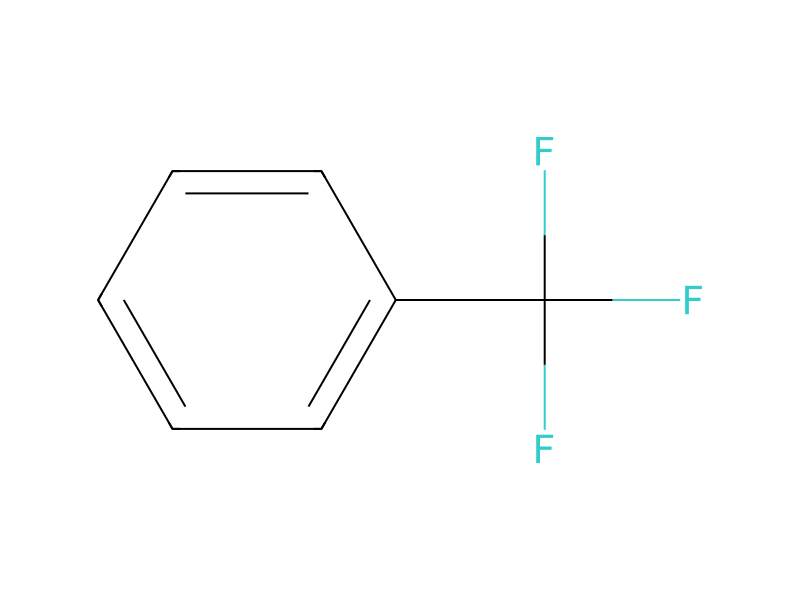
C1(C=CC(O)=CC=1)O.C(=O)([O-])[O-].[K+].[K+].FC(C1C=CC=CC=1)(F)F.[CH2:25]([OH:35])[CH2:26][CH2:27][CH2:28][CH2:29][CH2:30][CH2:31][CH2:32][CH2:33][CH3:34]>>[CH:25](=[O:35])[CH2:26][CH2:27][CH2:28][CH2:29][CH2:30][CH2:31][CH2:32][CH2:33][CH3:34].[CH2:25]([OH:35])[CH2:26][CH2:27][CH2:28][CH2:29][CH2:30][CH2:31][CH2:32][CH2:33][CH3:34]Participants
6




Procedure
To a mixture of 0.2 millimole of Ru(PPh3)3Cl2 [dichlorotris(triphenylphosphine)ruthenium(II)], 0.2 millimole of hydroquinone, 0.03 millimole of potassium carbonate and 6 ml of trifluoromethylbenzene was added 1 millimole of 1-decanol, and the resultant mixture was stirred under oxygen atmosphere (1 atm) at 60° C. for 20 hours. The products were subjected to chromatography on silica gel (eluent: hexane/ethyl acetate=10/1) for the isolation to give 1-decanal in a conversion rate of 1-decanol of 90% (yield 90%).
Sources & evidence
- ORD record
- ord-e492a7ee1e0e4e0585463f7d865fb2f5
- Source dataset
- uspto-grants-2000_12
- Patent number
- US06166264
Reaction notes
Loading…