Triphenylphosphine → 1-Aminoisoquinoline-7-carbonitrile
Reaction equation

[NH2:1][C:2]1[C:11]2[C:6](=[CH:7][CH:8]=[C:9](OS(C(F)(F)F)(=O)=O)[CH:10]=2)[CH:5]=[CH:4][N:3]=1.C1(P(C2C=CC=CC=2)C2C=CC=CC=2)C=CC=CC=1.[CH3:39][N:40]1CCCC1=O>C([O-])(=O)C.[Pd+2].C([O-])(=O)C.[C-]#N.[Zn+2].[C-]#N>[NH2:1][C:2]1[C:11]2[C:6](=[CH:7][CH:8]=[C:9]([C:39]#[N:40])[CH:10]=2)[CH:5]=[CH:4][N:3]=1Participants
6
Reactant 3



Product 1

Reagents, catalysts & solvents 2

Procedure
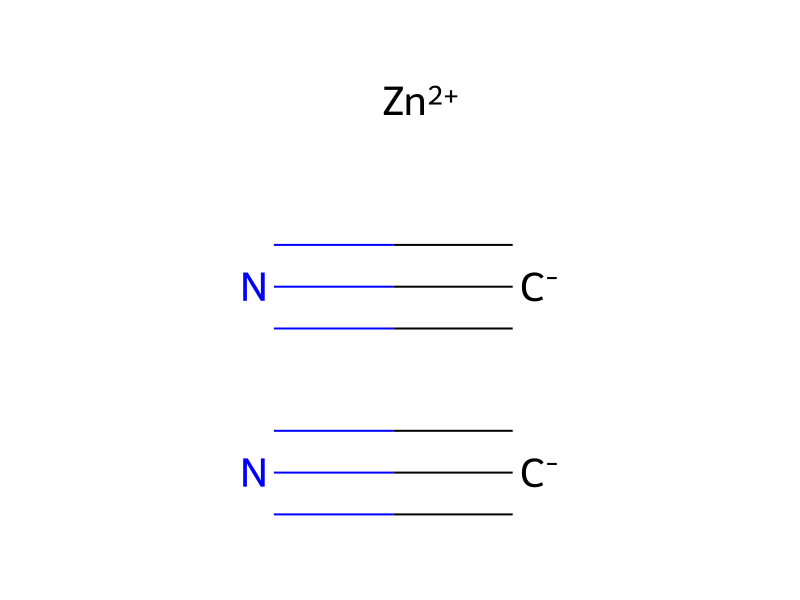
Palladium acetate (0.9 g) was added to a heated mixture of trifluoromethanesulfonic acid 1-amino-isoquinolin-7-yl ester (5.8 g), zinc cyanide (2.3 g) and triphenylphosphine (1.0 g) in 75 mL of N-methyl-pyrrolidone at 190° C. (exothermic!). Stirring was continued at 190° C. for 2 h. Precipitated material was removed by filtration and discarded. Ethyl acetate was added and the organic mixture washed with 2N aqueous ammonia, water and brine and dried (Na2SO4). Filtration and concentration afforded a brownish oil, which was purified by silica chromatography (ethyl acetate/isohexane=3/7, 4/6, 515, 6/4, 7/3, 8/2) to give 3.2 g (94%) of the title compound as yellow crystals. M.p. 183-186° C.
Workup
- customPrecipitated material was removed by filtration
- additionEthyl acetate was added
- washthe organic mixture washed with 2N aqueous ammonia, water and brine
- dry with materialdried (Na2SO4)
- filtrationFiltration and concentration
- customafforded a brownish oil, which
- customwas purified by silica chromatography (ethyl acetate/isohexane=3/7, 4/6, 515, 6/4, 7/3, 8/2)
Sources & evidence
- ORD record
- ord-e1c7c192519b43a0af28eaeb69931efd
- Source dataset
- uspto-grants-2002_09
- Patent number
- US06444672B1
Reaction notes
Loading…