Furfurylamine → 5-Bromonicotinic acid
Reaction equation

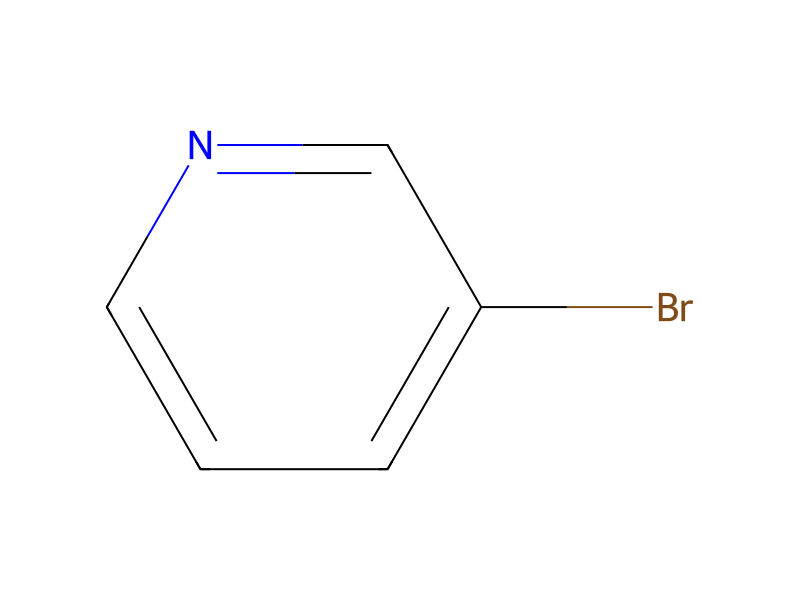
[Br:1][C:2]1[CH:3]=[N:4][CH:5]=[CH:6][CH:7]=1.NC1N=CC(Br)=CN=1.NC1C([N+]([O-])=O)=CC(Br)=CN=1.C(N)[C:28]1[O:32]C=CC=1.BrCCC=C.CC([OH:44])CC=C.C1O[C@@H]1C>>[Br:1][C:2]1[CH:3]=[N:4][CH:5]=[C:6]([CH:7]=1)[C:28]([OH:32])=[O:44]Participants




Procedure
The following examples are provided to illustrate the present invention, and should not be construed as limiting thereof. In these examples, all parts and percentages are by weight, unless otherwise noted. Reaction yields are reported in mole percentages. Several commercially available starting materials are used throughout the following examples. 3-Bromopyridine, 2-amino-5-bromopyrimidine, 2-amino-5-bromo-3-nitropyridine, furfurylamine, 4-bromo-1-butene and 4-penten-2-ol were obtained from Aldrich Chemical Company. (R)-(+)-propylene oxide was obtained from Fluka Chemical Company. 5-Bromonicotinic acid was obtained form Acros Organics or Aldrich Chemical Company. 3,5-Dibromopyridine was obtained form Lancaster Synthesis, Inc. or Aldrich Chemical Company. 3-Chloro-5-trifluoromethylpyridine was obtained form Strem Chemicals, Inc. Column chromatography was done using either Merck silica gel 60 (70-230 mesh) or aluminum oxide (activated, neutral, Brockmann I, standard grade, ˜150 mesh). Pressure reactions were done in a heavy wall glass pressure tube (185 mL capacity), with Ace-Thread, and plunger valve available from Ace Glass Inc. Reaction mixtures were typically heated using a high-temperature silicon oil bath, and temperatures refer to those of the oil bath. The following abbreviations are used in the following examples: CHCl3 for chloroform, CH2Cl2 for dichloromethane, CH3OH for methanol, DMF for N,N-dimethylformamide, and EtOAc for ethyl acetate, THF for tetrahydrofuran, and Et3N for triethylamine.
Workup
- customReaction
- customyields
Sources & evidence
- ORD record
- ord-642f26b8fe984d98bf86fbf6d682338d
- Source dataset
- uspto-grants-2002_09
- Patent number
- US06455554B1
Reaction notes
Loading…