Imidazole → HCID 13424620, compound
Reaction equation
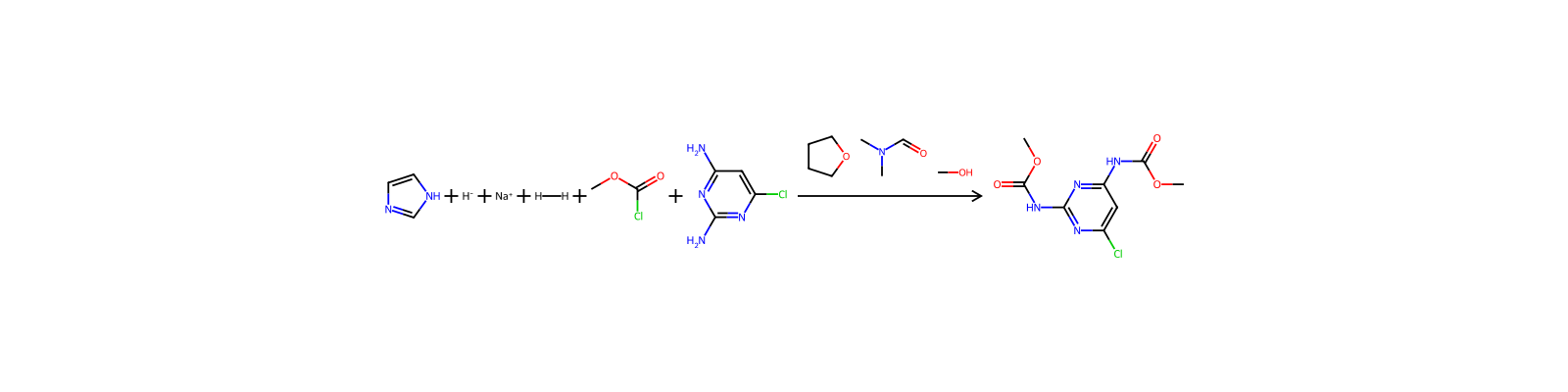
N1C=CN=C1.[H-].[Na+].[H][H].Cl[C:11]([O:13][CH3:14])=[O:12].[Cl:15][C:16]1[N:21]=[C:20]([NH2:22])[N:19]=[C:18]([NH2:23])[CH:17]=1>O1CCCC1.CN(C)C=O.CO>[Cl:15][C:16]1[N:21]=[C:20]([NH:22][C:11]([O:13][CH3:14])=[O:12])[N:19]=[C:18]([NH:23][C:11]([O:13][CH3:14])=[O:12])[CH:17]=1Participants
Reactant 5

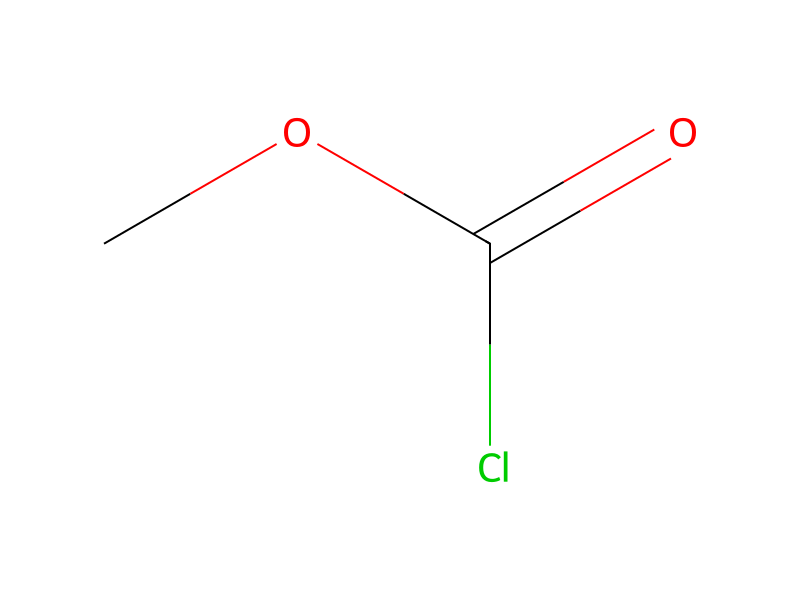



Product 1

Reagents, catalysts & solvents 3



Procedure
A solution of 2.7 g (0.041 mol) of imidazole in 50 ml of dry tetrahydrofuran is treated at 0° C. with 1.8 g (0.041 mol) of 55 to 60 percent sodium hydride. After the hydrogen formation has finished, 3.8 g (0.041 mol) of methyl chloroformate in 20 ml of dry tetrahydrofuran are added dropwise at 0° C., whereupon the suspension obtained is treated dropwise at 0° with a solution of 2.9 g (0.021 mol) of 6-chloro-2,4-diaminopyrimidine and 4.5 g (0.041 mol) of potassium t-butylate in 30 ml of dry dimethylformamide. The mixture is stirred at 0° for 1 hour and then at 50° for 3 hours, whereupon 3 ml of methanol are added thereto and the solvent is evaporated to the largest extent possible. The residue is poured into ice-cold water, adjusted with 1N hydrochloric acid to pH 2 and extracted with methylene chloride and a small amount of methanol. After drying the organic extract over magnesium sulphate and evaporation under vacuum, the residue is recrystallized from ethyl acetate, there being obtained pure dimethyl 6-chloro-2,4-pyrimidinedicarbamate.
Workup
- customobtained
- waitat 50° for 3 hours
- customthe solvent is evaporated to the largest extent possible
- additionThe residue is poured into ice-cold water
- extractionextracted with methylene chloride
- customAfter drying the
- extractionorganic extract over magnesium sulphate and evaporation under vacuum
- customthe residue is recrystallized from ethyl acetate, there
Sources & evidence
- ORD record
- ord-ca4b0dc123fb429f9e12919bbab8e6de
- Source dataset
- uspto-grants-1986_01
- Patent number
- US04565869
Reaction notes
Loading…