Hydroxylamine → HCID 22991106, compound
Reaction equation

NO.[Si:3](Cl)([C:16]([CH3:19])([CH3:18])[CH3:17])([C:10]1[CH:15]=[CH:14][CH:13]=[CH:12][CH:11]=1)[C:4]1[CH:9]=[CH:8][CH:7]=[CH:6][CH:5]=1.C(N(CC)C(C)C)(C)C.Cl.[CH3:31][NH:32][OH:33]>ClCCl.O>[CH3:31][N:32]([Si:3]([C:16]([CH3:19])([CH3:18])[CH3:17])([C:10]1[CH:15]=[CH:14][CH:13]=[CH:12][CH:11]=1)[C:4]1[CH:9]=[CH:8][CH:7]=[CH:6][CH:5]=1)[OH:33]Participants



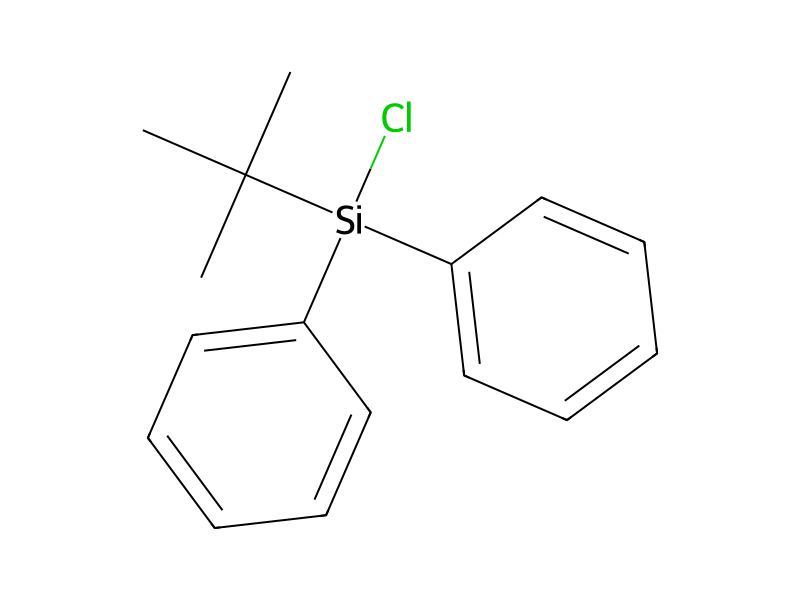



Procedure
One possible synthetic scheme for hydroxylamine derivatives involves adding tert-butyldiphenylsilyl chloride and N,N-diisopropylethylamine to a suspension of N-methyl hydroxylamine hydrochloride in dry dichloromethane. The reaction mixture was stirred followed by the addition of water. The two layers were separated and the aqueous layer was extracted with methylene chloride. The organic solutions were then combined, dried with magnesium sulfate, filtered, and concentrated to dryness under reduced pressure. The resulting product was purified by liquid chromatography on silica gel using a mixture of hexane and ethyl acetate to elute the desired product. The purification process gave N-Methyl,N-(tert-butyldiphenylsilyl)hydroxylamine (27).
Workup
- customThe two layers were separated
- extractionthe aqueous layer was extracted with methylene chloride
- dry with materialdried with magnesium sulfate
- filtrationfiltered
- concentrationconcentrated to dryness under reduced pressure
- customThe resulting product was purified by liquid chromatography on silica gel using
- additiona mixture of hexane and ethyl acetate
- washto elute the desired product
Sources & evidence
- ORD record
- ord-d2e16c03fbb44fcbbcc773d79ee779ea
- Source dataset
- uspto-grants-2007_07
- Patent number
- US07238339B2
Reaction notes
Loading…