Hydrochloric Acid → Propanedioic acid, 2-(2,4,6-trifluorophenyl)-, 1,3-diethyl ester
Reaction equation

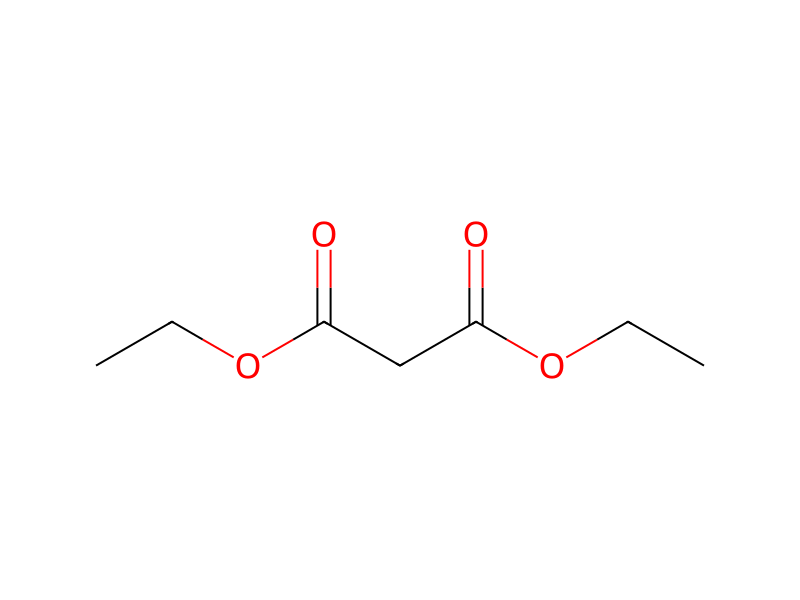
[H-].[Na+].[C:3]([O:11][CH2:12][CH3:13])(=[O:10])[CH2:4][C:5]([O:7][CH2:8][CH3:9])=[O:6].Br[C:15]1[C:20]([F:21])=[CH:19][C:18]([F:22])=[CH:17][C:16]=1[F:23].Cl>O.COC(C)(C)C.O1CCOCC1>[F:21][C:20]1[CH:15]=[C:16]([F:23])[CH:17]=[C:18]([F:22])[C:19]=1[CH:4]([C:5]([O:7][CH2:8][CH3:9])=[O:6])[C:3]([O:11][CH2:12][CH3:13])=[O:10]Participants
8
Reactant 4



Product 1

Reagents, catalysts & solvents 3



Conditions
- Temperature
- 40 °C
Procedure
Into a mixture of 4.8 g of sodium hydride (60% in oil) and 100 ml of 1,4-dioxane, 19.2 g of diethyl malonate were added dropwise at room temperature, and then 17.2 g of cuprous bromide and 21.1 g of 1-bromo-2,4,6-trifluorobenzene were subsequently added thereto at 40° C. and refluxed for 26 hours under heating. To the reaction mixture, conc. hydrochloric acid was added under ice-cooling, and then tert-butyl methyl ether and water were added. The organic layer was separated, washed with aqueous sodium hydroxide solution, dil. hydrochloric acid and water subsequently, dried over sodium sulfate and concentrated. The residue was subjected to silica gel column chromatography to give 12.6 g of diethyl (2,4,6-trifluorophenyl)malonate.
Workup
- additionwere added dropwise at room temperature
- temperatureunder heating
- temperaturecooling
- customThe organic layer was separated
- washwashed with aqueous sodium hydroxide solution, dil. hydrochloric acid and water subsequently
- dry with materialdried over sodium sulfate
- concentrationconcentrated
Sources & evidence
- ORD record
- ord-ddc6f29da12c4e8aacd3f30c97566c76
- Source dataset
- uspto-grants-2007_05
- Patent number
- US07211545B2
Reaction notes
Loading…