Picolinic acid → N-(2-Methyl-2-propanyl)-2-pyridinecarboxamide
Reaction equation

[N:1]1[CH:6]=[CH:5][CH:4]=[CH:3][C:2]=1[C:7]([OH:9])=O.C(N(CC)CC)C.C(Cl)(=O)C(C)(C)C.[C:24]([NH2:28])([CH3:27])([CH3:26])[CH3:25].C([O-])(O)=O.[Na+]>C(Cl)Cl>[C:24]([NH:28][C:7](=[O:9])[C:2]1[CH:3]=[CH:4][CH:5]=[CH:6][N:1]=1)([CH3:27])([CH3:26])[CH3:25]Participants

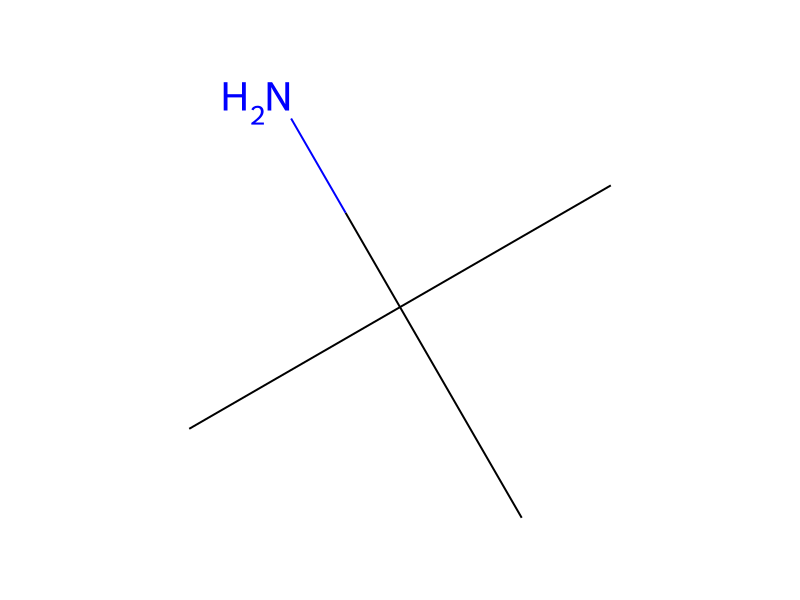





Conditions
- Temperature
- 0 °C
Procedure
To a cooled solution of picolinic acid (3.6 g, 29.2 mmole, Aldrich) and triethylamine (8 mL, 57.4 mmole) in 80 mL of methylene chloride at 0° C. was added pivaloyl chloride (3.8 mL, 30.8 mmole). The mixture was stirred for 1 hour at 0° C., t-butylamine (4.0 mL, 38.1 mmole) was added, and stirring was continued for 1 hour at 0° C. and 1 hour at room temperature. Saturated NaHCO3 (30 mL) was added, the layers were separated, and the aqueous layer was extracted with methylene chloride (2×30 mL). The combined organic solutions were dried and concentrated, and the residue was chromatographed in silica gel, eluting with 30 to 60% ethyl acetate in hexane, to provide 5.2 g of the title compound as an oil. MS: 179 (M+H)+ ; 1H NMR (CDCl3) δ: 8.52 (m, (1H), 8.18 (dm, J=7.5 Hz, 1H), 8.0 (s, br, 1H), 7.84 (dt, J=7.5, 1.5 Hz, 1H), 7.40 (ddd, J=7.5, 5.0, 1.5 Hz, 1H), 1.50 (s, 9H).
Workup
- stirringstirring
- waitwas continued for 1 hour at 0° C. and 1 hour at room temperature
- customthe layers were separated
- extractionthe aqueous layer was extracted with methylene chloride (2×30 mL)
- customThe combined organic solutions were dried
- concentrationconcentrated
- customthe residue was chromatographed in silica gel
- washeluting with 30 to 60% ethyl acetate in hexane
Sources & evidence
- ORD record
- ord-5349b4f762444cc6af7f980eb31d1c10
- Source dataset
- uspto-grants-1997_09
- Patent number
- US05668141
Reaction notes
Loading…