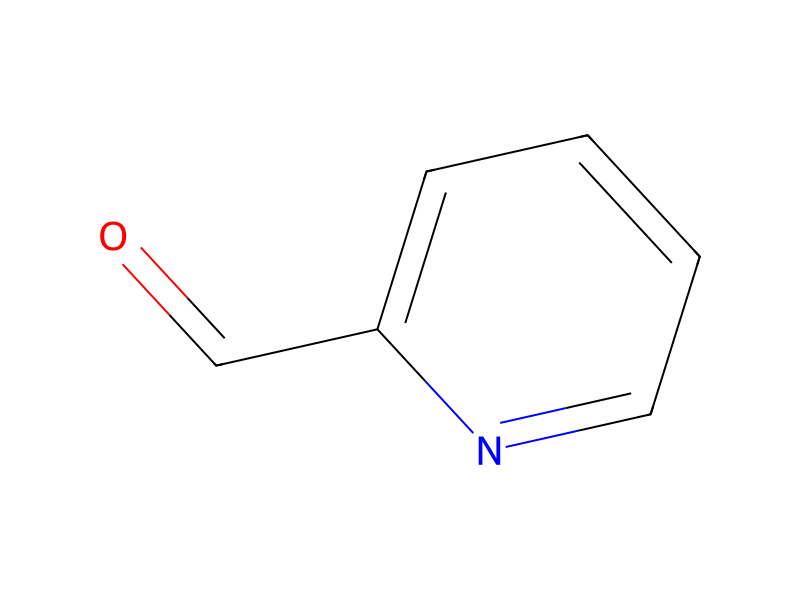
2-Pyridinecarboxaldehyde → HCID 178419322, compound
Reaction equation

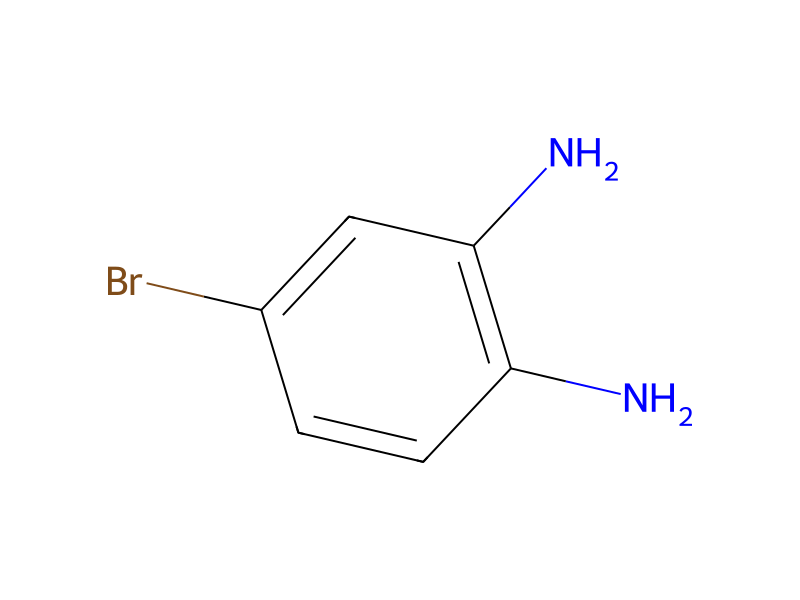
[Br:1][C:2]1[CH:7]=[CH:6][C:5]([NH2:8])=[C:4]([NH2:9])[CH:3]=1.S(=O)(O)[O-].[Na+].[N:15]1[CH:20]=[CH:19][CH:18]=[CH:17][C:16]=1[CH:21]=O>O.C(O)C>[Br:1][C:2]1[CH:7]=[CH:6][C:5]2[NH:8][C:21]([C:16]3[CH:17]=[CH:18][CH:19]=[CH:20][N:15]=3)=[N:9][C:4]=2[CH:3]=1Participants
6
Reactant 3

Product 1

Reagents, catalysts & solvents 2


Conditions
- Temperature
- 90 °C
Procedure
A mixture of 4-bromo-1,2-diaminobenzene (1.00 g, 5.35 mmol), sodium bisulfite (1.02 g) in water (8 mL) and ethanol (80 mL) and 2-pyridine carboxaldehyde (0.63 g, 5.88 mmol) was heated at 90° C. for 15 h. The reaction was cooled to room temperature and concentrated under vacuum. The residue was partitioned between water (60 mL) and chloroform (80 mL) and the aqueous phase was extracted with chloroform (2×50 mL). The organic extracts were combined, dried (MgSO4), filtered and concentrated under vacuum to give the crude product (1.36 g). The residue was purified by column chromatography eluting with EtOAc:hexaxes 0 to 50% to afford 594 mg of 5-bromo-2-(pyridin-2-yl)-1H-benzo[d]imidazole (40%).
Workup
- temperatureThe reaction was cooled to room temperature
- concentrationconcentrated under vacuum
- customThe residue was partitioned between water (60 mL) and chloroform (80 mL)
- extractionthe aqueous phase was extracted with chloroform (2×50 mL)
- dry with materialdried (MgSO4)
- filtrationfiltered
- concentrationconcentrated under vacuum
- customto give the crude product (1.36 g)
- customThe residue was purified by column chromatography
- washeluting with EtOAc
Sources & evidence
- ORD record
- ord-38ac2725cbc2442bb6994e4bdaa5c35c
- Source dataset
- uspto-grants-2014_12
- Patent number
- US08912336B2
Reaction notes
Loading…